
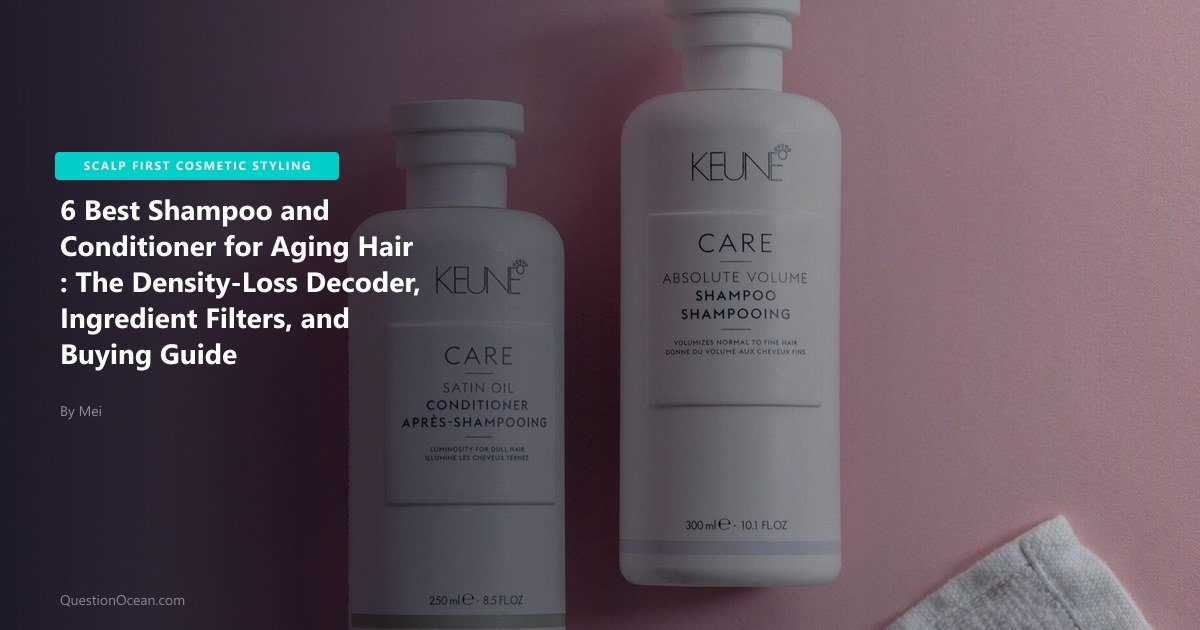
Aging hair changes in three measurable ways simultaneously, diameter shrinks (each individual strand becomes finer), density drops (fewer strands per square inch), and the cuticle becomes more porous due to cumulative weathering, and most “anti-aging” hair products only address one of these three at a time, which is why people in their 50s and 60s feel like nothing works on their hair anymore. The right shampoo and conditioner for aging hair has to address all three changes at once with a specific ingredient profile: gentle non-stripping surfactants for the increasingly fragile cuticle, density-supporting actives (caffeine, peptides, biotin) for the scalp, and humectant-forward conditioning to compensate for natural lipid loss, and the 6 sets below in 2026 are the ones that hit all three targets in a single routine.
For the broader scalp-first care framework, see our pillar guide to scalp-first styling routines.
What Actually Changes in Aging Hair
Last updated: April 20, 2026
By age 40-50, hair undergoes three measurable physical changes:
| Change | Mechanism | Impact |
|---|---|---|
| Diameter shrinkage | Follicle miniaturization, hormonal shifts | Hair feels finer, weaker per strand |
| Density loss | Follicles entering longer rest phase, some permanently inactive | Hair feels thinner overall, scalp shows |
| Cuticle weathering | Decades of cumulative damage, oxidation | Frizz, dryness, color loss, breakage |
Add to this the natural decline in sebum production at the scalp (estrogen drops in women postmenopause; testosterone-derived sebum drops in men over 50), which means aging hair is simultaneously oilier-looking at the roots (because sebum doesn’t travel down the shaft) and drier at the ends.
The 4 Ingredient Filters for Aging-Hair Shampoo
Filter 1, No Sulfates (Or Mild Co-Surfactant Sulfates Only)
Aged cuticles can’t survive harsh sulfate stripping. Look for shampoos with cocamidopropyl betaine, decyl glucoside, or cocamide DEA as primary surfactants. SLS and SLES should NOT be in the top 5 ingredients.
Filter 2, Density-Supporting Actives in the Top 10
- Caffeine (research shows it can extend the hair growth phase)
- Biotin (B7 vitamin)
- Peptides (signaling molecules for follicle stimulation)
- Niacinamide (B3 vitamin, improves scalp circulation)
- Saw palmetto extract (may inhibit DHT-driven thinning)
- Rosemary leaf extract (improves scalp blood flow)
Filter 3: Humectants for Cuticle Hydration
Glycerin, panthenol, hyaluronic acid, or aloe vera in the top 10 ingredients. Aging cuticles lose moisture faster, and humectants pull moisture back in.
Filter 4, pH 4.5-5.5
Aging cuticles are more sensitive to pH disruption. A shampoo at the natural hair pH of 4.5-5.5 keeps the cuticle smooth.
The 6 Best Shampoo and Conditioner Sets for Aging Hair (2026)
Set 1, Nioxin System Kit (Best for Density Loss)
Why it makes the list: Nioxin’s 6-step systems target density loss specifically with caffeine, niacinamide, and peptide-based actives. System 2 (for noticeably thinning natural hair) is the most popular for early-stage density loss; System 4 for chemically treated thinning hair.
Best for: Visible density loss, not just fine hair Price tier: $$$ ($30-50 for the kit)
Set 2, Pureology Strength Cure Best Blonde
Why it makes the list: Designed for color-treated aging hair with the dual problem of density loss and color fading. Sulfate-free, contains keratin and astaxanthin to support strand strength, plus a violet pigment to combat brassiness.
Best for: Color-treated aging hair Price tier: $$$$ ($35-55 for set)
Set 3, Briogeo Don’t Despair, Repair! Strengthening Treatment Set
Why it makes the list: Bond-building approach to aging hair. Repairs cuticle damage from decades of styling. Sulfate-free, silicone-free, paraben-free.
Best for: Aging hair with significant cumulative damage Price tier: $$$$ ($40-60 for set)
Set 4, Living Proof Full Shampoo and Conditioner
Why it makes the list: Adds visible thickness and volume without weighing hair down. Uses Living Proof’s patented OFPMA molecule to lift and texturize. Silicone-free.
Best for: Fine aging hair needing volume Price tier: $$$ ($30-45 for set)
Set 5. OUAI Thick Hair Shampoo and Conditioner
Why it makes the list: Designed for thick aging hair (Type 3 and 4) that needs cleansing without stripping plus density-supporting actives. Contains keratin, biotin, and panthenol.
Best for: Thick or coarse aging hair Price tier: $$$ ($28-40 for set)
Set 6, Drugstore Pick: Pantene Pro-V Hair Biology Full and Vibrant
Why it makes the list: Drugstore-affordable aging-hair line. Contains caffeine, biotin, and silk amino acids. Sulfate-free options available in the line.
Best for: Affordable daily routine Price tier: $ ($10-18 for set)
Shampoo Conditioner Aging Hair
Fine vs Coarse Aging Hair: The Differentiator
One mistake most aging-hair guides make is treating all aging hair the same. The right routine depends on the starting hair type.
| Starting Hair Type | Best Shampoo Texture | Best Conditioner Texture |
|---|---|---|
| Fine, straight aging | Lightweight, volumizing | Lightweight, leave-in style |
| Medium, wavy aging | Standard sulfate-free | Medium-weight |
| Thick, curly aging | Moisturizing, low-foam | Rich cream conditioner |
| Coarse, coily aging | Co-wash or low-poo | Heavy butter mask |
A fine-haired 60-year-old should NOT use the same routine as a thick-haired 60-year-old, even though both are “aging hair.”
The Routine Around the Shampoo and Conditioner
A shampoo and conditioner alone won’t reverse aging hair changes. The complete routine includes:
Daily
- Gentle finger-comb morning and night to distribute scalp oils
- Sleep on a satin pillowcase to reduce friction breakage
- Avoid daily heat styling
Weekly
- Deep condition once a week with a humectant-rich mask
- Scalp massage 2-3x a week to improve blood flow
Monthly
- Clarify with a chelating shampoo to remove buildup that weighs aging hair down
- Trim split ends to prevent breakage from traveling up the shaft
Annually
- Get a blood panel including ferritin, vitamin D, thyroid, and (for women) estradiol
- Consider topical minoxidil for confirmed androgenic thinning (consult dermatologist)
Common Aging-Hair Routine Mistakes
Mistake 1: Using the same shampoo from your 30s in your 60s. Aging hair has different needs and will continue to look dull and thin without an updated routine.
Mistake 2: Skipping conditioner because hair “feels oily.” The oil is from the scalp, not the lengths — your lengths are still dry and need conditioning. Apply conditioner mid-shaft to ends only.
Mistake 3: Over-shampooing to control oily roots. Stripping the scalp triggers more sebum production. Wash 2-3x a week with a sulfate-free shampoo instead of daily harsh shampooing.
Mistake 4: Believing biotin alone fixes density loss. Biotin only helps if you’re deficient (rare). For most aging hair, density loss requires the multi-active approach above.
Mistake 5: Skipping color-correcting conditioners. Aging gray hair yellows from UV and product residue: purple-toned conditioners weekly keep gray hair looking silver instead of brassy.
Frequently Asked Questions
Q: What’s the best shampoo for aging hair? A: Nioxin System 2 for early density loss, Pureology Strength Cure for color-treated aging hair, Living Proof Full for fine aging hair needing volume, and Pantene Hair Biology for budget options. The right choice depends on whether your primary issue is density loss, damage repair, or volume.
Q: How is aging hair different from young hair? A: Three measurable changes: each strand is thinner (diameter shrinks), there are fewer strands overall (density drops), and the cuticle is more weathered (more porous, drier). These three changes happen simultaneously, which is why aging hair looks and feels different even with the same care routine.
Q: At what age does hair start aging? A: Subtle changes start in the late 30s to early 40s for most people. By 50, about 50% of people have noticeable density loss or texture change. Menopause (typical age 45-55) accelerates changes in women due to estrogen drop.
Q: Should I switch to sulfate-free shampoo as I age? A: Yes, aging cuticles can’t tolerate harsh sulfate stripping the way younger hair did. Switching to gentle surfactants (cocamidopropyl betaine, decyl glucoside) reduces breakage and dryness without reducing cleansing effectiveness for normal scalp oil levels.
Q: Can shampoo really help with thinning hair? A: Indirectly. Shampoo doesn’t grow hair, but the right shampoo can reduce breakage (so existing hair lasts longer) and support follicle health with caffeine, peptides, and niacinamide that may extend the growth phase. Combined with topical minoxidil for confirmed androgenic thinning, the effect is meaningful.
Q: Is biotin shampoo good for aging hair? A: Only if biotin is paired with other actives. Biotin alone has limited effect (most people aren’t biotin deficient). Look for shampoos that include biotin alongside caffeine, peptides, and humectants for the multi-mechanism approach.
Q: How often should I wash aging hair? A: 2-3 times a week for most aging hair. Daily washing dries out the already-fragile cuticle and triggers compensatory oil production at the scalp. If your scalp feels too oily between washes, use a dry shampoo on day 2 instead of full washing.
Q: What’s the best conditioner for menopausal hair? A: A humectant-forward conditioner with glycerin, panthenol, and hyaluronic acid in the top 10 ingredients, plus moderate emollients (argan oil, jojoba oil). Pureology Strength Cure conditioner and Briogeo Don’t Despair Repair conditioner are top picks for menopausal hair specifically.
Q: Will an expensive shampoo make a difference for aging hair? A: Yes, generally, expensive shampoos for aging hair invest more in active ingredient concentration and surfactant gentleness. The exception is the Pantene Hair Biology line, which delivers good aging-hair benefits at drugstore prices. Skip “luxury for luxury’s sake” brands without active ingredient lists.
Q: Can shampoo cause hair loss in older adults? A: Harsh sulfate shampoos can cause breakage that mimics hair loss but doesn’t actually remove hair from the follicle. Switching to gentle shampoo prevents breakage. True hair loss in older adults usually requires medical intervention (minoxidil, finasteride, blood work) rather than just shampoo changes.
The right shampoo and conditioner for aging hair address the three simultaneous changes. Diameter, density, and cuticle weathering. With gentle surfactants, density actives, and humectant conditioning. Pair the products with the surrounding routine (gentle washing frequency, deep conditioning, scalp massage, and blood-work-driven medical care for confirmed deficiencies), and aging hair stays full, healthy, and resilient through your 60s, 70s, and beyond.
For the root-volume serums that pair with these shampoos, see our root serums for fine hair lift guide.