
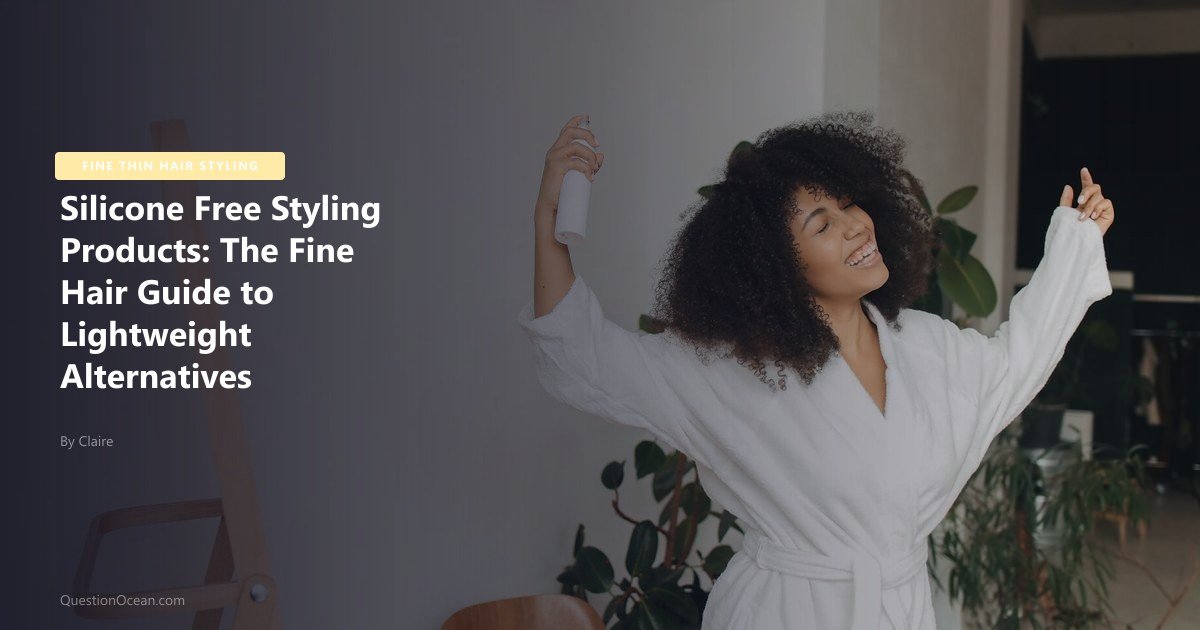
Dimethicone, the most common silicone in hair styling products, coats each strand in a layer that adds approximately 0.8-1.2 microns of thickness to the hair surface. On thick, coarse textures, this coating creates smoothness and shine without a noticeable weight penalty. On fine hair measuring just 50-60 microns in diameter, that silicone layer represents a 2-4% increase in strand diameter, enough cumulative weight to flatten root lift within 3-4 hours of styling and turn a voluminous blowout into a limp, greasy-looking result.
Switching to silicone free styling products eliminates this invisible weight while maintaining the slip, shine, and manageability that silicones are valued for. This guide teaches you to identify hidden silicones on ingredient labels, understand what makes them problematic for fine hair specifically, and select plant-based polymer alternatives that deliver comparable performance at a fraction of the weight.
The Weight Problem: How Dimethicone Undermines Fine Hair Volume
Silicones are used in styling products for three reasons: they reduce friction between strands (slip), create a reflective coating (shine), and fill microscopic gaps in the cuticle surface (smoothness). These benefits are real and measurable. The problem for fine-haired users is not that silicones are inherently bad. It is that their weight-to-benefit ratio works against volume.
Dimethicone is the heaviest commonly used hair silicone, with a viscosity range of 100-12,500 centistokes (cSt) depending on formulation. High-viscosity dimethicone (above 1,000 cSt) creates the most dramatic smoothing effect but also deposits the heaviest coating on the strand. Over 3-5 applications between washes, these layers accumulate. A phenomenon called silicone buildup. Adding measurable weight to each strand that compounds the flat, volume-free appearance fine hair already struggles with.
The accumulation effect is the critical issue. A single application of a dimethicone-containing serum may produce beautiful results on day one. By day three without clarifying, the layered coating weighs fine strands down progressively more, creating the greasy, flat appearance that many fine-haired users attribute to their natural texture rather than to product accumulation.
Our complete fine hair styling guide covers the full approach to building volume on fine textures, with product weight management as a foundational principle across all recommendations.
Decoding Ingredient Labels: Hidden Silicone Names
Product labels rarely list “silicone” as an ingredient. Instead, silicones appear under their chemical names, many of which do not obviously read as silicones to consumers unfamiliar with cosmetic chemistry.
High-Weight Silicones to Avoid on Fine Hair
These silicones deposit the heaviest coating and are the most difficult to remove without clarifying shampoo:
- Dimethicone, the most common and heaviest hair silicone; appears in serums, leave-in conditioners, and heat protectants
- Amodimethicone, an amino-modified silicone that bonds to damaged cuticle areas; builds up selectively on porous sections
- Dimethiconol, a higher molecular weight variant of dimethicone that creates an even thicker coating
- Cetyl dimethicone, a waxy silicone used in styling creams and balms; extremely heavy on fine hair
- Stearyl dimethicone: another waxy variant common in smoothing balms and anti-frizz creams
Water-Soluble Silicones (Lower Risk)
Some silicones are formulated to wash out with regular (non-clarifying) shampoo. These carry lower buildup risk but still add strand weight:
- Dimethicone copolyol. Water-soluble; washes out more easily but still coats the strand
- PEG-modified dimethicone (PEG-8 dimethicone, PEG-12 dimethicone), designed for easy removal
- Cyclomethicone (cyclopentasiloxane). A volatile silicone that evaporates partially after application; lighter than dimethicone but not weightless
Silicone-Adjacent Ingredients That Mimic Silicone Behavior
Some ingredients function like silicones but carry different names:
- Phenyl trimethicone: a lighter silicone that adds shine without the heavy coating of dimethicone; acceptable in small amounts on fine hair
- Trimethylsilylamodimethicone: a lightweight conditioning silicone; lower buildup than amodimethicone but still accumulates over time
The simplest identification rule: if an ingredient name ends in “-cone,” “-conol,” “-siloxane,” or “-silane,” it is a silicone. This covers approximately 95% of silicone variants used in styling products.
Silicone Free Styling Spray, lightweight formula for fine hair
Are Silicones Bad for Fine Hair?
Silicones are not cosmetically harmful to fine hair, but they are counterproductive to volume. The coating they create serves a smoothing and shine purpose, but that coating comes with weight that fine hair cannot support without losing lift.
The question is not whether silicones damage hair (they do not. They sit on the surface and wash off). The question is whether the trade-off of smoothness for lost volume is worth it for your specific styling goals.
For fine-haired users whose primary goal is volume and lift, silicone free styling products eliminate the most significant source of invisible product weight. For fine-haired users whose primary goal is frizz control and smoothness, a lightweight water-soluble silicone (dimethicone copolyol or cyclomethicone) used sparingly on the mid-shaft and ends: never at the roots, provides shine benefits with manageable buildup.
Users with high porosity fine hair face an additional consideration: their more open cuticle structure absorbs and traps silicones more readily than low-porosity hair, accelerating the buildup timeline. For porosity-specific guidance on managing coating products, see the lightweight oils guide for high porosity hair.
Plant-Based Polymer Alternatives That Maintain Slip
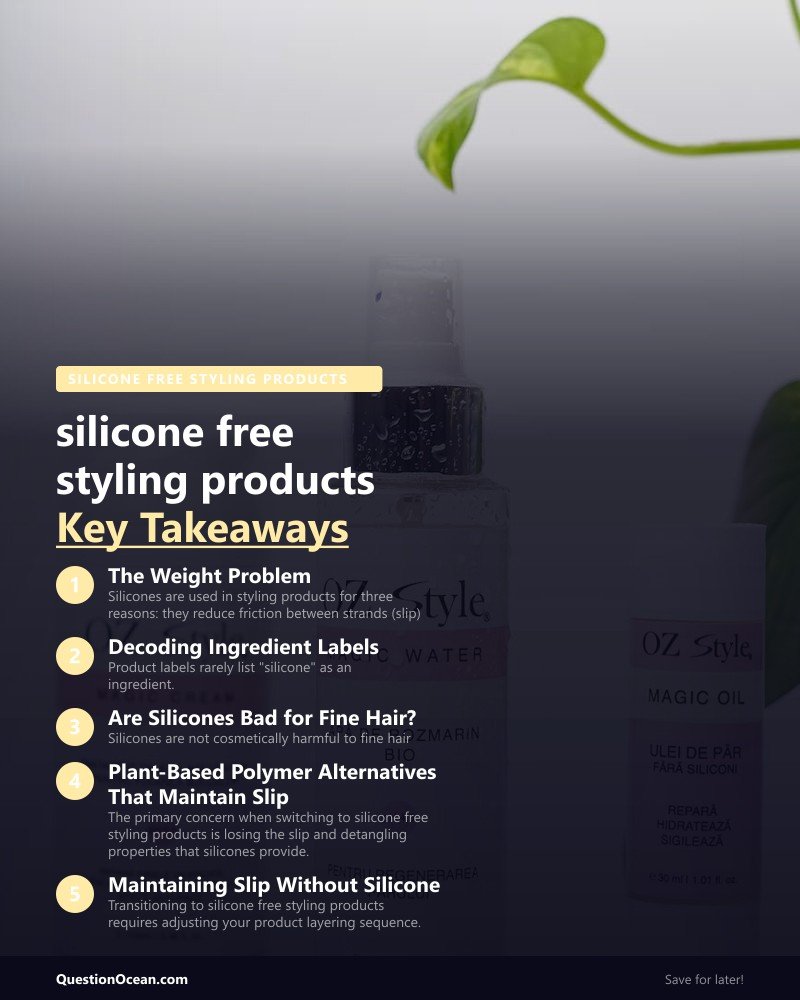
The primary concern when switching to silicone free styling products is losing the slip and detangling properties that silicones provide. Without some form of surface coating, fine hair tangles more easily, combs pull rather than glide, and the finished style can feel rough rather than smooth.
Plant-based polymers offer a compelling middle ground: they coat the strand lightly enough to provide slip and manageability without the cumulative weight buildup of silicones.
Hydrolyzed Plant Proteins
Hydrolyzed wheat protein, rice protein, and quinoa protein are the most effective silicone alternatives for fine hair slip and body. These proteins are processed into small molecular fragments (under 1,000 daltons) that bond temporarily to the cuticle surface, filling microscopic gaps and creating a smooth texture that allows strands to slide past each other without tangling.
Unlike silicones, hydrolyzed plant proteins wash out completely with regular sulfate-free shampoo, no clarifying required. They also add a temporary thickening effect to each strand, increasing the apparent diameter by 5-10% without the weight penalty of dimethicone.
Natural Gums and Gel-Forming Agents
Plant-based gums provide hold and definition in silicone free styling products:
- Xanthan gum — creates a flexible gel matrix that holds volume and defines texture; commonly used in curl-defining creams and volumizing gels
- Guar hydroxypropyltrimonium chloride, a cationic guar derivative that coats the strand for detangling and slip; significantly lighter than dimethicone
- Aloe vera leaf juice, provides light hold, moisture, and slip in leave-in formulas; evaporates partially, leaving minimal residue
- Flaxseed extract (linum usitatissimum). A gel-forming agent that creates a lightweight, flexible hold with natural shine
Vegetable-Derived Esters
Vegetable esters mimic the smoothing and shine effects of silicones:
- Coco-caprylate: a coconut-derived ester that feels silky and lightweight; provides slip without coating weight
- Isoamyl laurate, a plant-derived emollient that smooths the cuticle surface with a dry, non-greasy finish
- Cetearyl olivate. An olive-derived emulsifier that creates a thin conditioning layer
These ingredients appear increasingly in 2026 silicone free styling products marketed specifically for fine and low-density hair. Check for them on labels as indicators of a silicone-free formula designed for volume rather than weight.
Maintaining Slip Without Silicone: The Daily Routine
Transitioning to silicone free styling products requires adjusting your product layering sequence. Without silicone coating the strand, other products in your routine need to fill the slip and detangling role.
The Silicone-Free Styling Sequence for Fine Hair
- Wash with a gentle sulfate-free shampoo, silicone-free shampoos containing coco-glucoside or decyl glucoside cleanse without stripping
- Condition with a lightweight rinse-out conditioner, apply only from mid-shaft to ends; look for guar derivatives or hydrolyzed proteins as the conditioning agents
- Apply a leave-in detangling spray, plant-protein-based formulas (hydrolyzed wheat, rice, or quinoa protein) provide slip without silicone weight
- Apply volumizing mousse or root spray: at the roots only; choose formulas with PVP or VP/VA copolymer for structural lift
- Blow-dry with a round brush: the polymer-based products activate with heat, creating volume and body
- Finish with a lightweight flexible-hold spray, skip silicone-based shine sprays entirely; natural shine comes from smooth, well-conditioned cuticle
The critical adjustment is adding a plant-protein leave-in detangling step that replaces the slip silicones previously provided. Without this step, the hair feels rough and tangles during blow-drying, leading many users to conclude that silicone-free products do not work for their hair, when the actual problem is missing the slip replacement layer.
For weightless volumizing mousses that pair well with silicone-free routines, PVP-based formulas provide hold and body without silicone in the ingredient list.
Reading “Silicone-Free” Marketing Claims
Not all products labeled “silicone-free” are genuinely free of all silicone variants. Marketing regulations in the US, UK, and Canada allow brands to make “free from” claims that reference only the most commonly recognized silicones: while including less-known variants that perform identically.
Always verify the ingredient list rather than relying on front-label claims. A product labeled “dimethicone-free” may still contain amodimethicone, cyclomethicone, or phenyl trimethicone. Apply the “-cone, -conol, -siloxane, -silane” identification rule to the full ingredient list regardless of marketing language.
Products certified by organizations like the Environmental Working Group (EWG) or carrying the Leaping Bunny certification undergo more rigorous ingredient screening. While these certifications focus on different criteria (safety and cruelty-free, respectively), products that meet their standards tend to have cleaner, more transparent ingredient lists.
Brands Known for Genuinely Silicone-Free Formulas
- Innersense (US/UK/CA availability), entire line is silicone-free with plant-protein conditioning
- Rahua (US/UK/CA availability), uses ungurahua oil and plant proteins instead of silicones
- Acure (primarily US/CA), budget-friendly silicone-free formulas available at Target, Walmart, and Shoppers Drug Mart
- Faith in Nature (primarily UK, expanding to US/CA), affordable plant-based formulas free of all silicone variants
Silicone Free Leave-In Conditioner, plant-protein formula for fine hair
The Transition Period: What to Expect
Switching from silicone-containing to silicone free styling products produces a noticeable transition period lasting 2-4 weeks. During this phase, the hair may feel rougher, tangier, and less smooth than it did with silicone coatings.
This transition period is normal and temporary. What you are feeling is your hair’s actual uncoated texture: after months or years of silicone buildup created an artificially smooth surface. As the accumulated silicone washes away over 3-5 shampoo sessions (faster with one clarifying wash), the hair returns to its natural cuticle texture.
Within 2-4 weeks, the plant-protein and natural-gum conditioning agents in your new products build their own lightweight conditioning layer. The hair will feel smooth and manageable again, but without the progressive weight accumulation that silicones created.
During the transition:
- Use a clarifying shampoo once in the first week to accelerate silicone removal
- Apply a protein-based deep conditioner to restore surface smoothness
- Use a wide-tooth comb with a detangling spray rather than brushing, to reduce friction on the temporarily rougher cuticle
- Expect 15-20% more volume within the first two weeks as silicone weight lifts from the strands
For maintaining volume between washes during the transition, dry shampoos for fine hair absorb oil without adding silicone-based coating back onto clean strands.
Frequently Asked Questions
Q: Are silicones bad for fine hair? A: Silicones are not cosmetically harmful, but they are counterproductive for volume. The coating adds weight that fine hair cannot support without losing lift. Switching to silicone free styling products eliminates the most significant source of invisible product weight for fine textures.
Q: How do I know if a product contains silicone? A: Check the ingredient list for names ending in “-cone,” “-conol,” “-siloxane,” or “-silane.” Common silicones include dimethicone, amodimethicone, cyclomethicone, and dimethiconol. Do not rely on front-label “silicone-free” claims: always verify the full ingredient list.
Q: What can I use instead of silicone for smooth hair? A: Hydrolyzed plant proteins (wheat, rice, quinoa) provide slip and smoothness. Natural gums (xanthan, guar) add flexible hold. Vegetable esters (coco-caprylate, isoamyl laurate) mimic the silky feel of silicone without weight accumulation.
Q: Will my hair feel rough without silicone? A: There is a 2-4 week transition period where hair feels rougher as existing silicone buildup washes away. After this phase, plant-protein conditioning agents create their own lightweight smoothing layer. Using a detangling spray during the transition prevents tangling.
Q: Do silicone-free products work as well as silicone products? A: For volume and lift on fine hair, silicone free styling products consistently outperform silicone-containing alternatives because they do not add cumulative coating weight. For smoothing and frizz control on thick or coarse hair, silicones may still be preferred.
Q: How do I remove existing silicone buildup? A: One wash with a clarifying shampoo containing sulfates (sodium lauryl sulfate or sodium laureth sulfate) removes most accumulated silicone. Follow with a deep conditioner to restore moisture. Regular sulfate-free shampoo cannot fully remove non-water-soluble silicones like dimethicone.
Silicone free styling products give fine hair access to the full volume potential that silicone coatings suppress. The combination of plant-based polymers, hydrolyzed proteins, and natural gum conditioning agents provides the slip and manageability fine-haired users need — without the invisible weight that flattens every blowout by the afternoon.