
Quick answer: You can, but you shouldn’t. Silk bonnets are designed for sleeping, not for water exposure. Silk is a protein fiber that weakens when wet, and repeated water exposure will shrink, stain, and degrade the fabric. It also won’t keep your hair dry the way a waterproof shower cap does. If your goal is to protect your hair in the shower, use a waterproof shower cap. If your goal is to preserve a style while showering quickly, a satin-lined shower cap gives you the best of both worlds.
What Happens When Silk Gets Wet
Last updated: June 3, 2026
Silk is made of fibroin, a natural protein produced by silkworms. When fibroin absorbs water, several things happen:
| What Happens | Why It Matters |
|---|---|
| Silk fibers lose 15-20% of their strength when wet | The bonnet becomes fragile and tears more easily |
| Water causes the weave to tighten and shrink | Your bonnet gradually gets smaller with each exposure |
| Hot water accelerates degradation | Shower-temperature water damages silk faster than cold water |
| Shampoo/conditioner residue stains silk | Products in shower steam settle on the fabric and leave marks |
| Silk takes a long time to dry | A wet bonnet pressed against your hair creates a damp environment that encourages bacteria and mildew |
The bottom line: A $15-40 silk bonnet used repeatedly in the shower will degrade within weeks. You’ll end up needing to replace it far sooner than if you reserved it for nighttime use only.
When a Silk Bonnet in the Shower Might Make Sense (Rare Cases)
There are a few situations where wearing a silk bonnet briefly in the shower isn’t terrible:
- Quick body shower (2-3 minutes) without washing hair. If you’re not getting your head under the water and the shower steam exposure is minimal, the bonnet will survive. But a shower cap would still be better.
- You’re protecting a twist-out or braid-out from humidity while showering. Silk preserves curl definition better than a plastic shower cap that creates condensation inside. However, a satin-lined shower cap does this even better.
- Emergency/travel situation where you don’t have a shower cap. A silk bonnet used once in the shower won’t ruin it. Making it a habit will.
Better Alternatives for Shower Hair Protection
Option 1: Standard Waterproof Shower Cap ($3-8)
Pros: Fully waterproof, cheap, widely available, easy to clean Cons: Plastic creates condensation inside, which can cause frizz on curly hair. No fabric lining means friction against your edges. Best for: Simple hair protection on non-wash days
Option 2: Satin-Lined Shower Cap ($12-20)
Pros: Waterproof exterior + satin interior (protects style AND keeps hair dry). No condensation-induced frizz because the satin absorbs some moisture. Cons: More expensive, harder to find, needs gentle cleaning Best for: Curly/coily hair that needs style preservation AND water protection
Option 3: Deep Conditioning Cap (Reusable, Heat-Trapping)
Pros: Designed to be used in the shower. Waterproof outside, heat-trapping inside. Great for deep conditioning days. Cons: Not for daily use (too warm for quick showers) Best for: Wash days when you want to deep condition while showering
Silk Bonnet vs. Satin Bonnet: Which Is Better for Hair?
Since this question comes up in the bonnet conversation, here’s the comparison:
| Factor | Silk Bonnet | Satin (Polyester) Bonnet |
|---|---|---|
| Friction | Lowest | Very low (nearly as smooth as silk) |
| Moisture absorption | Absorbs very little (good for hair retention) | Absorbs none (synthetic doesn’t absorb) |
| Durability | Delicate, weakens with water/washing | Durable, machine washable |
| Price | $15-40 | $5-15 |
| Breathability | Excellent (natural fiber) | Moderate (synthetic) |
| Water resistance | Poor | Poor (but survives water better than silk) |
| Best for | Nighttime use, protecting styled curls | Nighttime + more versatile daily use |
Verdict: Silk is technically slightly better for hair (lower friction, better breathability), but satin gives 90% of the benefit at a third of the price and survives much more abuse. For most people, satin is the practical choice.
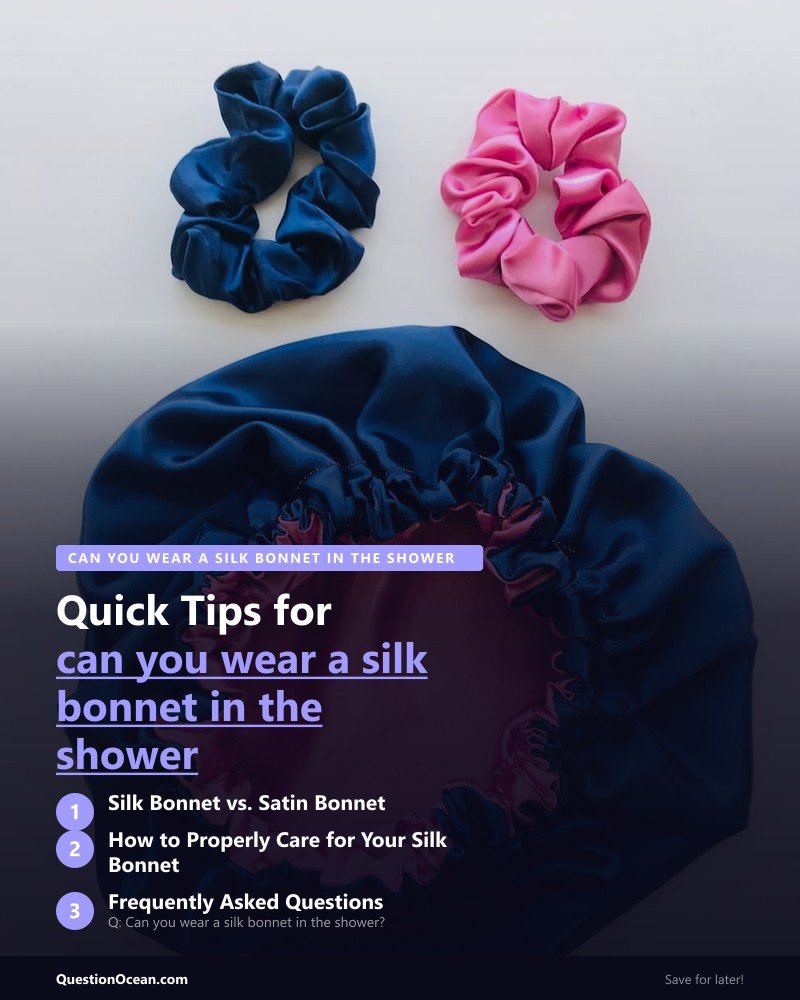
How to Properly Care for Your Silk Bonnet
Since the bonnet should be reserved for sleeping (not showering), here’s how to keep it in good condition:
| Care Step | How Often | Method |
|---|---|---|
| Washing | Every 5-7 wears | Hand wash in cold water with gentle soap/shampoo |
| Drying | After every wash | Lay flat on a towel, never wring or twist |
| Storage | When not in use | Keep in a breathable bag or drawer (not in a damp bathroom) |
| Replacing | Every 6-12 months | Even with good care, silk degrades from oils and friction |
Never machine wash silk. The agitation and heat destroy the fiber structure. Hand washing in cold water preserves the smoothness that makes silk useful for hair in the first place.
Frequently Asked Questions
Q: Can you wear a silk bonnet in the shower? A: Technically yes, but it’s not recommended. Silk weakens when wet, shrinks over time, and won’t keep your hair dry. Use a waterproof shower cap instead, or a satin-lined shower cap if you want style preservation.
Q: Will wearing a silk bonnet in the shower ruin it? A: One time won’t destroy it. Regular shower use will degrade the silk within weeks: shrinking, weakening, and staining from product residue in the steam.
Q: What can I use instead of a silk bonnet in the shower? A: A satin-lined shower cap is the best alternative. It has a waterproof exterior that actually keeps water out, plus a satin interior that protects your hair style and edges. Standard plastic shower caps work for basic protection.
Q: Is satin or silk better for a bonnet? A: Silk is slightly smoother and more breathable. Satin (polyester) is more durable, cheaper, and easier to care for. For practical daily use, satin is the better value. For the absolute gentlest nighttime protection, silk is marginally better.
Q: How often should I replace my silk bonnet? A: Every 6-12 months with proper care. If you notice the silk feeling rougher, thinner, or less smooth, it’s lost the properties that make it beneficial for hair and needs replacing.
Keep your silk bonnet for what it does best: protecting your hair while you sleep. For the shower, invest in a proper waterproof cap. Using the right tool for the right job means both your bonnet and your hairstyle last longer.
For the complete 4C nighttime routine, see our 4C hair care guide.