
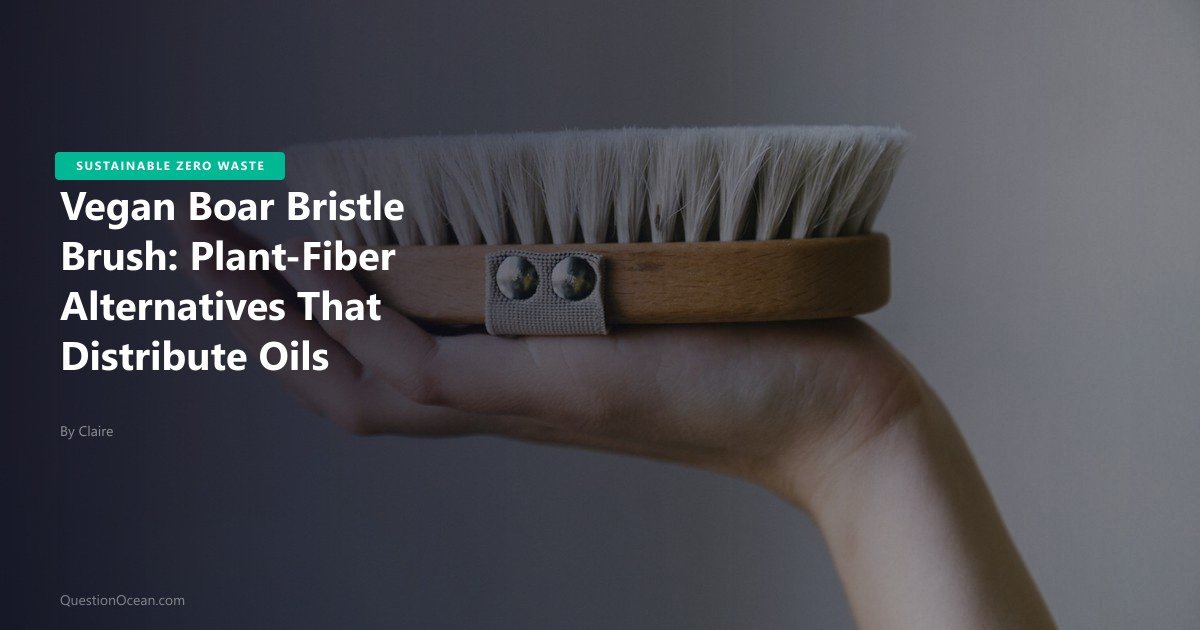
Boar bristle brushes have dominated the natural haircare space for decades because of one specific property: their scaled surface structure catches and distributes sebum from the roots along the full length of each strand. A vegan boar bristle brush built from plant fibers can replicate this function, but only if the fiber type matches the mechanical properties of animal hair. The wrong plant fiber delivers zero sebum distribution and tears through the cuticle instead of smoothing it.
Sisal, tampico, and agave fibers each mimic different aspects of boar bristle performance, and choosing the right one depends on your hair texture, styling goal, and willingness to break in the brush. Our complete guide to sustainable zero-waste haircare covers the broader eco-friendly tool landscape. This article breaks down the specific fiber science, product comparisons, and technique adjustments that make plant-based brushes a genuine functional replacement. Not just an ethical compromise.
How Boar Bristle Works: The Mechanism You Need to Replicate
Boar bristle achieves its signature smoothing and oil-distributing effect through three physical properties working together. Understanding these properties is essential for evaluating whether a plant-fiber alternative actually delivers equivalent results.
The scaled cuticle structure of boar hair is the primary mechanism. Each boar bristle has overlapping keratin scales (similar to human hair) that catch microscopic droplets of sebum at the root zone and physically transport them down the strand through brushing motion. Smooth synthetic bristles — nylon, for instance, slide over sebum without catching it, which is why plastic brushes feel slippery but never distribute oils effectively.
The second property is stiffness gradient. A boar bristle is stiffer at the base and more flexible at the tip, which allows it to penetrate through hair layers to reach the scalp without scratching. This gradient creates a brushing sensation that feels firm at the root and gentle at the ends.
The third property is diameter. Boar bristles average 60-90 microns in diameter, thin enough to pass between individual hairs without creating drag, but thick enough to maintain structural rigidity through a full stroke.
Any vegan alternative must match at least two of these three properties to function as a genuine replacement rather than a marketing claim.
What Is a Vegan Alternative to Boar Bristle?
The most effective vegan alternative to boar bristle is a sisal-fiber brush, which replicates the scaled surface texture and stiffness gradient more closely than any other plant material. Sisal fibers come from the Agave sisalana plant, harvested primarily in East Africa and Brazil, and have been used in industrial brushes and textiles for over a century.
Sisal’s surface under magnification reveals a micro-ridged texture that functions similarly to the overlapping scales on boar hair. These ridges catch sebum and carry it along the strand during brushing. The fiber is naturally stiff at the base and tapers to a finer, more flexible tip. Mirroring the stiffness gradient of boar bristle almost exactly.
The main limitation of sisal is diameter. Sisal fibers average 100-200 microns, roughly double the diameter of boar bristle. This makes sisal brushes feel slightly coarser on the scalp and means they work better for medium-to-thick hair than for very fine strands under 50 microns.
For fine hair, tampico fiber (from the Agave lechuguilla plant) offers a thinner alternative at 50-80 microns, much closer to the boar bristle range. Tampico is softer and more flexible than sisal, making it gentler on the scalp but slightly less effective at penetrating through dense hair layers.
Sisal Fiber Brushes: Best for Thick and Medium Hair
Sisal-bristle brushes deliver the strongest sebum distribution of any plant-fiber option. The coarse, ridged fibers grip oil effectively and transport it from root to tip within 30-40 brush strokes: comparable to the 25-30 strokes typically needed with a genuine boar bristle brush.
Breaking In a New Sisal Brush
New sisal bristles feel rough and scratchy for the first 1-2 weeks of use. This is normal and temporary. The fiber tips soften with repeated contact against hair and scalp oils, creating a polished surface that glides more smoothly over time.
Speed up the break-in process by applying 2-3 drops of jojoba oil directly to the bristle tips and working it through with your fingers. Leave the oil on the bristles overnight, then brush through dry hair the next morning. Repeat every other day for the first week. The oil conditions the fiber tips without affecting their sebum-catching surface texture.
Styling Applications
Sisal brushes excel at:
- Smoothing blowouts: The stiff fibers create tension against the hair shaft similar to a round boar bristle brush, producing a sleek, polished finish with natural shine from distributed sebum
- Pre-wash oil distribution: Brush through dry hair before shampooing to spread scalp oils from root to tip, reducing the need for conditioner on mid-lengths
- Static reduction: The natural fiber generates less static electricity than nylon or plastic alternatives, making it ideal for dry winter months in Canadian and northern US climates
Sisal Bristle Hair Brush, natural agave fiber, wooden handle
Tampico Fiber Brushes: The Fine-Hair Solution
Tampico fiber, harvested from wild agave plants in northern Mexico, fills the gap that sisal cannot: effective sebum distribution for fine and delicate hair. At 50-80 microns per fiber, tampico matches the diameter range of boar bristle almost exactly.
Tampico’s flexibility makes it the gentlest plant-fiber option available, with a bend resistance approximately 40% lower than sisal. This flexibility allows the fibers to pass through fine hair without pulling or snagging, while the micro-textured surface still catches and transports sebum along each strand.
The trade-off is durability. Tampico fibers wear down faster than sisal. Expect 18-24 months of daily use before the bristles lose their structural integrity, compared to 3-5 years for sisal. This shorter lifespan still exceeds most synthetic brushes (6-12 months) and remains competitive with boar bristle brushes (2-3 years).
Best Tampico Brush Applications
- Daily scalp stimulation: The soft, flexible tips provide gentle cosmetic massage without irritation, making tampico ideal for sensitive scalps
- Detangling fine hair: The thin fibers slip between strands without creating the resistance that causes breakage in fine, low-density hair
- Distributing lightweight serums: Apply a few drops of serum to the bristle tips and brush through for even distribution without over-saturating any section
If you also use biodegradable hair ties and accessories, tampico brushes pair well with fabric-wrapped elastics for a fully plant-based styling toolkit.
Agave and Cactus Fiber: Emerging Alternatives
Beyond sisal and tampico, several newer plant fibers are entering the vegan brush market in 2026.
Mexican Cactus Fiber (Ixtle)
Ixtle fiber comes from several agave and yucca species and sits between sisal and tampico in both diameter (70-120 microns) and stiffness. It offers a middle-ground option for medium-textured hair and is increasingly available from artisan brush makers in North America.
Coconut Coir
Coconut fiber is too coarse (150-300 microns) for direct scalp contact but works effectively in body brushes and can serve as a heavy-duty detangling tool for very thick, coily hair when used gently on dry sections before washing.
Hemp Fiber
Hemp bristles are experimental in 2026. The fiber’s natural texture shows promise for sebum distribution, but commercial hemp-bristle brushes are not yet widely available in US, UK, or CA markets. Watch for launches from sustainable tool brands in late 2026 and early 2027.
Mimicking Sebum Distribution: Technique Adjustments
Even the best vegan boar bristle brush requires slight technique modifications to match the oil-distributing performance of genuine boar hair. Plant fibers catch sebum differently, and adjusting your brushing method accounts for these material differences.
Start every session by brushing the scalp directly for 15-20 seconds using short, firm strokes. This step loads the bristle tips with sebum before you begin the distribution strokes. Boar bristle catches oil on the first stroke through the hair; plant fibers need this priming step to achieve the same initial oil load.
Then brush from root to tip in long, continuous strokes, 40-50 strokes for sisal, 50-60 for tampico. Tilt the brush at a 30-degree angle rather than pulling straight down. This angle presses the bristle surfaces against each strand at an oblique contact point, maximizing the surface area where micro-ridges catch and transfer oil.
For readers who maintain their wooden brush tools with regular conditioning, our guide to cleaning wooden hair brush tools covers the specific care protocols that keep plant-fiber bristles performing at their peak.
Detangling vs. Styling: Choosing the Right Fiber for the Job
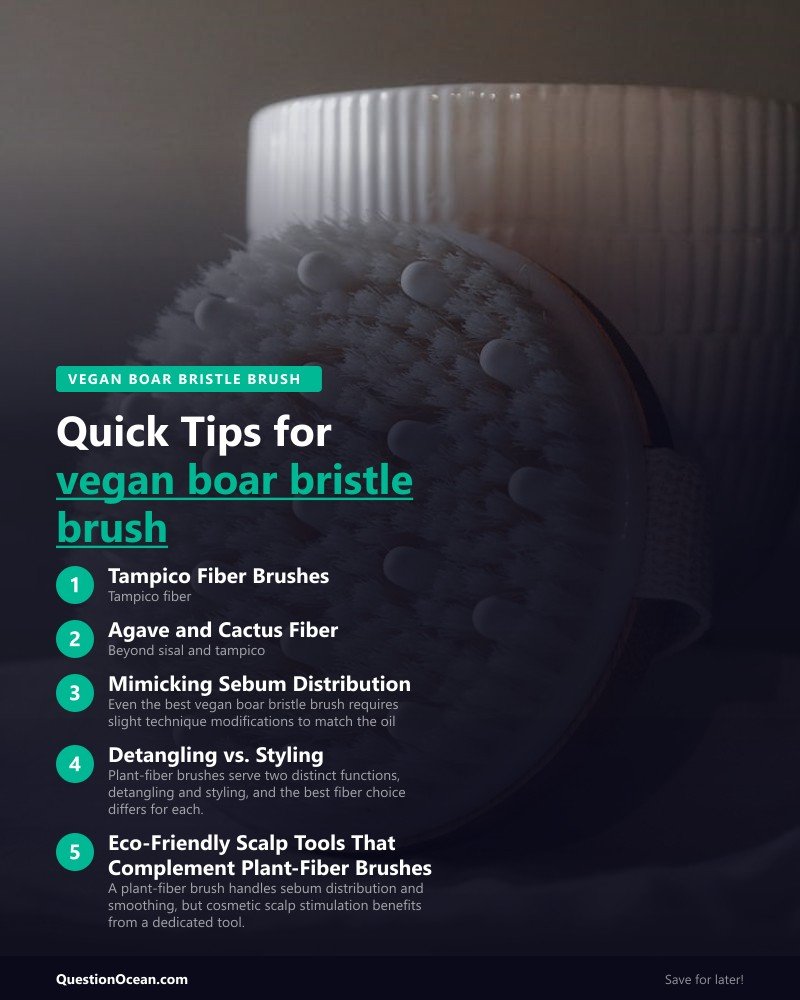
Plant-fiber brushes serve two distinct functions, detangling and styling, and the best fiber choice differs for each.
For Detangling
Tampico and soft agave fibers work best because their flexibility allows them to bend around knots rather than pulling through them. Use the brush on dry hair only, starting at the ends and working upward in 2-3 inch sections. Never force a plant-fiber brush through wet, tangled hair: the rigid fibers lack the give of a wet brush or wide-tooth comb and will cause mechanical breakage.
For Styling and Smoothing
Sisal delivers superior results because the stiffer fibers create the tension needed to smooth the cuticle flat and produce visible shine. Use a sisal paddle brush for straightening and smoothing after blow-drying, or a sisal half-round brush for creating tension during a round-brush blowout.
For Daily Maintenance
A mixed-fiber brush (sisal and tampico combined) offers the best compromise for users who want one brush for both detangling and sebum distribution. The tampico fibers handle knot-free passage through the hair while the interspersed sisal fibers provide the surface grip needed for oil transport.
Tampico Fiber Paddle Brush, fine-hair friendly, bamboo handle
Eco-Friendly Scalp Tools That Complement Plant-Fiber Brushes
A plant-fiber brush handles sebum distribution and smoothing, but cosmetic scalp stimulation benefits from a dedicated tool. Silicone scalp massager brushes designed for scalp-first cosmetic styling routines pair well with vegan bristle brushes. Use the scalp massager during washing and the plant-fiber brush on dry hair between washes.
This two-tool approach delivers comprehensive scalp and strand care without any animal-derived materials. The silicone massager addresses cosmetic exfoliation during the wash step, while the plant-fiber brush manages daily oil distribution and styling.
Frequently Asked Questions
Q: What is a vegan alternative to boar bristle? A: Sisal fiber is the closest vegan match to boar bristle, replicating both the scaled surface texture and the stiffness gradient that make boar brushes effective at distributing sebum from root to tip. For fine hair, tampico fiber (50-80 microns) more closely matches the diameter of boar bristle for gentler performance.
Q: Do vegan brushes distribute oil like boar bristle brushes? A: Yes, but they require a slightly adjusted technique. Prime the bristles by brushing the scalp directly for 15-20 seconds before beginning root-to-tip strokes, and expect to use 40-60 strokes per session compared to 25-30 with boar bristle. The end result. Evenly distributed sebum and enhanced natural shine: is comparable.
Q: How long do plant-fiber brushes last? A: Sisal-bristle brushes last 3-5 years with proper care (regular cleaning, monthly oiling). Tampico-bristle brushes last 18-24 months of daily use. Both lifespans exceed typical synthetic brushes (6-12 months) and are competitive with boar bristle (2-3 years).
Q: Can I use a vegan bristle brush on wet hair? A: No. Plant fibers are more rigid than wet-brush materials and can cause mechanical breakage when forced through wet, tangled strands. Use plant-fiber brushes on dry or nearly dry hair only. For wet detangling, use a wide-tooth comb or a dedicated flexible wet brush.
Q: Are sisal brushes too rough for sensitive scalps? A: New sisal brushes feel coarse for the first 1-2 weeks but soften with use. Speed up the break-in period by conditioning the bristle tips with jojoba oil for three consecutive days. If sensitivity persists, switch to a tampico brush, which offers 40% less stiffness while maintaining sebum-distributing capability.
Q: What is the most eco-friendly hair brush material overall? A: A brush combining a FSC-certified beechwood or bamboo body with sisal or tampico bristles and a natural rubber cushion is the most sustainable option. Every component is biodegradable, plant-derived, and replaceable, eliminating the nylon, plastic, and animal-derived materials found in conventional brushes.
A well-chosen vegan boar bristle brush delivers the sebum distribution, smoothing, and natural shine that made boar bristle famous, without the animal-derived materials. Sisal handles thick hair and heavy-duty styling, tampico manages fine strands and gentle daily maintenance, and both fibers improve with use as the bristle tips develop a polished surface that glides more smoothly with every stroke.