
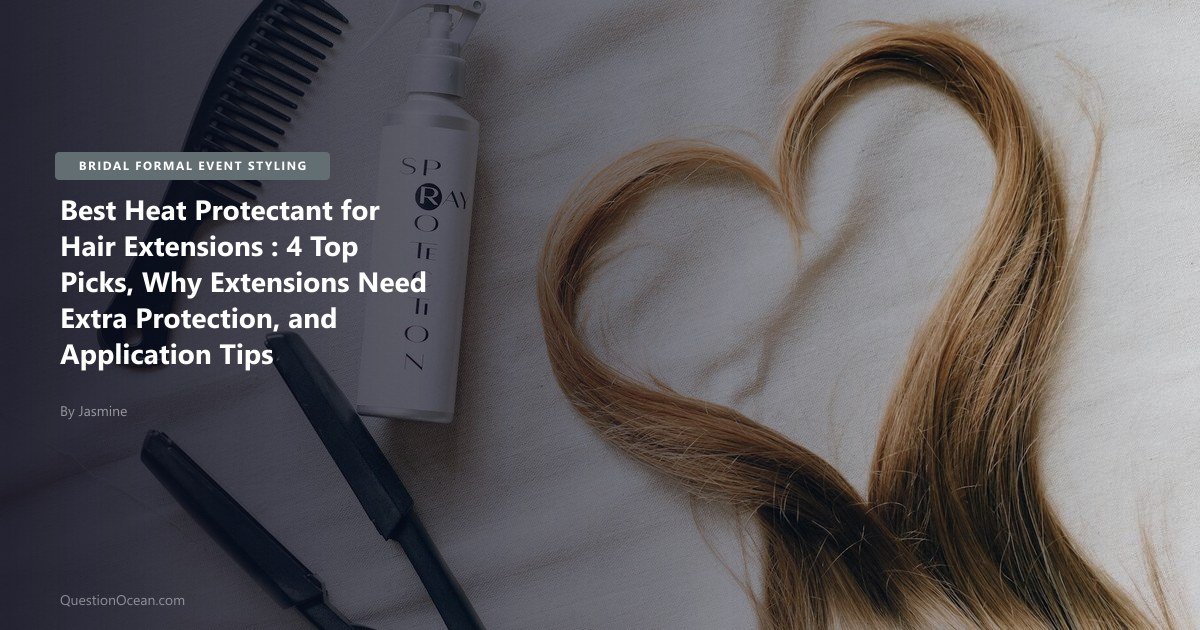
Quick answer: Extensions are more vulnerable to heat damage than natural hair because they can’t self-repair, there’s no follicle producing new oils or replacing damaged protein. Every heat pass causes permanent, cumulative damage. The best heat protectants for extensions are lightweight sprays (not creams or oils) that don’t build up near attachment points. Top picks: Chi 44 Iron Guard Spray ($10-14), Kenra Platinum Blow-Dry Spray ($16-20), and HSI Professional Argan Oil Heat Protector ($11-15).
Why Extensions Need Heat Protection More Than Natural Hair
Last updated: July 7, 2026
Natural hair has a built-in recovery system. The scalp produces sebum that coats new growth. Damaged sections are eventually replaced by new strands growing from the follicle. Living hair is a renewable resource.
Extensions don’t renew. Every bit of heat damage is permanent and cumulative. The keratin protein bonds that break at high temperatures never reform. Over time, unprotected heat styling turns extension hair from silky to straw, and once that happens, the only fix is replacing the extensions.
The financial math makes heat protectant essential:
- A quality set of tape-in or fusion extensions: $200-1,500
- A bottle of heat protectant spray: $10-20
- Replacing extensions 3-6 months early because of heat damage: another $200-1,500
Heat protectant extends extension lifespan by an estimated 30-50%, which translates to months of additional wear and hundreds of dollars saved.
The 4 Best Heat Protectants for Extensions
1. Chi 44 Iron Guard Thermal Protection Spray ($10-14 / 8 oz)
Rating: 8.5/10
The salon workhorse. Protects up to 450°F. Lightweight spray formula that doesn’t build up or leave residue near attachment points. The ceramic-infused formula distributes heat more evenly across the strand, reducing hot spots that cause localized damage.
Why it’s ideal for extensions: Zero residue, zero weight, doesn’t interfere with bonds or tape. Dries invisible. Can be applied to both the extension hair and the natural hair simultaneously without different considerations.
Best for: All extension types (clip-in, tape-in, bonded, sew-in). Daily flat iron and curling iron use.
Heat Protectant Spray for Extensions
2. Kenra Platinum Blow-Dry Spray ($16-20 / 6.8 oz)
Rating: 8/10
Specifically designed for blow-dry heat (lower temperature, longer exposure). Reduces blow-dry time by 50% according to Kenra’s testing. The faster dry time means less total heat exposure: a significant benefit for extensions.
Why it’s ideal for extensions: The time-reduction claim is legitimate in practice. Extensions take longer to blow-dry than natural hair (no scalp heat to help evaporate water), so anything that speeds the process reduces cumulative heat damage.
Best for: Regular blow-drying. Bridal and event styling where blow-dry foundation is critical.
3. HSI Professional Argan Oil Heat Protector ($11-15 / 8 oz)
Rating: 7.5/10
A spray with argan oil that protects up to 450°F. The argan oil adds a light conditioning benefit alongside the heat protection. Leaves a soft shine without heaviness.
Why it’s ideal for extensions: The argan oil combats the dryness that extensions experience (no scalp oil supply). Dual-purpose product: heat protection + moisture in one step.
Best for: Dry or matte-looking extensions that need both heat protection and shine. Flat iron styling.
One caution: The argan oil content means this product is slightly heavier than the Chi or Kenra. On very fine extensions or near tape attachments, the Chi 44 Iron Guard (oil-free) is safer.
4. It’s a 10 Miracle Leave-In Product ($18-24 / 10 oz)
Rating: 7.5/10
A multi-benefit leave-in that provides heat protection up to 450°F plus detangling, moisture, frizz control, and shine. The 10-in-1 approach means fewer products applied to extensions, which reduces buildup risk.
Why it’s ideal for extensions: Replaces multiple products with one. The detangling benefit is valuable — extensions tangle at bond lines, and pre-detangling with a protective product reduces shedding during combing.
Best for: People who want one product for heat protection + daily care. All extension types.
Spray vs Cream vs Oil Heat Protectant for Extensions
| Format | Weight | Buildup Risk | Bond Safety | Best For |
|---|---|---|---|---|
| Spray | Lightest | Lowest | Safest | All extension types, daily use |
| Serum | Light-medium | Low-moderate | Good | Clip-ins (removed nightly), dry extensions |
| Cream | Medium-heavy | Moderate | Risky near bonds | Clip-ins only; avoid near attachment points |
| Oil | Heavy | High | Poor for tape/bonded | NOT recommended for permanent extensions |
The rule: spray format wins for extensions. Sprays distribute evenly without concentrating product near attachment points. Creams and oils migrate toward the scalp with gravity, accumulating at bond and tape lines where they dissolve adhesive and loosen attachments.
How to Apply Heat Protectant to Extensions
Step 1: Detangle first. Never apply product to tangled extensions. Detangle with a wide-tooth comb or extension-specific brush, starting from the ends and working up.
Step 2: Spray from 6-8 inches away. Hold the bottle at arm’s length and mist evenly. Close-range spraying concentrates product in one spot.
Step 3: Focus on mid-shaft to ends. The mid-shaft and ends are the most exposed to heat tools. The root area near attachments should get minimal product.
Step 4: Avoid direct spraying on bonds, tape, or links. Product buildup at attachment points loosens connections. Spray around them, not on them.
Step 5: Let the spray dry for 30-60 seconds before applying heat. Applying heat to wet-with-protectant hair can cause the product to steam, which damages the cuticle from the inside out. Wait until the spray is tacky-dry.
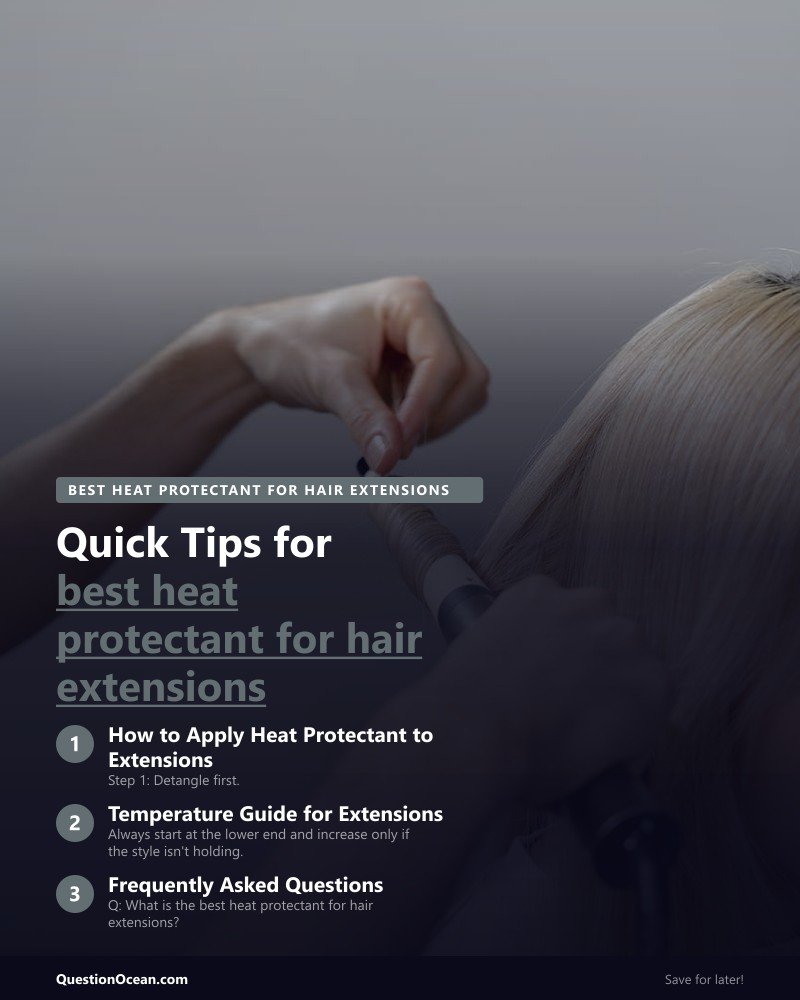
Step 6: Lower your heat setting by 25-50°F. Extensions respond to heat faster than natural hair attached to a warm scalp. 325-350°F on extensions produces the same result as 375-400°F on natural hair.
Temperature Guide for Extensions
| Tool | Natural Hair Temp | Extension Temp | Why Lower |
|---|---|---|---|
| Flat iron | 375-400°F | 300-350°F | No scalp heat, no recovery |
| Curling iron | 350-400°F | 300-350°F | Same, less moisture, more vulnerable |
| Blow dryer | High heat | Medium heat | Extensions dry faster; high heat is excessive |
Always start at the lower end and increase only if the style isn’t holding.
Frequently Asked Questions
Q: What is the best heat protectant for hair extensions? A: Chi 44 Iron Guard Spray ($10-14) for lightweight, residue-free daily protection. HSI Professional Argan Oil Protector ($11-15) for dry extensions that need moisture with heat protection.
Q: Do you need heat protectant for extensions? A: Yes. Even more than for natural hair. Extensions can’t self-repair, so heat damage is permanent and cumulative. Heat protectant extends extension lifespan by 30-50%.
Q: Can I use regular heat protectant on extensions? A: Yes, as long as it’s a lightweight spray without heavy oils or silicones that build up near attachment points. Avoid cream-based heat protectants near bonds or tape.
Q: What temperature should I flat iron extensions? A: 300-350°F, which is 25-50°F lower than you’d use on natural hair. Extensions heat faster and have less moisture to buffer the temperature.
Heat protectant is the cheapest insurance for your extension investment. A $10-20 bottle that extends the life of $500+ extensions by months is one of the smartest purchases in hair care.