
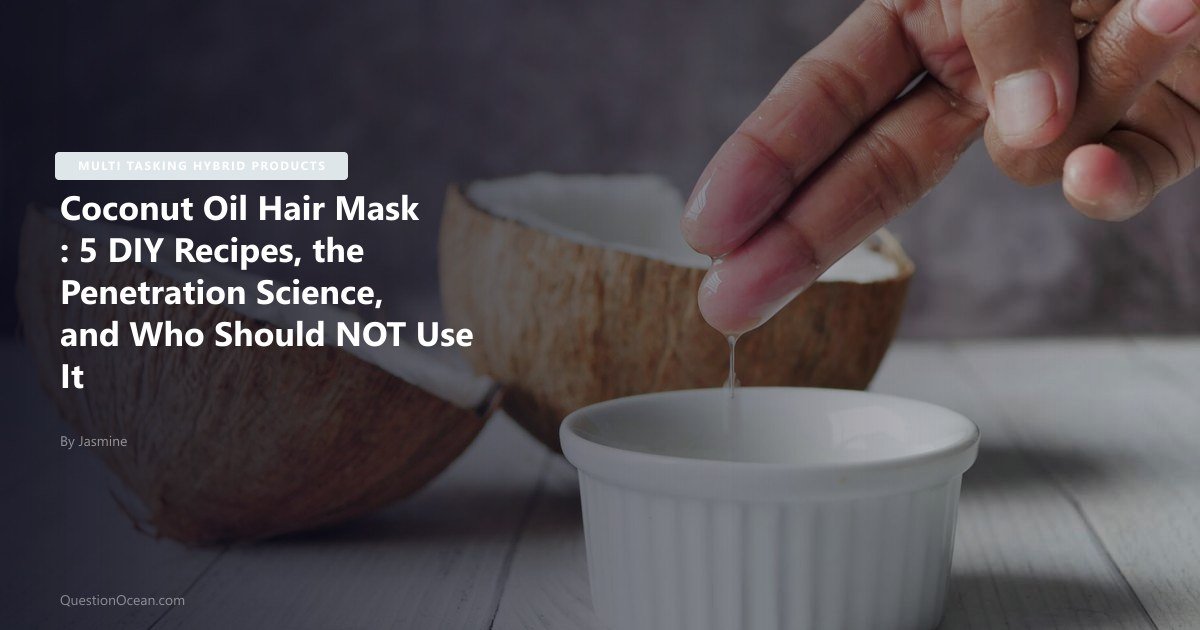
Quick answer: Coconut oil is one of the few oils scientifically proven to penetrate the hair shaft (not just coat the surface). A 2003 study published in the Journal of Cosmetic Science by Rele and Mohile found that coconut oil reduced protein loss by 39% in undamaged hair and 54% in damaged hair. However, coconut oil doesn’t work for everyone, low-porosity hair and protein-sensitive hair often react badly, with results ranging from stiff, crunchy texture to increased breakage.
Why Coconut Oil Is Different From Other Oils
Last updated: July 12, 2026
Most hair oils (argan, jojoba, castor) sit on the hair surface and coat the cuticle. Coconut oil is one of the few that actually penetrates inside the hair shaft. Here’s why:
Lauric acid makes up ~49% of coconut oil’s fatty acid profile. Lauric acid has a small molecular weight and a straight-chain structure that allows it to slip between the cuticle scales and bind to the hair’s internal keratin protein.
| Oil | Penetrates Hair Shaft? | Primary Function |
|---|---|---|
| Coconut oil | Yes (lauric acid penetration) | Internal moisture + protein protection |
| Argan oil | Minimal | Surface conditioning, shine |
| Jojoba oil | No (too large) | Surface seal, sebum mimic |
| Castor oil | No (too thick) | Surface coating, heavy seal |
| Olive oil | Minimal | Surface conditioning |
| Sunflower oil | Yes (linoleic acid) | Internal moisture (lighter than coconut) |
Source: Rele & Mohile, 2003, Journal of Cosmetic Science
The 5 Best DIY Coconut Oil Hair Masks
Mask 1. Basic Deep Moisture (All Hair Types)
Ingredients:
- 2 tablespoons virgin coconut oil (warm until liquid)
- 1 teaspoon honey (humectant: draws moisture in)
Method:
- Warm coconut oil between palms until fully liquid
- Mix in honey
- Apply to damp hair from mid-shaft to ends (avoid roots if oily)
- Cover with a shower cap
- Leave 30-60 minutes
- Shampoo twice to remove fully
Best for: Normal to dry hair needing a moisture boost
Mask 2: Protein Repair (Damaged/Chemically Treated)
Ingredients:
- 2 tablespoons virgin coconut oil
- 1 egg (protein source)
- 1 tablespoon honey
Method:
- Whisk egg and honey together FIRST
- Add melted coconut oil and mix
- Apply to damp hair, focusing on damaged areas
- Cover with shower cap, leave 20-30 minutes
- Rinse with COOL water first (warm water cooks the egg), then shampoo
Best for: Color-treated, heat-damaged, or bleached hair
Important: Use cool water to rinse. Warm water will cook the egg in your hair. Not a pleasant experience.
Mask 3, Scalp Treatment (Dry/Flaky Scalp)
Ingredients:
- 1 tablespoon virgin coconut oil
- 3 drops tea tree essential oil (antifungal)
- 3 drops peppermint essential oil (stimulating)
Method:
- Mix oils together
- Part hair into sections
- Apply directly to the scalp with fingertips
- Massage in circular motions for 3-5 minutes
- Leave 30 minutes to overnight
- Shampoo thoroughly
Best for: Dry, itchy scalp (not for oily scalps)
Mask 4. Frizz Control (Humid Climates)
Ingredients:
- 1 tablespoon virgin coconut oil
- 1 tablespoon plain yogurt (lactic acid smooths cuticle)
- 1 teaspoon avocado oil (adds slip)
Method:
- Mix all ingredients until smooth
- Apply to damp hair, scrunching into curls if applicable
- Leave 20-30 minutes under shower cap
- Rinse and shampoo once
Best for: Type 2C-3C hair in humid environments
Mask 5, Lightweight Moisture (Fine Hair)
Ingredients:
- 1 teaspoon virgin coconut oil (note: teaspoon, not tablespoon)
- 2 tablespoons aloe vera gel (lightweight moisture)
Method:
- Mix coconut oil into aloe vera gel
- Apply sparingly to damp hair. Ends only for fine hair
- Leave 15-20 minutes (shorter time for fine hair)
- Rinse thoroughly and shampoo
Best for: Fine hair that needs moisture without weight. The aloe vera dilutes the coconut oil enough to prevent the heaviness that pure coconut oil creates on fine strands.
Who Should NOT Use Coconut Oil
Low-Porosity Hair
Low-porosity hair has a tightly sealed cuticle. Coconut oil trying to penetrate into an already-closed cuticle creates a coating that sits on top, making hair feel waxy, stiff, and heavy. The oil can’t get in, so it just builds up.
Signs you have low-porosity hair:
- Water beads on hair surface instead of absorbing quickly
- Products sit on top of hair rather than sinking in
- Hair takes a very long time to dry
- Hair strand floats in a glass of water for 2+ minutes
If you have low-porosity hair: Use lighter oils like argan or grapeseed that are designed to condition the surface without trying to penetrate.
Protein-Sensitive Hair
Coconut oil’s ability to bind with keratin protein inside the hair shaft means it essentially acts as a protein treatment. For hair that’s already protein-overloaded, this makes things worse, resulting in stiff, brittle, straw-like texture that’s prone to snapping.
Signs of protein overload:
- Hair feels stiff and crunchy even when wet
- Hair snaps instead of stretching
- Hair lost its elasticity after a protein treatment
If you’re protein-sensitive: Use moisture-only oils like argan or jojoba instead.
Very Fine Hair (Use Caution)
Coconut oil is one of the heavier oils. On very fine hair (50-60 micrometers per strand), even a small amount can weigh strands down and create a greasy, flat appearance. If you have fine hair and want to try coconut oil, use Mask 5 above — the diluted version with aloe vera.
How Often to Use Coconut Oil Masks
| Hair Type | Frequency | Duration |
|---|---|---|
| Dry, damaged, high-porosity | 1-2× per week | 30-60 minutes |
| Normal, medium porosity | 1× per week | 20-30 minutes |
| Fine hair | 1× every 2 weeks | 15-20 minutes |
| Color-treated | 1× per week | 20-30 minutes |
| Low-porosity | Avoid, or test tiny amount first | 15 minutes max |
Coconut Oil Mask Tips (Common Mistakes to Avoid)
Mistake 1: Applying to dry hair. Coconut oil masks work best on damp hair: the water helps the oil distribute evenly and the slightly open cuticle from warm water allows better penetration.
Mistake 2: Using too much. More oil doesn’t mean more benefit. 1-2 tablespoons is enough for shoulder-length hair. Excess oil just requires more shampooing to remove, which strips the benefit you just added.
Mistake 3: Not shampooing enough after. Coconut oil is heavy. One shampoo often isn’t enough to remove it. Shampoo twice, or use a gentle clarifying shampoo once.
Mistake 4: Applying to roots on oily scalps. If your scalp is already oily, coconut oil on the roots makes it worse. Apply mid-shaft to ends only.
Mistake 5: Using refined coconut oil. Refined (processed) coconut oil has had some of the beneficial fatty acids stripped out during processing. Use virgin or extra-virgin coconut oil for hair treatments. The lauric acid content is higher.
Refined vs. Virgin Coconut Oil for Hair
| Type | Lauric Acid Content | Scent | Best For |
|---|---|---|---|
| Virgin/Extra-Virgin | ~49% (highest) | Strong coconut scent | Hair masks (maximum penetration) |
| Refined | ~44% (lower) | Minimal scent | People who dislike coconut scent |
| Fractionated (MCT) | Very low (lauric acid removed) | No scent | NOT for hair masks (doesn’t penetrate) |
Important: Fractionated coconut oil (often sold as “MCT oil”) has had the lauric acid removed for dietary supplement use. Without lauric acid, it loses the property that makes coconut oil special for hair. Don’t use MCT oil as a hair mask.
Frequently Asked Questions
Q: How long should I leave coconut oil in my hair? A: 20-60 minutes for a mask treatment. Overnight is safe for dry/damaged hair but unnecessary for most people: the oil penetrates within 30-60 minutes. Leaving it longer doesn’t increase penetration, it just sits on the surface.
Q: Can I leave coconut oil in my hair without washing it out? A: Not recommended as a daily practice. A tiny amount (pea-sized) on dry ends works as a light sealant, but leaving a full mask application in your hair attracts dirt, weighs hair down, and can clog the scalp.
Q: Does coconut oil help hair growth? A: Coconut oil doesn’t directly stimulate hair growth. It reduces protein loss and breakage, which means your hair retains more length over time (less breakage = longer hair, even if growth rate stays the same). For actual growth stimulation, look into rosemary oil or minoxidil.
Q: Can coconut oil damage hair? A: Yes, on low-porosity or protein-sensitive hair, coconut oil can cause buildup, stiffness, and breakage. It’s not universally beneficial. Test a small section first if you’ve never used it.
Q: Is coconut oil or argan oil better for hair? A: Different tools for different jobs. Coconut oil penetrates and protects internal protein (better for deep treatment). Argan oil conditions the surface and adds shine (better for daily use). For a complete routine, use coconut oil as a weekly mask and argan oil as a daily finishing oil.
Coconut oil is one of the most effective and affordable hair treatments available, but only if your hair type is compatible. Test a small section first, use the right amount, and follow the mask recipe that matches your hair’s needs.
For more multi-use oil guides, see our multi-use hair oils guide.