
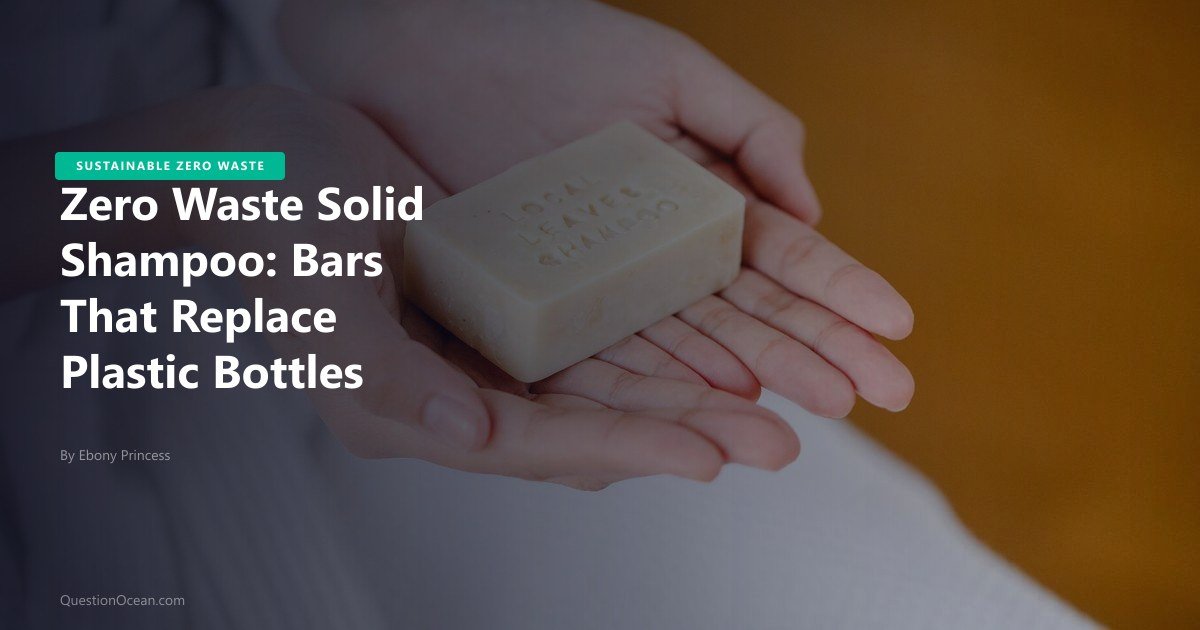
Each standard 300ml shampoo bottle requires 80 grams of virgin plastic to produce, uses 3.5 liters of water during manufacturing, and takes 450 years to decompose after you toss it. A zero waste solid shampoo bar eliminates all of that, delivering 60-80 washes from a single 65-gram bar wrapped in compostable paper. The environmental math is not subtle: switching to solid shampoo is the single largest plastic reduction most people can make in their hair care routine.
This guide covers the surfactant science that makes bars work differently from liquids, maps the pH landscape across leading brands, and provides a week-by-week protocol for surviving the transition period that causes most first-time users to quit.
Are Solid Shampoo Bars Good for Hair?
Solid shampoo bars clean hair just as effectively as liquid shampoos when the surfactant system matches your hair type and water hardness. The negative experiences that dominate early reviews, waxy residue, tangled ends, dull appearance. Are almost always caused by pH mismatch, hard water interaction, or incomplete rinsing rather than any fundamental flaw in bar formulation.
The technology behind solid bars has advanced substantially since the early soap-based options that plagued the category in 2018-2020. Modern formulations use synthetic surfactants (SCI, SCS, SLSA) pressed into bar form rather than traditional saponified oils, eliminating the high pH and scum formation that gave shampoo bars their poor reputation.
For a broader overview of how shampoo bars fit into a complete sustainable routine, see our guide to eco-friendly brushes and zero-waste tools.
The key distinction every buyer must understand: a “shampoo bar” and a “bar shampoo” may look identical but use fundamentally different chemistry. True solid shampoo bars use detergent-based surfactants at a pH of 4.5-6.0. Soap bars use saponified oils at a pH of 8.0-10.0. Only the detergent-based bars perform comparably to liquid shampoo.
Surfactant Chemistry in Bar Form: How It Actually Works
Liquid shampoos suspend surfactant molecules in 70-80% water. Solid bars eliminate that water, concentrating the same active ingredients into a dense puck that activates on contact with shower water. Understanding the three main surfactant families helps you select the right bar.
Sodium Cocoyl Isethionate (SCI)
SCI is the gold standard surfactant for solid shampoo bars. Gentle enough for daily use, effective at pH 5.0-6.0, and compatible with both hard and soft water. Derived from coconut oil, SCI produces a creamy, low-foam lather that rinses cleanly without stripping natural oils. Bars with SCI as the primary surfactant (listed first or second on the ingredient panel) perform most similarly to salon-quality liquid shampoos.
SCI-based bars include Ethique, HiBar, and Viori, all available across Amazon US, UK, and CA markets.
Sodium Coco Sulfate (SCS)
SCS delivers a richer, higher-foam lather than SCI and provides stronger cleansing power for oily scalps and heavy product buildup. The trade-off is a slightly higher irritation potential. Users with sensitive or dry scalps should patch-test SCS bars before committing. SCS functions well in hard water without significant residue formation.
Sodium Lauroyl Methyl Isethionate (SLMI)
SLMI is the newest entrant, appearing in premium bars from brands like Unwrapped Life and Kitsch. It combines the gentleness of SCI with improved foam density and a silkier after-feel. Bars listing SLMI typically cost 20-30% more than SCI equivalents but produce noticeably softer results on fine and color-treated hair.
Solid Shampoo Bar. SCI-based sulfate-free bar for all hair types
The Waxy Transition Period: Why It Happens and How to Survive It
The transition period is the number one reason new users abandon solid shampoo bars. During the first 2-4 weeks after switching from liquid to bar shampoo, hair may feel waxy, heavy, or coated, as if it is not getting clean despite thorough lathering.
This waxy feeling is caused by the interaction between your hair’s accumulated silicone coating (from liquid conditioners and styling products) and the bar’s surfactant system, which strips silicone less aggressively than sulfate-heavy liquid shampoos. The silicone layers that have built up over months of liquid product use partially dissolve and re-deposit unevenly on the hair shaft, creating a tacky texture.
Week-by-Week Transition Protocol
- Week 1: Use a clarifying liquid shampoo for one final wash to strip the majority of silicone buildup before starting the bar. This single step prevents 60-70% of transition symptoms
- Week 2: Lather the bar directly on wet hair for 30-60 seconds (longer than you think necessary). Rinse for a full 2 minutes, under-rinsing is the primary cause of residue
- Week 3: Add an apple cider vinegar rinse (1 tablespoon ACV per 250ml cool water) after every bar wash. The acidic pH (approximately 3.0) seals the cuticle and removes mineral deposits that contribute to waxy buildup
- Week 4: By this point, hair should feel clean and light after each wash. If waxy texture persists, switch to a bar with SCI as the primary surfactant, you may be using a soap-based bar rather than a true detergent bar
Most users report that their hair actually feels better than it did with liquid shampoo by week 5-6, as the removal of silicone coatings allows natural oils to condition the hair shaft directly.
pH Mapping: Finding the Right Bar for Your Hair
pH determines how the hair cuticle behaves during and after washing. The hair’s natural pH sits between 4.5 and 5.5. Products that match this range leave the cuticle flat, smooth, and reflective. Products significantly above this range (pH 7.0+) swell and lift the cuticle, creating roughness, tangles, and dullness.
True detergent-based shampoo bars (SCI, SCS, SLMI) operate at pH 4.5-6.0: cuticle-safe range. Traditional soap-based bars operate at pH 8.0-10.0, damaging range that requires a mandatory acidic rinse to restore cuticle position.
pH ranges by brand:
- Ethique bars: pH 5.0-5.5 (excellent for all hair types)
- HiBar: pH 5.5-6.0 (safe range, slightly higher for stronger cleansing)
- Viori: pH 4.5-5.0 (ideal for color-treated and fine hair)
- J.R. Liggett’s: pH 8.5-9.5 (soap-based. Requires ACV rinse)
- Chagrin Valley: pH 8.0-9.0 (soap-based, requires ACV rinse)
Testing your bar’s pH at home is straightforward. Purchase pH test strips (available for $6-8 on Amazon US/UK/CA) and test the lather directly. If the reading exceeds 7.0, your bar is soap-based and you must follow every wash with an acidic rinse to prevent cumulative cuticle damage.
Hard Water: The Hidden Variable That Ruins Bar Performance
Hard water. Water containing high concentrations of dissolved calcium and magnesium, is the single most important environmental factor in solid shampoo performance. And it affects the majority of US, UK, and Canadian users.
Approximately 85% of US households, 60% of UK households, and 55% of Canadian households receive hard water (above 120 mg/L calcium carbonate). Hard water reacts with both soap-based and some detergent-based bars to form calcium stearate — an insoluble white residue that coats the hair shaft and creates the characteristic “waxy” feeling blamed on the bars themselves.
Solutions ranked by effectiveness:
- Chelating rinse: An apple cider vinegar or citric acid rinse (1 teaspoon citric acid per 500ml water) dissolves calcium deposits after each wash. This is the most accessible and affordable fix
- Shower filter: A KDF or activated carbon shower filter reduces calcium and chlorine levels at the source. Filters cost $20-40 on Amazon US/UK/CA and last 6-8 months. This pairs well with the water quality concepts covered in our wash day optimization guidance
- SCI-based bars: Sodium Cocoyl Isethionate resists calcium interaction better than any other bar surfactant. In hard water zones, SCI bars perform noticeably better than SCS or soap-based alternatives
- Distilled water final rinse: Keeping a 1-liter jug of distilled water for a final rinse after bar shampooing eliminates residue entirely, though it adds cost and inconvenience
Shower Filter, KDF/activated carbon filter for hard water
In-Shower Storage Solutions That Prevent Mushy Bars
A solid shampoo bar sitting in a pool of water on a shower shelf dissolves 3-4 times faster than a properly stored bar. Correct storage extends bar life from 40 washes to the full 60-80 wash potential: effectively doubling your cost efficiency.
The golden rule: air must circulate around all surfaces of the bar between uses. Any surface touching a wet shelf or sitting in pooled water dissolves by osmosis, wasting product.
Storage options ranked by effectiveness:
- Magnetic soap holder: A wall-mounted magnet system (embedded metal disc pressed into the bar) suspends the bar in open air with 360-degree ventilation. Dissolution rate drops to near zero between uses. Costs $8-12 USD
- Slotted wooden soap dish: Bamboo or cedar dishes with drainage slots allow water to run off while providing ventilation underneath. Position outside the direct shower spray zone. Available for $5-10
- Mesh bag hanging: Place the bar in a sisal or cotton mesh bag and hang from the shower head or a hook. The mesh allows drainage while the hanging position ensures no surface pools. This doubles as an exfoliating wash tool
- Travel tin with drainage insert: For between-use drying at home and portability during travel, a vented aluminum tin keeps the bar dry and protected
Avoid ceramic dishes without drainage holes, plastic soap cases that trap moisture, and any surface that allows the bar to sit flat in standing water.
For readers combining bar storage with other wooden tool maintenance, our guide on cleaning and maintaining wooden hair tools covers moisture management principles that apply equally to bar soap dishes.
Traveling with Solid Shampoo Bars
Solid bars are one of the most travel-friendly hair care options available, no liquid restrictions, no leak risk, and no TSA or airport security concerns. A single bar replaces 2-3 liquid travel bottles.
Pack bars in a vented aluminum tin with a silicone liner insert to prevent the bar from sticking to the metal during transit. Allow the bar to air-dry for at least 4 hours before sealing the tin for packing. A damp bar sealed in an airtight container develops surface softening within hours.
Travel-specific tips:
- Carry a dedicated travel bar rather than your daily shower bar, smaller 30-35g bars last 25-35 washes, enough for trips up to 3 weeks
- Pack a small packet of citric acid powder (available in 50g sachets) for hard water destinations: dissolve half a teaspoon in a water bottle for post-wash rinses
- In hotel showers without hooks or shelves, rest the bar on a folded washcloth to create an improvised drainage surface
- For camping and outdoor travel, biodegradable-certified bars (look for USDA BioPreferred) can be used in freshwater environments when used 200+ feet from water sources
For users exploring the broader zero-waste travel kit, refillable hair care systems complement solid bars with concentrated conditioner and styling product refills.
Matching the Right Bar to Your Hair Type
Not every bar works for every hair type. The surfactant base, added oils, and protein content must align with your hair’s porosity and density for optimal results.
Fine Hair (Low Density, Easily Weighed Down)
Choose lightweight SCI bars without heavy butters like shea or cocoa. Look for bars containing panthenol or hydrolyzed rice protein. These add body without weight. Ethique Mintasy and HiBar Maintain are leading options for fine hair.
Thick, Coarse Hair (High Density, Moisture-Hungry)
Select bars with added oils (argan, marula, or babassu) and avoid strong clarifying formulas that strip needed moisture. SCI-SLMI blend bars provide gentle cleansing with a conditioning after-feel. Viori Hidden Waterfall and Unwrapped Life The Balancer work well for coarse textures.
Color-Treated Hair
pH is critical for color retention. Only use bars confirmed at pH 5.5 or below. Anything higher lifts the cuticle and accelerates color fade. SCI bars are the safest choice, as they operate at the lowest pH range in the solid shampoo category. Avoid clarifying or chelating bars entirely on color-treated hair.
Oily Scalp, Dry Ends
Use an SCS-based bar for stronger root cleansing, lathering only at the scalp and allowing diluted rinse water to cleanse the lengths. Follow with a solid conditioner bar applied mid-shaft to ends only. This zone-specific approach mirrors the same principles used in liquid product routines.
Shampoo Bar Storage Tin. Vented aluminum travel case with drainage insert
Solid Conditioner Bars: The Essential Companion
Most users who struggle with solid shampoo are actually struggling without a matching conditioner step. Solid conditioner bars use cationic surfactants (BTMS-50, cetrimonium chloride) pressed with butters and oils to provide slip, detangling, and moisture sealing.
Apply the conditioner bar directly to wet hair from ear-level to ends, using 3-5 strokes per section. The body heat from your hands and the hair shaft melts the surface layer of the bar, depositing a thin conditioning film. Leave for 1-2 minutes, then rinse with cool water to seal the cuticle.
Solid conditioner bars last 50-60 uses, slightly fewer than shampoo bars because the butters dissolve more rapidly during application. Store using the same drainage principles as shampoo bars.
Frequently Asked Questions
Q: Are solid shampoo bars good for hair? A: Modern detergent-based bars (using SCI, SCS, or SLMI surfactants) clean hair as effectively as liquid shampoos when matched to your hair type and water hardness. Soap-based bars with pH above 7.0 can damage the cuticle over time and require an acidic rinse after every wash.
Q: Why does my hair feel waxy after using a shampoo bar? A: Waxy buildup during the first 2-4 weeks is caused by accumulated silicone from previous liquid products interacting with the bar’s surfactant system. A one-time clarifying wash before switching, thorough 2-minute rinsing, and an apple cider vinegar rinse after each wash eliminate this issue for most users.
Q: How long does a solid shampoo bar last? A: A standard 65-gram bar delivers 60-80 washes when stored properly on a draining surface between uses. Bars left sitting in standing water lose 40-50% of their wash count to dissolution waste. Proper storage effectively doubles the bar’s lifespan.
Q: Can I use shampoo bars with hard water? A: Yes, but choose SCI-based bars (not soap-based) and add a chelating rinse, either apple cider vinegar (1 tablespoon per 250ml water) or citric acid (half a teaspoon per 500ml water), after each wash. A shower filter further reduces calcium interaction for consistent results.
Q: Are shampoo bars TSA and airport security compliant? A: Solid shampoo bars are not classified as liquids by TSA (US), CAA (UK), or CATSA (Canada). They do not count toward your liquid carry-on allowance and can be packed in carry-on luggage without restrictions.
Q: What is the difference between a shampoo bar and bar soap for hair? A: Shampoo bars use synthetic surfactants (SCI, SCS) at pH 4.5-6.0, matching the hair’s natural acidity. Bar soap uses saponified oils at pH 8.0-10.0, which lifts the cuticle and causes roughness, tangles, and dullness without an acidic rinse. Always check the ingredient list. Soap bars list “sodium hydroxide” or “saponified oils” while shampoo bars list surfactant names like sodium cocoyl isethionate.
Zero waste solid shampoo bars deliver the same cleansing performance as liquid shampoos while eliminating 4-6 plastic bottles per person annually. Choose SCI-based bars for the smoothest transition, store on draining surfaces for maximum longevity, and add a chelating rinse in hard water areas to prevent the residue buildup that causes most first-time users to give up too early.