
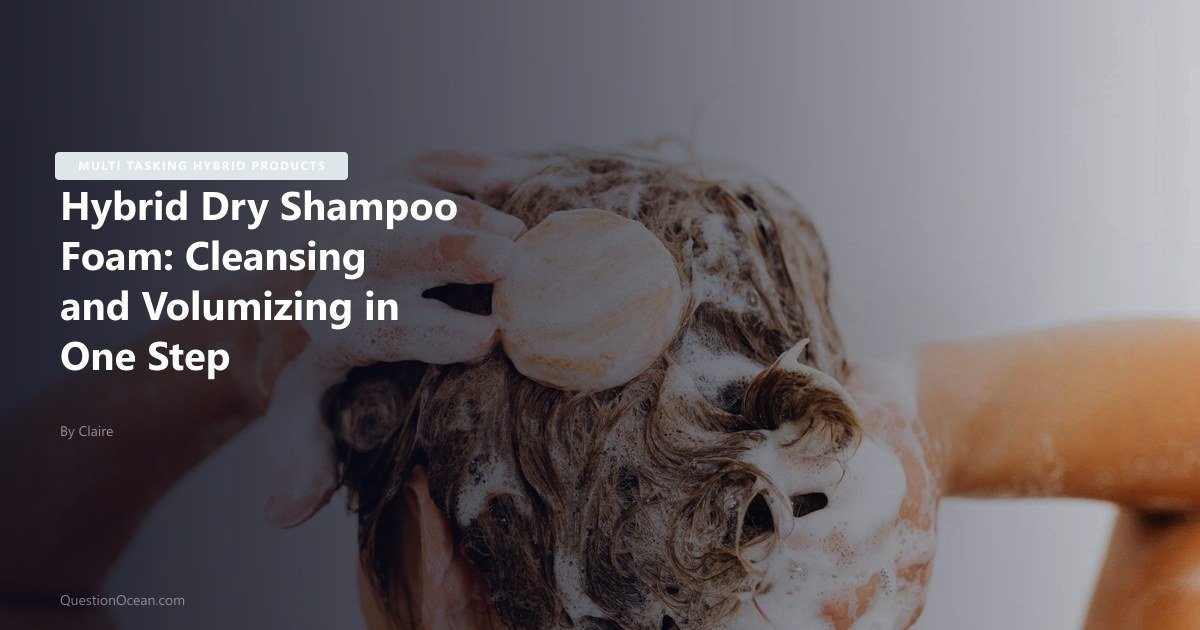
Traditional dry shampoo sprays deposit starch or rice powder at the roots, absorb oil, and leave behind a chalky layer that dulls dark hair and stiffens strands. Hybrid dry shampoo foam replaces that powder-based approach with micellar-infused mousse technology that lifts oil, adds genuine root volume, and disappears completely into every hair shade. This guide breaks down the science behind foam formulas, identifies the top 2026 innovations, and explains exactly how to air-dry the foam for maximum lift without residue.
For a complete overview of how foam cleansers fit into a streamlined product lineup, see our guide to building a minimalist hair routine with multi-tasking products.
How Does Dry Shampoo Foam Work?
Hybrid dry shampoo foam uses micellar cleansing technology, microscopic oil-attracting molecules suspended in a water-light foam base, to dissolve sebum at the root without powder deposits. Traditional aerosol dry shampoos rely on physical absorption: starch particles sit on the hair shaft and soak up oil through capillary action. Foams work through chemical attraction instead.
Micelles are spherical clusters of surfactant molecules. The oil-loving (lipophilic) ends face inward while the water-loving (hydrophilic) ends face outward. When you massage the foam into your roots, micelles surround and encapsulate sebum droplets, lifting them away from the hair shaft. The lightweight foam carrier evaporates within sixty to ninety seconds, leaving clean, volumized roots with zero visible residue.
This mechanism explains why foam works better than powder on dark hair. There are no physical particles to reflect light and create that telltale gray cast. Brunettes and black-haired users across the US, UK, and Canada consistently report cleaner results with foam versus traditional spray formats.
Micellar Cleansing Technology in Hair Foams
The micellar technology powering these foams originates from French pharmaceutical skincare, adapted for hair in the early 2020s. The critical difference between face and hair micellar formulas is molecular weight. Hair foams use larger micelle clusters (80-120 nanometers versus 5-20 for facial cleansers) to handle the heavier sebum load found at the scalp.
The best micellar hair foams combine three surfactant types: coco-glucoside for gentle cleansing, disodium laureth sulfosuccinate for oil removal, and polyquaternium-11 for volumizing hold. This triple-surfactant approach achieves the cleanse-plus-volume effect that makes these foams true hybrid products.
Ingredient quality varies significantly across price points. Budget foams under $12 USD often substitute micellar surfactants with standard sodium lauryl sulfate in foam form, which strips natural oils rather than selectively removing excess sebum. Check ingredient lists for genuine micellar indicators: the presence of poloxamer, coco-glucoside, or decyl glucoside signals true micellar technology.
UK shoppers can find genuine micellar foams at Boots and Superdrug in the GBP 8-18 range. Canadian options at Shoppers Drug Mart run $10-22 CAD. US retailers Ulta and Target stock the widest selection between $9-28 USD.
Air-Drying the Foam for Maximum Volume
Application technique determines whether a hybrid foam delivers salon-worthy volume or falls flat. The key variable is moisture content at the root when the foam is applied. Completely dry roots resist foam penetration. Slightly damp roots (from sweat, humidity, or a light water mist) allow the foam carrier to spread evenly before evaporating.
Apply foam to roots in four sections. Crown, left temple, right temple, and nape. Using a zigzag motion with fingertips to distribute evenly across the scalp. Dispense a golf-ball-sized amount per section for medium-density hair. Fine hair needs half that volume per section. Thick hair may need slightly more at the crown where oil concentration is highest.
After application, resist the temptation to blow dry. Air-drying allows the volumizing polymers in the foam to set in their lifted position without heat disturbance. The drying process takes three to five minutes in a typical indoor environment. During this time, flip your head upside down and gently scrunch roots to encourage lift.
For readers who use foam as part of a post-workout refresh, our guide to gym bag essentials for post-workout hair covers application techniques specific to locker-room conditions.
Micellar Dry Shampoo Foam. Residue-free volumizing foam cleanser
Volumizing Roots Without Powdery White Residue
White residue is the primary complaint against traditional dry shampoos, and it disproportionately affects users with dark hair colors. The residue comes from physical absorption agents. Tapioca starch, rice starch, aluminum starch octenylsuccinate: that remain visible on the hair shaft until physically brushed through.
Foam formulas eliminate residue by replacing physical absorbers with liquid-phase surfactants that evaporate after cleansing. No solid particles remain on the hair. This makes foam the superior dry shampoo format for espresso brunettes, black hair, and any shade darker than medium brown.
Even on light hair, foam delivers a cleaner finish than powder. Blonde and light brunette users report that foam avoids the “chalky scalp” effect that builds up over multiple days of traditional dry shampoo use. The micellar cleansing action genuinely removes oil rather than masking it, which means less cumulative buildup between wash days.
For users who have avoided dry shampoo entirely because of residue concerns, foam formats represent a legitimate solution. The technology has matured enough that 2026 foam products bear little resemblance to the sticky, heavy mousses of earlier generations.
Top 2026 Foam Innovations Worth Watching
The hybrid foam category is evolving rapidly. Several 2026 innovations address longstanding limitations that earlier foam formulas could not solve.
Color-safe micellar foams now use chelating agents like phytic acid to prevent hard water mineral deposits from dulling colored hair during the between-wash period. This matters particularly in hard water regions across southern England, the Canadian prairies, and the US Southwest, where mineral buildup accelerates color fading.
Other notable 2026 developments:
- Probiotic-infused foams contain lactobacillus ferment filtrate to support the scalp’s natural microbiome while cleansing, addressing the cosmetic concern of flaky scalp appearance between washes
- Adaptogenic foams use ashwagandha root extract and reishi mushroom derivatives to cosmetically calm irritation at the scalp line
- Scent-neutralizing foams with cyclodextrin technology trap and neutralize odor molecules from sweat, cooking, and environmental pollution rather than masking them with fragrance
- Tinted foams in five shade ranges blend visible roots for color-treated hair while simultaneously absorbing oil
These innovations push foam technology beyond simple oil absorption into genuine multi-function territory. A single foam application can now cleanse, volumize, protect color, and neutralize odor.
Foam vs. Spray vs. Powder: Format Comparison
Each dry shampoo format has specific advantages, and choosing the right one depends on your hair type, color, and lifestyle needs.
Foam excels at combined cleansing and volumizing for dark hair, medium to thick densities, and users who need residue-free results. Spray works fastest for quick touch-ups on light hair. Powder provides the strongest oil absorption for extremely oily scalps but requires thorough blending.
- Foam: Best for dark hair, combined cleanse-volume needs, gym bag portability (no aerosol restrictions), and sensitive scalps
- Spray: Best for quick application on light hair, travel-friendly aerosol cans under 100ml, and fine hair that needs minimal weight
- Powder: Best for maximum oil absorption on extremely oily roots, targeted application using a brush, and users who prefer zero water content
For air-travel considerations across US, UK, and Canadian airlines, foam offers a significant advantage. Non-aerosol foams bypass the pressurized container restrictions that apply to traditional spray dry shampoos. Our guide to the best 3-in-1 stylers for carry-on travel details TSA-compliant packaging across all three markets.
Root Volumizing Foam, lightweight lift foam for fine and medium hair
Wash Day Extension: How Foam Fits Into Your Weekly Routine
Hybrid foam works best as a bridge between wash days rather than a permanent replacement for cleansing. Most hair types can extend their wash cycle by one to two days with foam application, pushing a standard every-other-day wash schedule to every three or four days.
For optimal results, apply foam on day two after washing, then again on day three if needed. Beyond day three, most hair types benefit from a full wash rather than additional foam layering. Stacking more than two consecutive foam applications risks disrupting the scalp’s natural oil balance, even with micellar formulas.
The wash-day extension benefit connects directly to the wash day optimization strategies that help styles last longer between cleansing sessions. Foam serves as the connective product between styling and washing, maintaining appearance without resetting the style.
Troubleshooting Common Foam Application Issues
Foam Falls Flat Within an Hour
This usually indicates over-application. Excess foam weighs roots down once the carrier liquid evaporates. Reduce your per-section amount by half and focus application on the first inch of hair from the scalp only. Avoid distributing foam through mid-lengths.
Roots Feel Sticky After Drying
Sticky residue comes from polyquaternium buildup when foam is applied to already-product-laden hair. If you used a styling cream or serum at the roots that morning, the foam interacts with existing polymers. Solution: apply foam to bare, unstyled roots, or switch to a clarifying shampoo on your next wash day.
Scalp Feels Tight or Dry
Some micellar foams over-cleanse naturally dry scalps. Look for formulas containing glycerin or panthenol in the top ten ingredients, which provide compensating hydration during the cleansing process. Users in dry winter climates across Canada and the northern US may need a more hydrating foam formula than those in the humid UK.
Color-Safe Dry Shampoo Foam — micellar cleanser for color-treated hair
Frequently Asked Questions
Q: How does dry shampoo foam work? A: Dry shampoo foam uses micellar surfactant technology to chemically attract and encapsulate excess oil at the roots. Unlike powder-based sprays that physically absorb oil, foam dissolves sebum through lipophilic micelle clusters, then the lightweight foam carrier evaporates within sixty to ninety seconds, leaving clean, volumized roots with no visible residue.
Q: Does dry shampoo foam leave white residue on dark hair? A: No. Genuine micellar foams contain zero starch or powder particles, which means there are no solid white deposits on the hair shaft. This makes foam the ideal dry shampoo format for brunettes, black hair, and every shade darker than medium brown.
Q: How often can you use dry shampoo foam between washes? A: Most hair types tolerate two consecutive foam applications between wash days. Apply on day two and day three after washing, then cleanse fully on day four. Stacking more than two applications risks disrupting the scalp’s natural oil balance.
Q: Is dry shampoo foam better than spray for fine hair? A: It depends on your priority. Foam provides superior volume because the mousse format lifts roots during air-drying. However, foam adds slightly more weight than aerosol spray. Fine hair that needs volume benefits from foam. Fine hair that prioritizes weightlessness above all else may prefer a lightweight spray.
Q: Can I use dry shampoo foam on wet hair? A: Hybrid dry shampoo foam is designed for dry or slightly damp roots, not soaking wet hair. Applying to wet hair dilutes the micellar surfactants and prevents the foam from achieving its oil-absorbing and volumizing functions. Wait until hair is at least 80% dry before application.
Hybrid dry shampoo foam represents the most significant format innovation in the dry shampoo category since aerosol sprays replaced loose powders. By combining micellar cleansing with volumizing polymers in a residue-free delivery system, foam eliminates the biggest complaints about traditional dry shampoo while adding genuine root lift that powder formats cannot match.