
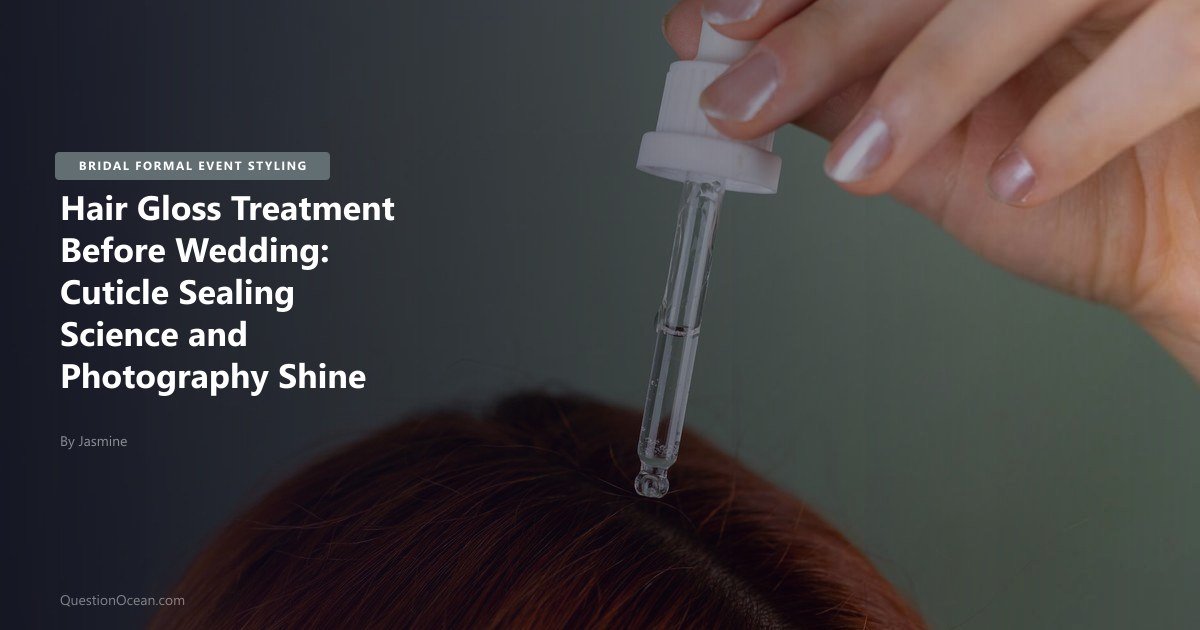
The single most photographed visual quality of bridal hair, across every cultural tradition, dress style, and venue type. Is shine. Wedding photography lighting maximizes shine reflectivity, social media filters enhance it further, and modern editorial bridal aesthetics make glossy, mirror-finish hair the universal indicator of “expensive bridal styling.” The challenge is that natural hair shine varies enormously between individuals, and most brides need additional intervention to reach the shine level they want for their wedding photographs. Hair gloss treatment before wedding works through one specific mechanism: closing and smoothing the cuticle layer of every strand so light reflects uniformly off the surface instead of scattering off raised, rough, or damaged cuticle scales.
This guide explains the cuticle sealing chemistry behind gloss treatments, the difference between salon glazes and at-home options, and the timing protocols that maximize shine on the wedding day specifically.
For the complete bridal hair framework, see our pillar guide to bridal hair trends 2026.
The Cuticle Science of Hair Shine
Hair shine is purely a surface optics phenomenon. The cortex of the hair (the inner protein structure) does not affect shine. Only the cuticle, the outermost layer made up of overlapping protein scales — determines how light interacts with the hair surface.
Healthy cuticle = high shine: When cuticle scales lie flat against the hair shaft in tight, overlapping rows (like roof shingles), the hair surface is smooth at the microscopic level. Light reflects off this smooth surface in coordinated parallel rays: the optical definition of “shine.”
Damaged cuticle = low shine: When cuticle scales lift, crack, or break (from heat damage, chemical processing, mechanical friction, or environmental stress), the hair surface becomes microscopically rough. Light hits the raised scales and reflects in scattered, random directions, making the hair appear dull regardless of color or styling.
The gloss treatment principle: All hair gloss treatments work by depositing a thin layer of cuticle-smoothing material onto the hair surface. This material fills in the gaps between raised cuticle scales and creates a temporarily smoother surface that reflects light uniformly.
The Three Categories of Gloss Treatments
1. Acidic glazes (pH 3.5-4.5): Use mildly acidic chemistry to chemically tighten the cuticle. The acid causes the cuticle scales to contract and lie flatter against the hair shaft. Results last 4-6 weeks.
2. Silicone-based glosses: Deposit silicones (dimethicone, cyclomethicone) on the hair surface to physically fill in cuticle gaps. Results last 2-3 weeks (washes out gradually).
3. Color-depositing glosses: Combine the gloss effect with semi-permanent color deposits to refresh hair color while smoothing the cuticle. Used to enhance natural hair color or correct unwanted tones (brassiness in blonde, fading in brunette).
Salon Glaze Treatments
Professional salon gloss treatments use higher-concentration chemistry than at-home products and produce more dramatic results, but at higher cost.
Cost ranges:
- Basic clear glaze: $40-75 (US) / £30-60 (UK) / $55-100 (CA)
- Color-depositing glaze: $60-120 (US) / £50-95 (UK) / $80-160 (CA)
- Premium acidic glaze (Olaplex No. 8 + treatment service): $80-150 (US) / £65-120 (UK) / $110-200 (CA)
Time investment: 30-60 minutes in the salon, including processing and rinse time.
Best for: Brides who want maximum shine impact and don’t mind the cost. The professional application ensures complete coverage that’s difficult to achieve at home.
What to Ask Your Stylist
When booking a pre-wedding gloss treatment, specify:
- The shine result you want (mirror finish vs healthy gleam)
- Whether you want color enhancement or pure clear shine
- Your styling tool plan (gloss treatments improve heat tool results)
- How many days before the wedding the appointment is scheduled
- Whether you want to maintain the result with at-home products between the appointment and the wedding
At-Home Gloss Treatment Options
For brides who can’t or don’t want to invest in salon treatments, several at-home product categories deliver meaningful (if less dramatic) shine improvement.
Conditioning Glosses
Used like a deep conditioning treatment. Applied after shampooing, left on for 5-15 minutes, then rinsed.
Recommended brands: John Frieda Luminous Glaze, Garnier Color Reviver, dpHUE Gloss+
Cost: $15-30 per bottle, with 4-8 applications per bottle.
Results: 7-14 days of noticeable shine improvement per application.
Leave-In Shine Sprays
Applied to dry hair as a finishing spray. Provides immediate shine without the rinse process.
Recommended brands: Oribe Shine Light Reflecting Spray, Moroccanoil Glimmer Shine, Bumble and Bumble Shine On Finishing Spray
Cost: $20-50 per bottle.
Results: Same-day shine for one styling session. Washes out completely.
Hair Oils as Gloss Substitutes
Argan oil, coconut oil, and similar plant oils can provide cuticle-smoothing shine effects when applied properly.
Application: 2-3 drops worked through dry hair from mid-shaft to ends. More than this creates greasy appearance.
Cost: $10-30 per bottle.
Results: Same-day shine. Best for fine to medium hair (thick hair often needs more intensive treatment).
Pre-Wedding Hair Gloss Treatment Shine
Timing Your Gloss Treatment for Maximum Wedding Day Shine
Gloss treatments don’t peak immediately. The shine result improves over 24-72 hours as the treatment fully absorbs and the cuticle settles into its smoothed configuration.
The optimal timing protocol:
| Days Before Wedding | Action |
|---|---|
| 14-21 days before | First gloss treatment (testing the effect) |
| 7-10 days before | Second gloss treatment (the main pre-wedding application) |
| 3-5 days before | Optional touch-up gloss treatment (if needed) |
| 1-2 days before | At-home shine spray application during styling |
| Wedding day | Finishing shine spray as the last styling step |
Why three treatments rather than one: Cumulative gloss applications produce better shine than a single treatment, particularly on hair with prior damage or color treatment. The first application reveals how your hair responds; the second application builds on that response.
The “too close” warning: Do NOT schedule a gloss treatment within 24 hours of the wedding. The treatment needs at least one full day to settle and reach peak shine. Salon visits the day of or day before the wedding risk underwhelming results.
Photography Considerations: Matching Shine to Lighting
Different shine levels photograph differently under different lighting conditions. Understanding this prevents the common mistake of over-glossing for the wrong venue.
Outdoor natural light: Tolerates very high shine levels. The diffused natural light minimizes harsh reflections. Aim for maximum shine for outdoor weddings.
Indoor venue lighting (warm tungsten): Tolerates medium shine. The yellow lighting tones flatter glossy hair. Aim for high shine but stop short of mirror finish.
Indoor flash photography: Sensitive to high shine. Camera flash creates intense reflections on very glossy hair, potentially producing “hot spots” in photos. Aim for moderate shine for flash-heavy events.
Mixed lighting (ceremony outdoor, reception indoor): Aim for moderate-to-high shine that works in both conditions. This is the most common bridal scenario.
For weather conditions affecting both shine and overall hair health, see our weather-proofing event hair summer guide.
Common Mistakes to Avoid
Mistake 1: Single treatment the week of: Gloss treatments compound. Schedule the main treatment 7-10 days before the wedding, not the day of.
Mistake 2: Skipping the trial: Test gloss treatments 2-3 weeks before the wedding to see how your specific hair responds. Some hair types over-gloss easily and become greasy-looking.
Mistake 3: Combining incompatible products: Some shine sprays react poorly with strong-hold hairsprays, creating a sticky, dull finish. Test product combinations before the wedding day.
Mistake 4: Applying gloss to dry, damaged hair without prep: Severely damaged hair needs deep conditioning before glossing. The gloss treatment cannot fully smooth severely damaged cuticle without preparation.
Mistake 5: Over-applying at-home products: More is not better. Excessive shine product creates greasy, weighed-down hair that photographs worse than untreated hair.
Argan Oil Hair Shine Treatment
Frequently Asked Questions
Q: When should I get a hair gloss treatment before my wedding? A: Schedule the main pre-wedding gloss treatment 7-10 days before the wedding. This timing allows the treatment to fully settle and reach peak shine. A test treatment 2-3 weeks before helps confirm how your hair responds. Avoid same-day or day-before treatments: they need 24+ hours to peak.
Q: What’s the difference between a hair gloss and a hair glaze? A: The terms are often used interchangeably. Technically, glazes are typically clear or tinted treatments using mild chemistry to smooth the cuticle, while glosses can include color-depositing or silicone-based formulas. Most salons use both terms for similar services. The functional result, smoother cuticle and increased shine, is the same.
Q: How long does a hair gloss treatment last? A: Salon glazes typically last 4-6 weeks. At-home conditioning glosses last 1-2 weeks. Leave-in shine sprays last for the styling session only. For weddings, plan the main treatment 7-10 days before the event so the result is at peak shine.
Q: Can I do a hair gloss treatment at home before my wedding? A: Yes. At-home conditioning gloss treatments (John Frieda Luminous Glaze, dpHUE Gloss+, etc.) deliver meaningful shine improvement at $15-30 per bottle. Salon treatments produce more dramatic results but cost $40-150. For brides on tight budgets, at-home options are entirely valid.
Q: Will hair gloss treatment damage my hair? A: No. Properly applied gloss treatments are conditioning, not damaging. Acidic glazes (low pH) actually help close and smooth the cuticle. Silicone-based glosses are physical surface treatments that don’t penetrate the hair shaft. Color-depositing glosses use semi-permanent dye chemistry that’s milder than permanent color.
Q: What’s the best at-home hair shine treatment for brides? A: For affordability and effectiveness, John Frieda Luminous Glaze ($15-22) is the best entry-level conditioning gloss. For premium results, dpHUE Gloss+ ($35-45) offers salon-level chemistry in an at-home format. For finishing shine on the wedding day itself, Oribe Shine Light Reflecting Spray ($45-60) provides camera-ready luminosity.
Hair gloss treatment before wedding is the single most impactful pre-wedding hair preparation step a bride can take. The cuticle smoothing science is straightforward, the products are accessible at every budget level from $15 at-home options to $150 salon services, and the timing protocol is forgiving as long as you schedule the main treatment 7-10 days before the event. Whether you choose salon-grade glazing or at-home conditioning gloss, the resulting shine will photograph beautifully in every lighting condition and make the difference between hair that looks “done” and hair that looks “professionally styled.”