
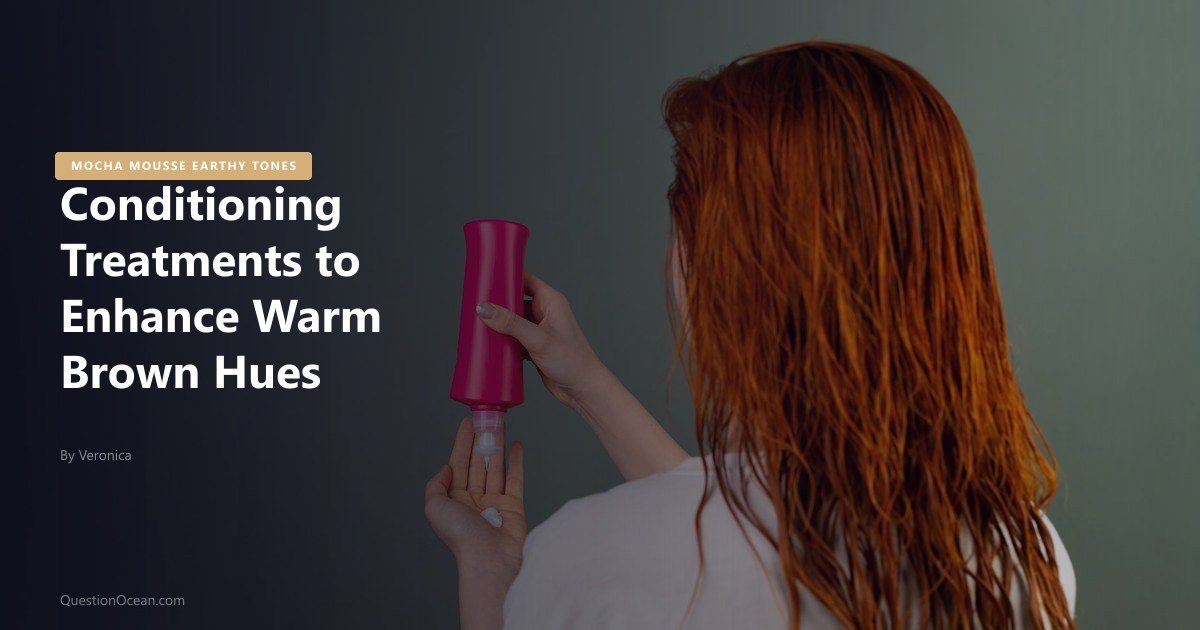
A single salon session deposits roughly 2-4 weeks of peak color vibrancy before warm brown shades begin fading toward flat, brassy, or ashy territory. A color enhancing conditioner for brown hair bridges that gap by depositing low-level pigment directly onto the cuticle surface during every wash, maintaining warmth and depth without a chemical color commitment. The difference between a conditioner that actually works and one that stains your shower tiles comes down to understanding direct dye science, porosity, and application timing.
This guide covers the specific formulas, techniques, and science behind keeping warm brown hues vibrant between professional appointments. For a complete overview of the mocha mousse shade family these products support, see the mocha mousse hair color trend guide.
How Direct Dye Science Works in Color-Depositing Products
Color-depositing conditioners and masks use an entirely different mechanism than permanent or demi-permanent hair color. Direct dyes sit on the outer cuticle layer and partially penetrate the first 1-2 cuticle layers without opening the cortex, which means zero chemical processing and zero lasting structural change.
Here is how the three main color systems compare:
| Feature | Permanent Color | Demi-Permanent | Color-Depositing Conditioner |
|---|---|---|---|
| Developer required | Yes (10-40 vol) | Yes (low volume) | No |
| Cuticle penetration | Full cortex | Partial cortex | Surface cuticle only |
| Longevity | 4-8 weeks | 20-28 washes | 3-8 washes |
| Damage potential | Moderate-high | Low-moderate | None |
| Gray coverage | Full | Blending only | None |
| Undertone control | Precise | Moderate | Limited |
The pigment molecules in color-depositing conditioners are larger than those in permanent dye, which is why they cannot penetrate deep enough for permanent results. This is also why they wash out gradually — each shampoo removes a thin layer of surface pigment until the base color reappears.
For longer-lasting color deposit without permanent commitment, a demi-permanent formula sits between these conditioners and full permanent color in terms of both longevity and cuticle interaction.
Choosing the Right Enhancer Based on Your Fading Pattern
Not all warm brown fading looks the same. Identifying your specific fading pattern determines which color-depositing formula will correct the problem rather than compound it.
The three most common warm brown fading patterns:
- Fading to brass or copper — Your brown is losing its cool/neutral base and exposing the underlying warm pigment. Choose a color enhancing conditioner with a neutral-brown or cool-brown base (look for descriptions like “cocoa,” “espresso,” or “cool brunette”). Avoid anything labeled “warm,” “golden,” or “caramel.”
- Fading to ash or grey — Your warm tones are disappearing, leaving a flat, lifeless grey-brown. Choose a warm-toned depositing conditioner with amber, chestnut, or warm-cocoa pigments to rebuild the warmth your color has lost.
- Fading to uneven patches — Sun exposure and porosity differences cause uneven fading across the hair shaft. Ends typically fade faster than roots. Apply the conditioner heavier on mid-lengths and ends, and lighter at the root area where natural oils slow fading.
Understanding your fading direction is critical because applying the wrong enhancer can push the tone further off. A warm-toned product on already-brassy hair makes the brassiness worse. A cool-toned product on already-ashy hair drains remaining warmth.
The Best Color-Depositing Products for Warm Brown Hair in 2026
The market for brunette color-depositing products has expanded significantly, but quality varies enormously. The top formulas combine pigment density with genuine conditioning ingredients that improve hair texture alongside color deposit.
Top Picks by Category
For weekly color maintenance: dpHUE Gloss+ in Medium Brown delivers the highest pigment concentration of any conditioner-format product. It processes in 3-5 minutes and leaves a noticeable boost in richness and shine after a single use. The formula includes olive oil and conditioning agents that genuinely soften hair rather than simply coating it. DpHUE Gloss+ in Medium Brown — high-pigment color-depositing gloss for brunettes
For deep conditioning plus color: Moroccanoil Color Depositing Mask in Cocoa combines argan oil conditioning with warm brown pigment deposit. Processing time is 5-7 minutes, and the consistency is thick enough to stay put without dripping. This formula works particularly well for counteracting ash-fading because its base leans warm-neutral. Moroccanoil Color Depositing Mask in Cocoa — argan oil conditioning with warm brown pigment
For shampoo-format deposit: Kristin Ess The One Signature Shampoo in brunette shades offers lighter pigment deposit suitable for every-other-wash use. This is the best option for low-porosity hair that tends to resist conditioner-format products.
For UK and Canadian availability: Josh Wood Colour Care Frizz Free Gloss in brunette shades is widely stocked across UK Boots locations and Canadian Shoppers Drug Mart. The formula prioritizes anti-frizz properties alongside gentle pigment deposit.
Damp vs. Dry Application: Why It Matters More Than You Think
Application method dramatically affects pigment uptake. Applying color-depositing conditioner to damp, towel-dried hair produces 30-40% more pigment deposit than applying to soaking wet hair, because excess water dilutes the formula and creates a barrier between pigment molecules and the cuticle.
Application method comparison:
- Soaking wet hair — Lowest pigment uptake. Water dilutes the formula and prevents pigment from reaching the cuticle surface. Suitable only for the lightest possible deposit to maintain already-vibrant color.
- Damp, towel-dried hair — Optimal balance. Enough moisture to distribute the product evenly, but not enough to dilute pigment concentration. This is the recommended method for most users.
- Dry hair — Maximum pigment deposit but highest risk of uneven application and staining. Only recommended for targeted application on specific faded sections. Wear gloves and section hair carefully.
For anyone using dry shampoo between washes, note that product buildup from dry shampoo creates a barrier that blocks color deposit. Always use a clarifying rinse or regular shampoo before applying any color-depositing treatment.
Porosity and Color Deposit: The Variable Nobody Mentions
Hair porosity determines how much pigment your cuticle absorbs and how long it holds. High-porosity hair absorbs color-depositing conditioner aggressively and can develop uneven, blotchy results if timing is not carefully controlled.
Porosity Quick Test
Drop a single clean, product-free hair strand into a glass of room-temperature water. Wait 2-3 minutes.
- Floats on surface — Low porosity. Cuticle is tightly sealed. Color deposit will be minimal and may need longer processing times or repeated applications.
- Sinks slowly to middle — Medium porosity. Normal cuticle structure. Standard processing times and application methods will work as directed.
- Sinks immediately to bottom — High porosity. Cuticle is raised or damaged. Reduce processing time by half to prevent over-deposit and patchiness.
Porosity-Specific Application Rules
- Low porosity — Apply product to damp hair, cover with a plastic cap, and use gentle heat from a hooded dryer or warm towel for 5-7 minutes. Heat opens the cuticle enough for deposit. Without heat, results will be barely noticeable.
- Medium porosity — Follow product directions as written. Damp-hair application for the recommended 3-7 minutes.
- High porosity — Apply to damp hair and process for no more than 2-3 minutes on the first attempt. High-porosity hair grabs pigment unevenly, especially on damaged or previously bleached sections. Check color every 60 seconds by wiping a small section with a white towel.
Preventing Cuticular Staining and Product Buildup
Repeated use of color-depositing conditioners without proper rotation can create surface buildup that dulls hair and creates a waxy, artificial-looking film. Alternate your color-depositing treatment with a regular sulfate-free conditioner — never use color-depositing products more than twice per week regardless of your fading speed.
Staining prevention protocol:
- Use a chelating shampoo once every two weeks to remove mineral and pigment buildup from the cuticle surface. Malibu C Hard Water Wellness Shampoo — chelating formula for mineral and pigment buildup removal
- Apply a thin layer of petroleum jelly or barrier cream along the hairline, ears, and neck before applying any depositing product. This prevents skin staining that can last 2-3 days.
- Wear nitrile gloves during application. Latex gloves are permeable to many direct dyes and will stain fingers underneath.
- Rinse the product using lukewarm water until the water runs mostly clear. Hot water opens the cuticle and releases the pigment you just deposited.
For a deeper dive into color-depositing mask formulas specifically designed for brunette maintenance, see the color depositing masks for brunettes guide.
Preventing Bathroom Tile and Grout Stains
Brown and warm-toned direct dyes are notorious for staining bathroom surfaces. The pigments that make these products effective on hair are equally effective at bonding to porous grout, silicone sealant, and untreated natural stone.
Prevention and cleanup:
- Before application — Lay an old dark towel across the counter and floor around the sink or tub. Spray porous surfaces (grout lines, natural stone countertops) with a quick coat of cooking spray or shower spray. This creates a temporary barrier.
- During application — Keep a damp microfiber cloth within reach and wipe any drips immediately. Fresh pigment removes easily. Dried pigment requires bleach or specialized grout cleaner.
- After rinsing — Spray the shower or tub with a bathroom cleaner containing bleach immediately after rinsing out the product. Let it sit for 5 minutes, then scrub. Waiting even an hour allows the pigment to set into grout and sealant.
- Stubborn stains — A paste of baking soda and hydrogen peroxide left on the stain for 30 minutes removes most dried direct dye from tile and grout. Magic Eraser sponges work on non-porous surfaces.
Neutralizing Brass Cosmetically Between Treatments
When brassiness creeps in before your next color-depositing session, there are cosmetic fixes that buy time. A blue or purple shampoo used once per week corrects surface-level brass on warm brown hair without stripping the underlying warm tones you want to keep.
Quick brass-neutralizing options:
- Blue shampoo — Best for brown hair levels 4-6 that pulls orange-brass. Blue is the complement of orange on the color wheel and neutralizes it effectively. Leave on for 2-3 minutes, no longer.
- Purple shampoo — Best for lighter brown hair levels 6-7 that pulls yellow-brass. Purple neutralizes yellow tones. Use sparingly on warm brown shades, as overuse creates an ashy, dull cast.
- Vinegar rinse — One tablespoon of apple cider vinegar in 8 ounces of cool water as a final rinse closes the cuticle and removes surface mineral deposits that contribute to brassy appearance. Not a toner, but an effective maintenance step.
Frequency of Use: Building a Weekly Color-Maintenance Schedule
The optimal frequency for color-depositing conditioner is once per week for medium-porosity hair, with adjustments based on your porosity type and fading speed.
| Hair Porosity | Color-Depositing Frequency | Regular Conditioner Days | Clarifying Wash |
|---|---|---|---|
| Low | Every 5th wash | All other washes | Monthly |
| Medium | Weekly (every 2nd-3rd wash) | All other washes | Biweekly |
| High | Every 4th wash only | All other washes | Weekly |
High-porosity hair needs less frequent color deposit because it absorbs more pigment per session. It needs more frequent clarifying because it also accumulates buildup faster. Low-porosity hair needs more frequent attempts because less pigment absorbs each time.
FAQ
Do color conditioners actually work on brown hair?
Yes, but results vary dramatically by product and porosity. High-quality formulas like dpHUE Gloss+ and Moroccanoil Color Depositing Mask deliver noticeable tone enhancement after a single use on medium-porosity hair. Low-porosity hair may need 2-3 applications with heat assistance before seeing significant change. These products maintain existing color rather than creating a new shade from scratch.
What is the best brunette colour-depositing shampoo or mask?
For shampoo format, Kristin Ess The One Signature Shampoo in brunette provides gentle deposit suitable for every-other-wash use. For mask format, Moroccanoil Color Depositing Mask in Cocoa combines the strongest conditioning with reliable warm-brown pigment. The best choice depends on whether your priority is convenience (shampoo) or conditioning plus pigment intensity (mask).
Can I use color-depositing conditioner on virgin, uncolored brown hair?
You can, but results will be subtle. Virgin hair has a tightly sealed cuticle that resists surface deposit. The primary benefit on uncolored hair is enhanced shine and very slight deepening of natural brown tones. These products are most effective on color-treated hair where the cuticle has been opened by previous chemical processing.
Will color-depositing conditioner cover gray hairs?
No. Direct dyes do not penetrate deeply enough to cover resistant gray strands. At best, they create a slightly tinted, translucent wash over grays that blends them marginally better with surrounding brown hair. For actual gray coverage, permanent or demi-permanent color is necessary.
How do I prevent the conditioner from staining my blonde highlights?
Apply the product only to the brown sections using a tint brush, avoiding highlighted pieces. Alternatively, apply a thin coat of regular conditioner to highlights first as a barrier before applying the color-depositing formula to the rest. If highlights do pick up unwanted tone, a single wash with a clarifying shampoo typically removes the surface deposit.
Can I use color-depositing conditioner the same day as permanent color?
Wait a minimum of 48 hours after permanent color before using any color-depositing product. Freshly colored hair has a partially open cuticle that can absorb direct dye unevenly, creating blotchy results. Allow the cuticle to close and stabilize before introducing additional pigment.
Final Thoughts
A quality color enhancing conditioner for brown hair turns color maintenance from an expensive salon-only task into a manageable weekly routine. The key is matching your product choice to your specific fading pattern and porosity type, respecting processing times rather than guessing, and rotating between depositing and regular conditioning to prevent buildup. With the right formula and application discipline, warm brown hues stay vibrant and dimensional for weeks longer than color alone can deliver.