
The 2026 bridal hair landscape has shifted decisively away from the rigid, sprayed-into-place updos that defined wedding photography in the 2010s. Today’s brides want hairstyles that survive 12+ hours of ceremony, photographs, dinner, and dancing while still looking soft, touchable, and editorial in close-up photos. The challenge for stylists and DIY brides alike is engineering this paradox: a style structured enough to hold weight (veils, headpieces, extensions) and weather (humidity, wind, body heat) while looking effortlessly natural in every photograph. The bridal hair trends 2026 prioritize four engineering principles: veil-compatible foundation structures that distribute weight without pulling, humidity-resistant formulas that maintain shape in any climate, photography-friendly textures that catch light without reflecting harshly, and accessory placement that frames the face without competing with the dress neckline.
This pillar guide covers the major bridal hair categories of 2026, the science behind making styles last 12+ hours, and the cluster of supporting articles that dive deep into each technique, product category, and styling decision facing modern brides.
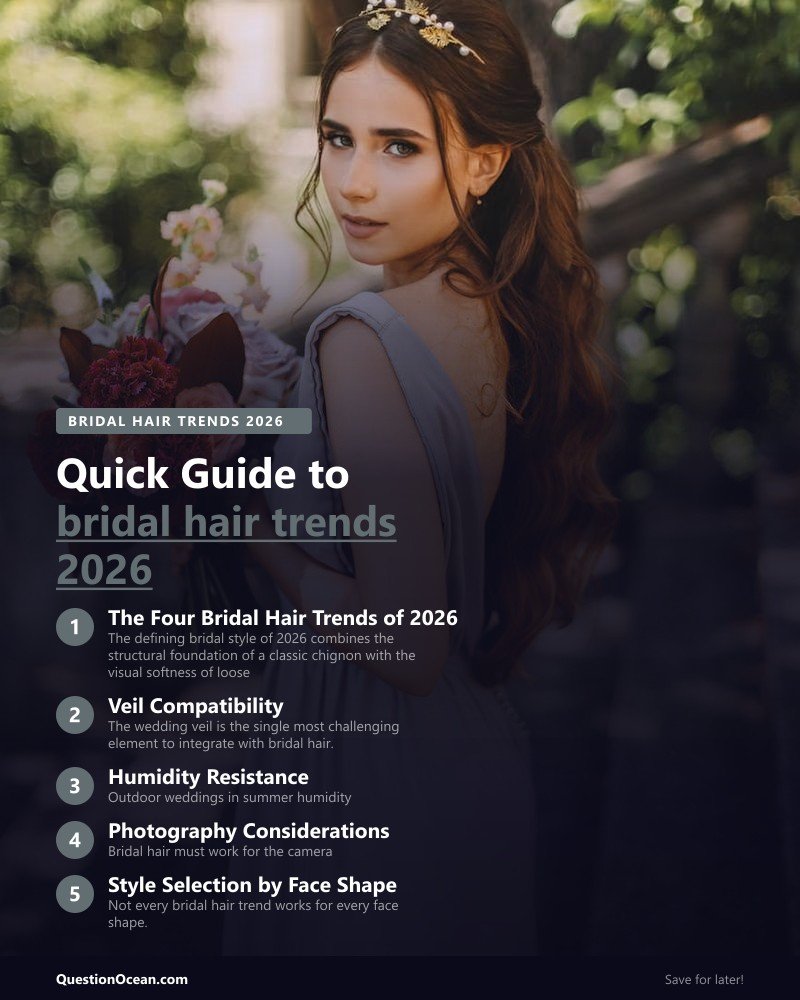
The Four Bridal Hair Trends of 2026
1. Soft Sculptural Updos
The defining bridal style of 2026 combines the structural foundation of a classic chignon with the visual softness of loose, intentionally pulled-out face-framing pieces. The base is engineered for durability. Pinned, padded, and sprayed, while the surface looks effortlessly relaxed.
Key elements:
- Hidden interior structure (foam padding, hairnets, multiple pin points)
- Visible texture (loose waves pulled into the updo rather than smoothed flat)
- Face-framing pieces deliberately pulled forward at the temples and ears
- Accessory placement at the natural curve where the updo meets the back of the head
For the technical execution of one specific updo style, see our sleek French twist evening wear guide.
2. Hollywood Glam Waves
The “old Hollywood” wave returns in 2026 with technical refinements: deeper S-curves, glossier finish, and longer-lasting hold thanks to modern setting products. This style works best for brides with mid-length to long hair who want to wear it down with maximum impact.
Key elements:
- Deep, uniform S-wave pattern from root to tip
- High-shine finish using gloss treatments or shine sprays
- Side-parted (typically deep side part) for dramatic asymmetry
- Often paired with vintage-inspired accessories (pearl combs, art deco pins)
For pre-wedding gloss treatment science, see our pre-wedding hair gloss treatments guide.
3. Half-Up with Statement Accessories
The half-up style splits the difference between updo formality and down-hair softness, securing the top section away from the face while leaving the length flowing. The 2026 update is the use of statement accessories, large pearl barrettes, sculptural metal pieces, or fresh flowers, at the gathering point.
Key elements:
- Top section pulled back from the temples and crown
- Bottom section styled in soft waves or curls
- Accessory placement at the back of the head where the sections meet
- Works for almost every face shape and most hair lengths
For accessory selection, see our pearl accessories formal updos guide.
4. Sleek and Polished
A counter-trend to the soft, textured looks: ultra-sleek, high-polish styles with razor-sharp parts and glass-like finish. This trend suits modern, minimalist wedding aesthetics and works particularly well with structured wedding gowns.
Key elements:
- Smooth, frizz-free finish achieved with specific products and tools
- Sharp center or side part with no flyaways
- Often styled into a low chignon or sleek ponytail
- Minimal or no accessories, the polish is the statement
Bridal Hair Pins Pearl Crystal Set
Veil Compatibility: The Engineering Challenge
The wedding veil is the single most challenging element to integrate with bridal hair. A traditional wedding veil weighs 4-12 ounces (sometimes more for cathedral-length veils with embellishment), and that weight pulls down on the hairstyle from a single attachment point. The veil comb.
The veil weight problem: A 6-ounce veil pulling down from a small comb point in the back of the head transfers all its weight to a few hair strands and the underlying scalp. Without proper structural support, the comb gradually slips backward, the surrounding hair gets pulled out of place, and by photo time, the veil is sagging and the hair is asymmetrical.
The structural solution:
- Foundation pinning before veil insertion: The hairstyle’s underlying structure must be reinforced with extra pins specifically positioned to anchor the veil comb point
- Padding or matting under the veil comb: A small amount of padding (foam or matted hair) creates a stable base for the comb to grip
- Cross-pinning the veil comb: Two crossed bobby pins inserted at 45-degree angles through the comb teeth lock the veil to the underlying structure
- Weight distribution: For heavier veils, multiple small combs distribute the weight rather than concentrating it on one point
Veil removal planning: Many modern brides remove the veil after the ceremony for the reception. The hairstyle must look complete with or without the veil, meaning the veil insertion point should not leave a visible “hole” in the style when removed.
For the technique of securing weighted accessories and extensions, see our securing heavy extensions all day guide.
Humidity Resistance: The Climate Variable
Outdoor weddings in summer humidity, beach weddings, and warm-climate destination weddings all share the same enemy: atmospheric moisture that disrupts hairstyles by reactivating hydrogen bonds in the hair shaft.
The science of humidity damage to hairstyles:
Hair holds its styled shape through hydrogen bonds in the keratin protein structure. Heat styling temporarily breaks and reforms these bonds in the new (curled, smooth, or waved) configuration. Humidity introduces water molecules that compete with the styling-set hydrogen bonds, causing them to release and the hair to revert toward its natural pattern.
The defense layers:
- Hydrophobic primer products applied before styling (silicone-based serums create a water-repelling layer)
- Anti-humidity finishing sprays applied after styling (creating an additional moisture barrier)
- Strong-hold hairspray locking the structural pin work (humidity-resistant formulas only)
- Product layering in the right sequence (heat protectant → primer → styling product → finishing spray)
For the complete weather-proofing protocol, see our weather-proofing event hair summer guide. For strong-hold spray analysis, see our strong hold hairsprays brush out guide.
Photography Considerations: How Hair Reads in Photos
Bridal hair must work for the camera, not just for the mirror. Three photography variables affect how hair appears in photos:
Lighting Direction and Type
Outdoor natural light is generally flattering to all hair colors and textures, but can create harsh shadows on volumetric updos when the sun is directly overhead. Schedule key portraits for “golden hour” (1-2 hours before sunset) when the light is warm and angled.
Indoor venue lighting varies enormously. Tungsten lighting (warm yellow tones) makes blonde hair appear orange and brunette hair appear flat. LED lighting (cool white) makes hair colors appear truer but can be unflattering on textured styles.
Flash photography creates intense reflections on glossy hair surfaces and can make highly polished styles look almost metallic. Slightly textured styles photograph better under flash than ultra-sleek styles.
The Glossy vs Matte Trade-Off
Glossy hair photographs as healthy, expensive, and intentional — but can also reflect light harshly, creating bright “hot spots” in photos. Matte hair photographs as soft and editorial, but can also look dull or flat in low light.
The solution: Aim for medium-glossy. Apply gloss treatments and shine products with restraint, allowing natural texture to break up the surface and prevent harsh reflections.
Color Photography Compatibility
Hair colors that look beautiful in person may not photograph well. Very dark hair can appear as a “black hole” in photos, lacking definition. Very light hair can appear “blown out” with no visible texture. Multi-tonal coloring photographs best because the color variation creates depth and dimension that the camera can capture.
Wedding Hair Accessories Pearl Vine
Style Selection by Face Shape
Not every bridal hair trend works for every face shape. The wrong style can emphasize features the bride wants to minimize.
Oval face: Almost all styles work. The most flexible face shape for bridal styling.
Round face: Avoid styles that add width at the temples. Opt for height (high updos) or face-framing pieces that elongate visually.
Square face: Soften with curls, waves, and asymmetric styles. Avoid sharp center parts and angular styles.
Long/oblong face: Add width with side-swept styles, half-up looks with volume at the temples. Avoid extremely high updos.
Heart-shaped face: Balance the wider forehead with chin-length face-framing pieces or low chignons. Avoid styles that pull all hair away from the face.
For complete face shape styling guidance, see our updo vs down style face shape guide.
Pre-Wedding Hair Preparation Timeline
Bridal hair perfection requires preparation that begins weeks before the wedding day, not the morning of.
6 months before: Schedule trial cuts and color treatments. Allow time for color corrections if results don’t match expectations.
3 months before: Begin a deep conditioning routine. Schedule the first hair gloss treatment. Trial run the planned wedding day hairstyle.
1 month before: Final color refresh. Final trim. Begin daily protein-strengthening treatments to maximize hair health.
1 week before: Final hair gloss treatment for maximum shine. No drastic changes, only refinements.
Day before: Wash hair the night before, not the day of. Day-old hair holds styles better than freshly washed hair.
Wedding day: Allow 2-3 hours for hair styling, including any extension installation, accessory placement, and veil attachment.
DIY vs Professional Bridal Hair
Not every bride hires a professional stylist. The DIY bridal hair option is increasingly popular, particularly for elopements, destination weddings, and casual ceremonies.
DIY bridal hair works for:
- Brides with established styling skills
- Simpler half-up or down styles
- Smaller weddings without extensive photography
- Brides who want full control over the timing and process
DIY bridal hair is risky for:
- Complex updos requiring back-of-head styling (very difficult to execute on yourself)
- Veil attachment (requires positioning that’s hard to verify in a mirror)
- Brides with limited prior styling experience
- Large weddings with extensive photography expectations
For DIY-friendly bridesmaid styles that translate to bride applications, see our DIY bridesmaid hairstyles guide.
The Touch-Up Kit Essential
Every bride needs a touch-up kit accessible throughout the day. The kit lives with the maid of honor, in the venue dressing room, or in a small clutch.
Essential items:
- Bobby pins (matching hair color)
- Small bottle of hairspray
- Small comb or pick
- Anti-shine blotting papers
- Small mirror
For the complete touch-up kit guide, see our hair touch-up kits evening bag guide.
Frequently Asked Questions
Q: What are the bridal hair trends for 2026? A: The four major 2026 bridal hair trends are soft sculptural updos (structured base with soft surface), Hollywood glam waves (deep S-curves with high shine), half-up with statement accessories (combining structure and flow), and sleek and polished (ultra-smooth high-shine finishes). Each trend emphasizes different bride personalities and dress styles.
Q: How do I make my wedding hair last all day? A: Pre-wedding preparation (deep conditioning, gloss treatments), proper product layering (heat protectant → primer → styling product → finishing spray), strong-hold humidity-resistant hairspray, hidden structural pinning, and a touch-up kit for the inevitable mid-event refresh. Bridal hair longevity is engineered, not accidental.
Q: Should I wear my hair up or down for my wedding? A: This depends on dress style, face shape, hair length, and personal preference. High-neckline dresses pair well with updos that show the neck. Low-back dresses pair beautifully with half-up styles or down hair. Round face shapes benefit from updo height, while long faces benefit from down or half-up styles. Trial both options at your hair trial appointment.
Q: How early should I schedule my bridal hair trial? A: 3-4 months before the wedding date. This gives time for any cut or color corrections, allows you to live with the trial style for a few days to assess how it would work in real conditions, and provides space to schedule a second trial if needed.
Q: Can I do my own wedding hair? A: Yes, for simpler styles. Half-up looks, down styles with curls, and basic chignons are achievable for brides with intermediate styling skills. Complex updos and veil attachment are best left to professional stylists. Practice your chosen style at least 3 times before the wedding day if going DIY.
Q: What is the best hairstyle for an outdoor wedding? A: Updos and half-up styles tolerate outdoor conditions (wind, humidity) better than down hair. Use strong-hold humidity-resistant hairspray and avoid extremely loose styles that wind can disrupt. Beach and tropical destinations require additional anti-humidity preparation regardless of style choice.
The bridal hair trends 2026 prioritize the impossible balance between structural durability and visual softness, styles engineered to survive 12+ hours of an event while photographing as effortless and natural. Whether you choose a soft sculptural updo, Hollywood waves, a half-up statement, or sleek polish, the key is matching the style to your dress, your venue, your face shape, and your personal aesthetic, then engineering the underlying structure to make it last from the first photograph to the last dance.