
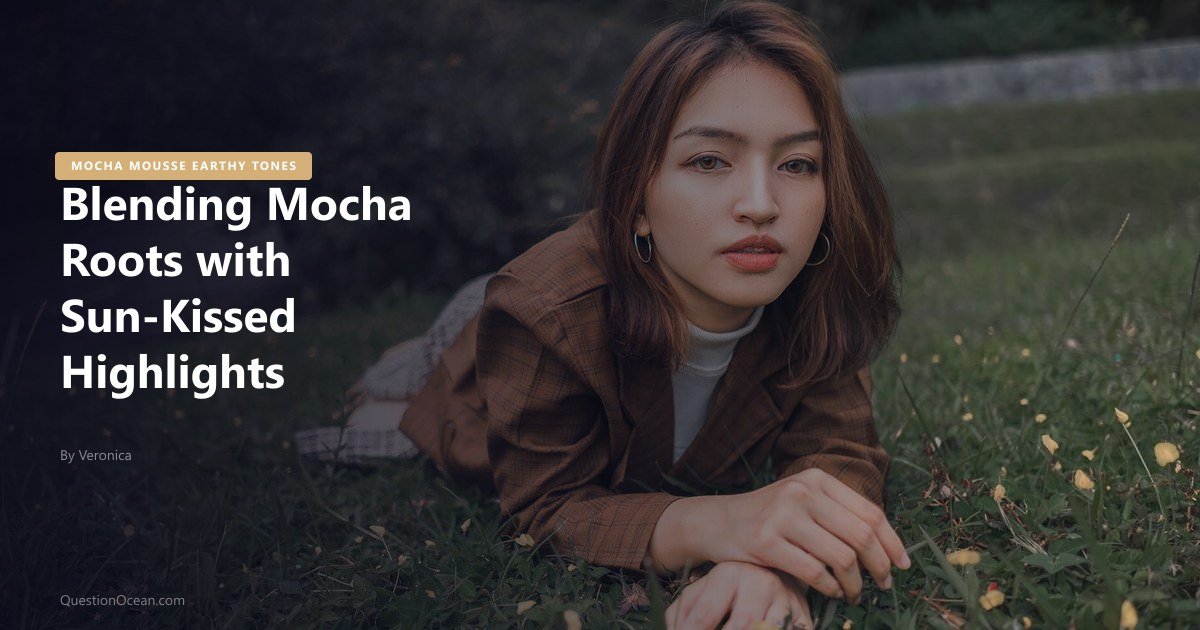
The most requested brunette service in US and UK salons right now combines two elements that fight each other during maintenance: a rich, warm mocha base and lighter sun-kissed pieces that want to turn brassy within weeks. Mocha brown with highlights creates stunning multidimensional depth when done correctly, but the dark roots and lightened ends have completely different care needs, and ignoring that conflict is why so many brunettes end up with orange-toned streaks against a fading base by week four.
This guide covers root melt techniques for seamless blending, the real difference between honey and caramel highlight ribbons, strategic placement for maximum impact, the lifting chemistry that creates brassiness, and the dual toning routine that keeps both zones looking intentional.
What Makes Multidimensional Brunette Different
Flat, single-process brown absorbs light. Multidimensional mocha brown with highlights reflects and refracts it, creating movement and depth that shifts with every angle. The visual trick relies on at least two distinct tonal levels. A rich mocha base at level 4-5 and lighter pieces at level 6-8. Woven together so seamlessly that the eye reads “natural variation” rather than “highlights.”
This is the core principle behind the mocha mousse hair color trend: warmth at multiple depths creates a three-dimensional effect that no single shade can achieve alone. The challenge is making those two levels coexist without the lighter pieces pulling attention away from the mocha foundation.
The approach differs from traditional foil highlights, which create uniform, evenly spaced stripes. Modern mocha-with-highlights techniques use freehand painting and varying saturation levels to mimic how sunlight naturally lightens hair, concentrated at the face, scattered through the mid-lengths, and heaviest at the ends where real sun exposure is greatest.
Root Melt Techniques for Seamless Blending
A root melt, sometimes called a root shadow or root smudge, is the technique that eliminates the hard line between your mocha base and the beginning of your highlighted pieces. Without a root melt, even the most beautiful highlights look disconnected from the base, creating a striped effect that reads as dated rather than dimensional.
The technique works by applying a demi-permanent formula (typically one shade lighter than your mocha base) to the first 1-2 inches of the highlighted sections. This creates a gradient transition zone where the dark root gradually warms into the lighter highlight.
Why demi-permanent for the melt zone specifically:
- It deposits translucent tone that blends rather than covers, keeping the transition soft
- It fades gradually, so the melt zone does not develop a secondary line of demarcation
- It conditions the cuticle during processing, maintaining shine in the transition area
- It can be refreshed at home between salon visits using the techniques in our demi-permanent dye guide
Colorists typically process the root melt for 10-15 minutes after the highlights have been rinsed and toned. The shorter processing window keeps the melt zone subtle: over-processing pushes it too dark and defeats the blending purpose.
Honey vs. Caramel Ribbons: Choosing Your Highlight Tone
Not all sun-kissed highlights are the same warmth. The two most popular options for mocha brown with highlights, honey and caramel. Create distinctly different effects, and choosing the wrong one for your skin’s undertone is a common misstep.
Honey highlights (level 7-8, golden-yellow undertone):
- Best for warm and neutral skin undertones
- Create a brighter, more sun-bleached appearance
- Require more aggressive brassiness management because gold tones oxidize faster
- Pair beautifully with mocha bases that lean warm or golden
Caramel highlights (level 6-7, warm amber undertone):
- Work across warm, neutral, and some cool undertones
- Create subtler, more tonal dimension that stays closer to the mocha base
- Fade more gracefully because the shorter tonal gap produces less visible brassiness
- Pair best with mocha bases that lean slightly cool or neutral, adding warmth without overwhelming
If you cannot decide, caramel is the safer starting point. The closer tonal proximity to a mocha base means the highlights integrate more naturally and require less maintenance. You can always go lighter at your next appointment once you understand your personal fade pattern.
The distinction between honey and caramel on a mocha base also ties into the broader question of how warm-toned browns differ, something covered in depth in our chocolate vs. mocha color chart guide.
Strategic Placement: Money Pieces, Babylights, and Face-Framing
Where highlights go matters as much as what shade they are. Three placement strategies dominate the mocha-with-highlights look in 2026:
Money pieces:
- The two front sections framing the face, starting approximately 1 inch back from the hairline
- These get the lightest lift (2-3 levels above base) for maximum brightness
- They are the first thing people notice, and the first sections to show brassiness
- Refresh money pieces every 8-10 weeks even if you stretch the rest of your highlights longer
Babylights:
- Ultra-fine, closely woven highlights scattered throughout the mid-lengths and crown
- Create a diffused, lived-in effect rather than chunky contrast
- Take longer in the salon chair (expect an extra 30-60 minutes) but require less frequent touch-ups
- Ideal for anyone who wants dimension without obvious highlight placement
Face-framing sweep:
- Pieces from the temple area through to the jawline, graduating in lightness from root to tip
- Creates a natural frame that brightens the complexion without a full highlight service
- The most low-maintenance option because the gradual fade looks intentional
For most mocha brown with highlights services, combining money pieces with either babylights or a face-framing sweep delivers the best balance of impact and maintenance. Full-head foil highlights on a mocha base create too much contrast and shift the look from multidimensional brunette to “brunette with blonde highlights”. A completely different aesthetic.
Lifting Chemistry and Why Brassiness Happens
Understanding why your highlights turn brassy is the key to preventing it. When lightener lifts your mocha base, it destroys melanin in a specific sequence. Eumelanin (brown-black pigment) breaks down first, exposing the underlying pheomelanin (red-yellow pigment): this is the orange and gold warmth that you perceive as brassiness.
The severity depends on how far the hair was lifted:
- 1-2 levels of lift: Warm copper-red exposure (not far enough for sun-kissed)
- 3 levels of lift: Orange-gold exposure (the caramel zone)
- 4+ levels of lift: Yellow-gold exposure (the honey zone)
Every level of additional lift exposes progressively lighter underlying pigment. This means honey highlights, which require more lift than caramel, expose more yellow pigment and are inherently more prone to brassy shift as the toner fades.
The techniques used in caramel balayage on espresso hair apply the same color wheel logic. The only difference is the starting level and the amount of lift required.
The Dual Toning Routine: Blue and Purple Shampoo
Here is where mocha brown with highlights gets complicated. Your dark mocha roots and your lighter highlighted pieces need different toning, and using the wrong shampoo on the wrong zone actively works against you.
For the mocha base (roots and unlightened sections):
- Blue shampoo neutralizes the warm copper-orange tones that emerge as mocha fades
- Apply blue shampoo directly to roots and base sections, massaging only those areas
- Leave on for 3-5 minutes maximum, over-toning mocha roots pushes them ashy and flat
Fanola No Orange Shampoo, blue pigment for brunette base toning
For the highlighted sections (mid-lengths and ends):
- If highlights are caramel (lifted to orange-gold stage): use blue shampoo on those sections too
- If highlights are honey or lighter (lifted to yellow-gold stage): switch to purple shampoo on those sections only
- Apply to highlighted pieces specifically, avoiding over-saturating the mocha base
Matrix Total Results Brass Off Shampoo. Blue-violet pigment for highlighted brunettes
The dual routine in practice:
- Wet hair thoroughly in the shower.
- Apply blue shampoo to roots and mocha base sections. Massage for 2 minutes.
- Apply the appropriate toning shampoo (blue or purple, depending on your highlight level) to the highlighted mid-lengths and ends.
- Let both zones process for 3-5 minutes simultaneously.
- Rinse with cool water to close the cuticle and seal in the toning effect.
- Follow with a color-safe conditioner on lengths and ends only.
Perform this dual routine once per week. On all other wash days, use a gentle sulfate-free shampoo to minimize fade on both zones equally.
Maintaining the Mocha Base Between Highlight Appointments
Highlights get all the maintenance attention, but the mocha base fades too, and when the base lightens while the highlights stay toned, you lose the contrast that makes the look work.
A color-depositing mask in a warm brown shade, applied to roots and base sections every 2-3 weeks, refreshes the mocha depth without touching the highlighted pieces. Part your hair into sections and apply the mask to base-colored strands only, clipping highlighted sections out of the way.
Moroccanoil Color Depositing Mask in Cocoa: brunette base refresh
This targeted application keeps the two-tone relationship intact. Applying a brown depositing mask over your highlights would dull or darken them, erasing the dimension you paid for.
Between color-depositing sessions, UV-protective leave-in spray on your highlighted sections prevents sun-driven oxidation, the same sunlight that inspired the “sun-kissed” look will ironically accelerate its brassiness if you do not shield those lightened pieces.
FAQ
What color highlights look best in mocha brown?
Caramel (level 6-7) and honey (level 7-8) highlights complement mocha brown most naturally. Caramel creates subtle, close-toned dimension that requires less maintenance, while honey creates brighter contrast with more visual pop. Warm gold tones integrate better than cool ash or platinum, cool-toned highlights against a warm mocha base create visual discord rather than harmony.
How do I deal with caramel highlights on brown hair lifting warm?
The warm shift is expected because caramel sits at a tonal level where orange-gold pigment is dominant. Use blue shampoo (not purple) on those sections once weekly to neutralize the copper drift. If the warmth has progressed past what blue shampoo can correct, a demi-permanent glaze at the salon in a neutral-warm caramel shade resets the tone without additional lifting.
Can I get mocha brown with highlights at home?
The mocha base can be achieved at home with a demi-permanent formula, but the highlights require lightener: which carries real risk of uneven lift, brassiness, and breakage when self-applied to sections you cannot see. If budget is a concern, consider getting highlights done professionally and maintaining the mocha base at home between appointments.
How often should I touch up mocha roots with highlights?
Highlights need refreshing every 10-16 weeks if you have a root melt, because the gradual transition disguises regrowth. Money pieces may need refreshing sooner (8-10 weeks) since they frame the face and show change most visibly. The mocha base can be maintained at home with demi-permanent color or depositing masks between full salon appointments.
Will purple shampoo work on my mocha highlights?
Only if your highlights have been lifted to a yellow or pale gold level (typically level 8 or higher). Purple pigment neutralizes yellow tones. If your highlights are caramel (orange-gold, level 6-7), purple shampoo will have minimal effect — you need blue shampoo, which neutralizes orange. Using the wrong one wastes product and leaves brassiness untouched.
Do mocha roots look good growing out with highlights?
Yes. This is one of the biggest advantages of mocha brown with highlights over all-over blonde or platinum. The warm mocha root grows in naturally against the highlighted pieces, creating a lived-in gradient that looks intentional for months. A root melt at your initial appointment extends this graceful grow-out period even further, making this one of the lowest-maintenance dimensional color options available.
Final Thoughts
Mocha brown with highlights succeeds when you treat the dark base and the lightened pieces as two separate systems with conflicting needs, and build a maintenance routine that serves both. Use blue shampoo on the mocha base, match your highlight toning shampoo to the actual level of lift, refresh the base with color-depositing masks between salon visits, and protect highlighted ends from UV oxidation. The multidimensional warmth that makes this look so striking in the salon chair can last well beyond your next appointment when the chemistry and care align.