

A wooden hair brush that never gets cleaned properly lasts 8-12 months before the wood cracks, the cushion loosens, or the bristles splay beyond usefulness. One that receives the right maintenance every two weeks can stay functional for five to seven years. The difference is not effort, it takes under four minutes per session, but technique. Most people ruin wooden brushes by submerging them in water, which is the single fastest way to destroy the tool.
Cleaning wooden hair brush tools correctly means understanding how wood reacts to moisture, which oils protect the grain, and how to sanitize bristles without introducing the chemicals that degrade natural materials. Our complete guide to sustainable zero-waste haircare covers the full eco-friendly toolkit, but this article focuses specifically on making your wooden brushes last as long as physically possible.
Why Water Destroys Wooden Hair Brushes
Wood is hygroscopic. It absorbs and releases moisture from its environment constantly. Bamboo, beechwood, and olive wood (the three most common materials in eco-friendly brushes) each have distinct absorption rates, but all share the same vulnerability: prolonged water contact causes the internal fibers to swell unevenly.
When the wood swells, the glue holding bristles in place weakens, the cushion seal breaks, and micro-cracks form along the grain. These cracks are invisible at first but widen over successive wet-dry cycles until the handle splits or the bristle rows loosen permanently.
A beechwood brush submerged for just 90 seconds absorbs enough water to increase its moisture content by 8-12%. Drying it on a radiator or in direct sunlight accelerates the cracking because rapid evaporation creates uneven contraction across the grain. The result is a brush that looked fine going in and develops hairline fractures within 48 hours.
The Four-Minute Dry Cleaning Method
This technique removes 90% of buildup without any water contact. Perform it every 7-14 days depending on how many styling products you use.
- Hold the brush bristle-side up and use a fine-toothed comb or dedicated brush-cleaning rake to lift trapped hair from the base, starting at one edge and working across in rows
- Tap the brush bristle-side down against your palm three to four times to dislodge loose dust, dry shampoo powder, and sebum flakes
- Dip a cotton pad in 70% isopropyl alcohol (not water) and wipe each bristle row from base to tip, rotating the pad to a clean section every two rows
- Wipe the wooden body and handle with a separate dry microfiber cloth to remove any transferred residue
This dry method preserves the wood’s natural moisture balance while removing the oily film and product residue that accumulates between bristle rows. The isopropyl alcohol evaporates within 15-20 seconds, leaving zero residual moisture in the wood grain.
When a Damp Clean Is Necessary
If your brush has visible product paste caked between bristles, common with heavy leave-in conditioner or pomade users. A minimal damp clean becomes unavoidable. The key is controlling exactly how much water contacts the wood and for how long.
Mix one teaspoon of gentle castile soap (Dr. Bronner’s unscented works across US, UK, and CA markets) into a shallow bowl of lukewarm water. Dip only the bristle tips into the solution, never submerge past the cushion line. Use your fingers or a soft toothbrush to work the soap through the bristles for 20-30 seconds maximum.
Rinse the bristles under a gentle stream of lukewarm water, holding the brush at a 45-degree angle with bristles pointing downward. This angle prevents water from running back into the cushion or pooling around the bristle insertion points. The entire wet phase should last under 60 seconds total.
Shake the brush vigorously three to four times, then pat the bristles with a clean towel. Place the brush bristle-side down on a dry towel in a well-ventilated area away from direct heat sources. Full air-drying takes 4-6 hours at room temperature. Never use it while still damp.
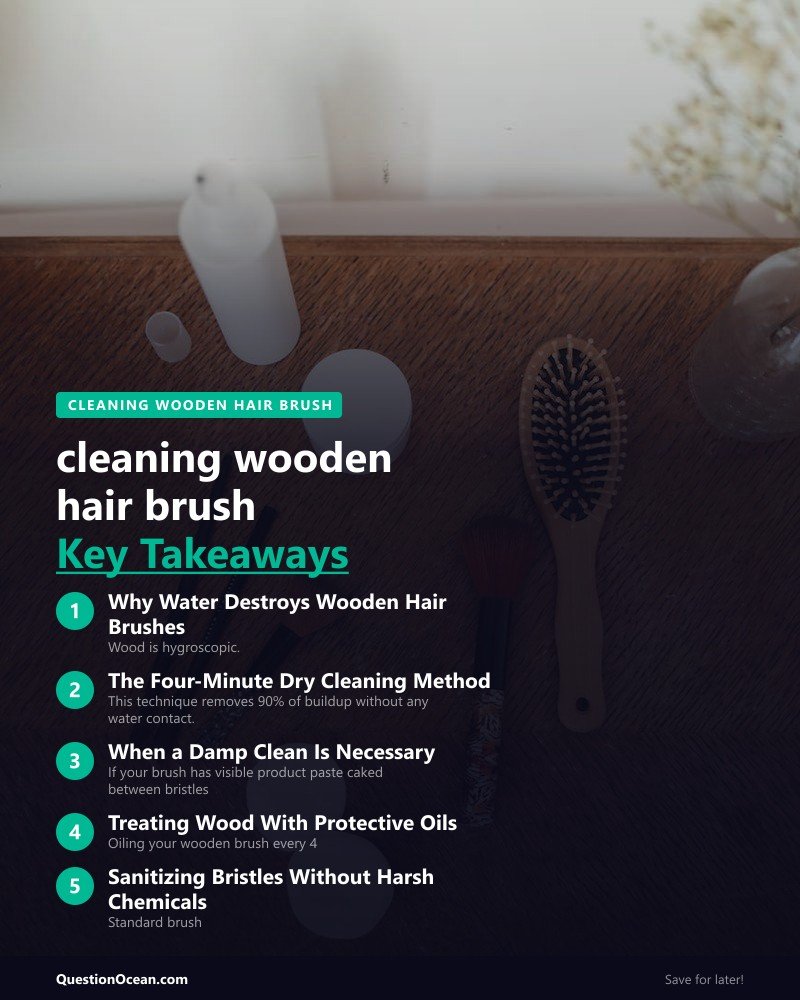
Treating Wood With Protective Oils
Oiling your wooden brush every 4-6 weeks creates a hydrophobic barrier that repels moisture, prevents cracking, and restores the wood’s natural luster. Two oils outperform all others for this purpose.
Jojoba Oil
Jojoba oil is technically a liquid wax, which makes it uniquely effective for wood protection. It does not go rancid (unlike olive or coconut oil), penetrates the grain deeply, and leaves a non-greasy satin finish. Apply 3-4 drops to a cotton cloth and rub along the grain of the handle and body. Allow 20 minutes for absorption before using the brush.
Jojoba Oil, cold-pressed, unrefined, suitable for wood conditioning
Linseed Oil (Food-Grade)
Food-grade linseed oil provides the deepest penetration of any natural wood treatment, reaching 2-3mm into the grain compared to 0.5-1mm for most carrier oils. It polymerizes slightly over 24-48 hours, creating a semi-permanent protective film inside the wood fibers. Apply sparingly, two drops are sufficient for a standard paddle brush handle, and buff with a clean cloth after 30 minutes.
Avoid boiled linseed oil (commonly sold in hardware stores), which contains metallic drying agents not suitable for personal care tools. Food-grade or raw linseed oil, available at health food shops and online, is the only safe option for items that contact your hair and scalp.
Sanitizing Bristles Without Harsh Chemicals
Standard brush-cleaning sprays often contain synthetic fragrances, parabens, or quaternary ammonium compounds that degrade natural rubber cushions and strip protective oils from wood. These three alternatives sanitize effectively without causing material damage.
- Tea tree oil solution: Add 5 drops of tea tree essential oil to 100ml of 70% isopropyl alcohol in a spray bottle. Mist bristles lightly after each dry cleaning session. Tea tree oil provides broad-spectrum antimicrobial action and evaporates cleanly
- White vinegar rinse: Mix equal parts white vinegar and water. Dip bristle tips only for 10 seconds, then air-dry bristle-side down. The acetic acid dissolves sebum and neutralizes odor-causing bacteria
- UV-C sanitizing: Place the brush under a portable UV-C sanitizing wand for 30-60 seconds per side. This kills 99.9% of surface microorganisms without any liquid contact, the ideal option for all-wooden brushes with no metal components
If you use biodegradable hair ties and eco accessories, the same tea tree oil spray works for sanitizing those items as well.
Drying Protocols That Prevent Warping
How you dry a wooden brush matters as much as how you clean it. Incorrect drying causes warping, cushion separation, and accelerated bristle loss.
Never dry a wooden brush on a radiator, near a space heater, or in direct sunlight. Rapid heat-drying pulls moisture from the outer wood layers while the interior remains damp, creating internal stress that manifests as warping within 24-48 hours.
The correct protocol after any damp cleaning involves three steps:
- Shake the brush vigorously to remove surface water droplets
- Pat bristles and the cushion edge with a clean, absorbent cotton towel
- Place the brush bristle-side down on a dry towel in an area with natural air circulation at room temperature (65-75°F / 18-24°C)
Bristle-side-down positioning is critical because it allows gravity to pull moisture away from the cushion junction — the most vulnerable point on any cushioned wooden brush. Placing the brush bristle-side up traps water at the cushion seal, which is the primary cause of premature cushion detachment.
In humid UK climates or during North American summer months, drying may take 6-8 hours rather than the standard 4-6. Do not accelerate the process with a hair dryer. The concentrated heat from even a cool-shot setting can create hot spots on the wood surface that lead to uneven contraction.
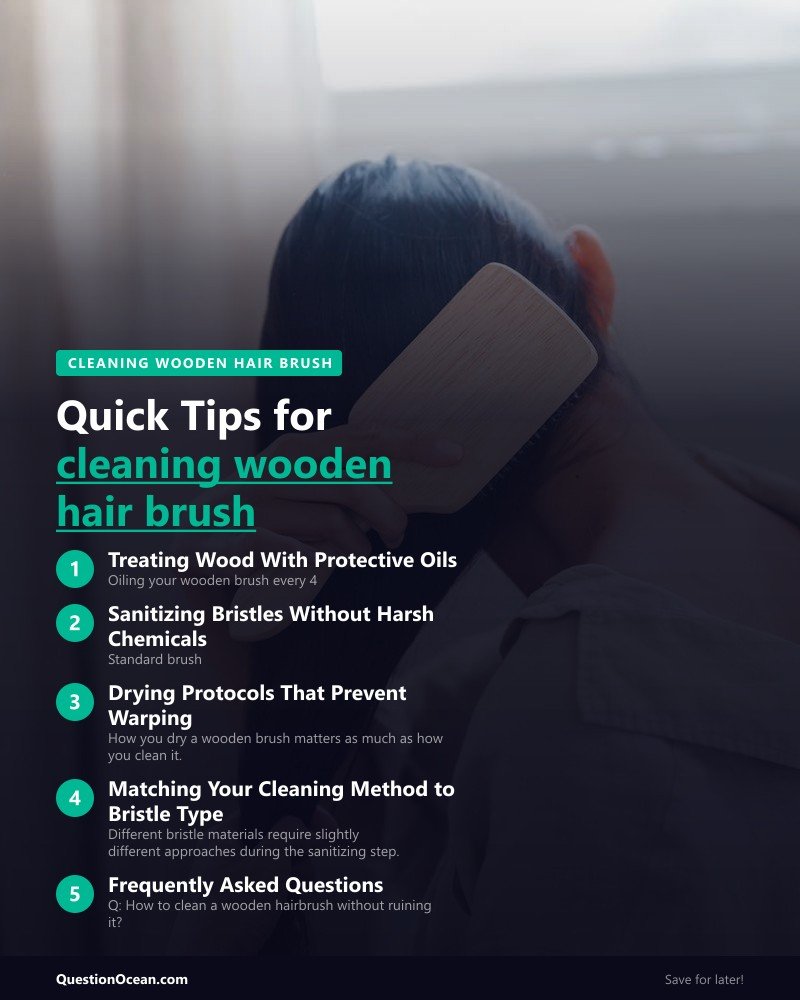
Matching Your Cleaning Method to Bristle Type
Different bristle materials require slightly different approaches during the sanitizing step. Matching the method to your brush type prevents premature bristle degradation.
- Natural plant-fiber bristles (sisal, tampico): Use the dry cleaning method exclusively when possible. These fibers absorb water even faster than wood and become permanently misshapen if saturated. The tea tree alcohol spray is the safest sanitizer
- Wooden pin bristles: The most water-resistant bristle type. Damp cleaning is safe when needed, but always oil the pins along with the body during your monthly conditioning
- Nylon bristles on a wooden base: The bristles themselves tolerate water well, but protect the wooden base by following the 45-degree-angle rinse technique described above
For readers exploring vegan alternatives to boar bristle brushes, plant-fiber bristles demand the gentlest cleaning approach of any bristle type.
A well-maintained wooden brush also supports your scalp care routine. If you use a scalp massager brush for cosmetic exfoliation, the same tea tree sanitizing spray and air-drying protocol applies to silicone and wooden scalp tools alike.
Wooden Hair Brush Cleaning Kit. Rake tool and microfiber cloth set
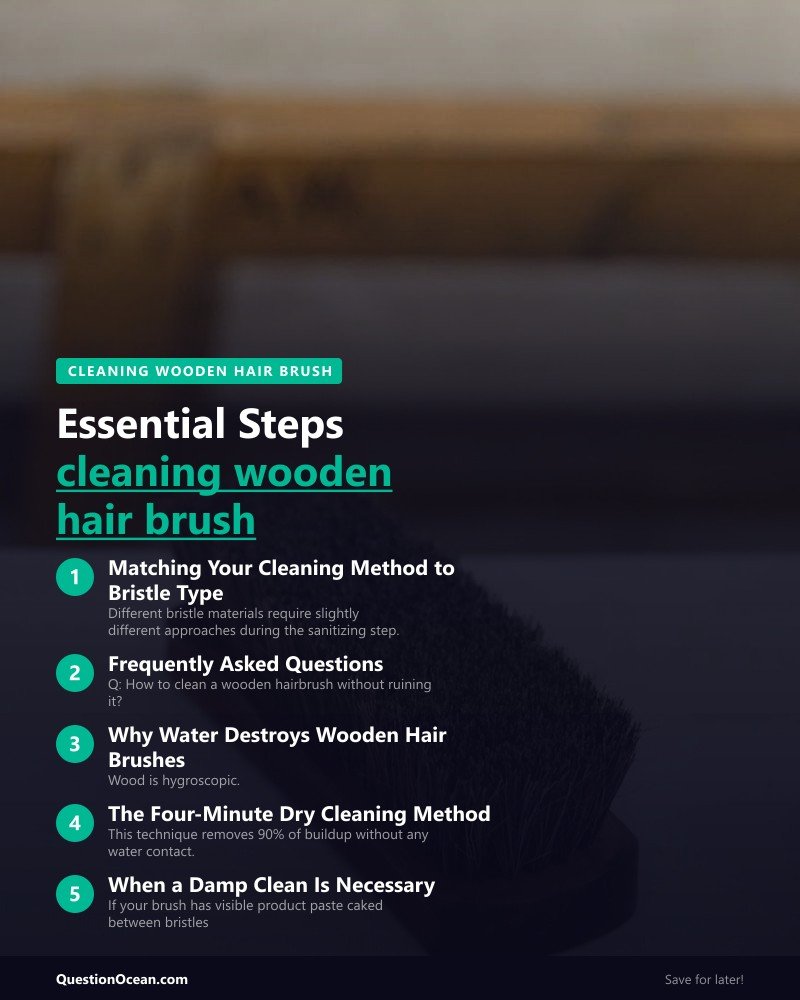
Frequently Asked Questions
Q: How to clean a wooden hairbrush without ruining it? A: Use the dry cleaning method: remove trapped hair with a comb or rake, tap out loose debris, then wipe bristles with a cotton pad dampened with 70% isopropyl alcohol. Avoid submerging the brush in water, which causes wood swelling, cushion separation, and cracking within weeks.
Q: Can I soak a wooden brush in water to remove buildup? A: Never soak a wooden brush. Even 90 seconds of submersion raises the wood’s moisture content by 8-12%, weakening glue joints and initiating micro-cracks. If a damp clean is necessary, dip only the bristle tips for under 60 seconds and dry bristle-side down at room temperature.
Q: How often should I oil a wooden hair brush? A: Every 4-6 weeks with jojoba oil or food-grade linseed oil. Apply 3-4 drops to a cloth and rub along the grain. This prevents drying, cracking, and moisture absorption while restoring the wood’s natural sheen.
Q: What oil is best for conditioning wooden brushes? A: Jojoba oil is the most practical choice because it never goes rancid and leaves a non-greasy finish. Food-grade linseed oil provides deeper penetration (2-3mm into the grain) and creates a semi-permanent protective barrier, making it ideal for brushes used daily.
Q: How do I remove the musty smell from a wooden brush? A: Mist the bristles and wood surface with a solution of 5 drops tea tree oil in 100ml isopropyl alcohol, then air-dry bristle-side down for 4-6 hours. The tea tree oil neutralizes odor-causing bacteria, and the alcohol evaporates without leaving moisture in the grain. Repeat weekly until the smell disappears.
Cleaning wooden hair brush tools correctly is a four-minute habit that extends the life of your investment from months to years. The combination of regular dry cleaning, monthly oil conditioning, and proper air-drying protocols keeps the wood structurally sound and the bristles performing at their best, making your sustainable choice genuinely sustainable over the long term.