
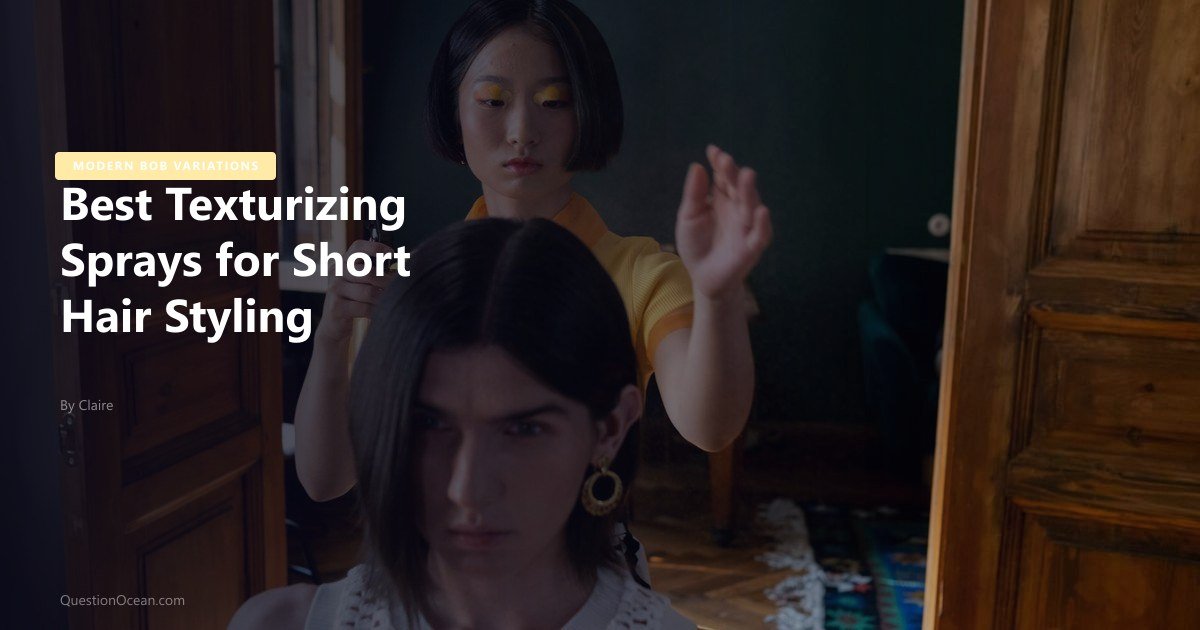
The difference between a bob that falls flat by lunchtime and one that holds piecey separation all day usually comes down to a single product: texturizing spray. But the wrong formula turns short hair into a crunchy, straw-like mess that feels worse than using nothing at all. This guide breaks down what actually works, why certain ingredients cause that dreaded stiffness, and which products deliver grip and movement without the haystack effect.
How Texturizing Spray Works on Short Hair
Texturizing sprays deposit microscopic polymers onto the hair shaft that create friction between individual strands. That friction is what gives short hair grip, separation, and the illusion of thicker density. Without it, fine or straight bob-length hair tends to clump together and lie flat against the head.
Most formulas use one of two polymer bases: PVP (polyvinylpyrrolidone) or copolymer blends that form a flexible film. The best texturizing sprays for short hair use lightweight copolymers that add grip without visible residue. Heavier PVP-dominant formulas work on long hair where weight is less of a concern, but on a bob they drag the shape down and create that stiff, coated feeling.
Texturizing Spray vs. Dry Shampoo: They Are Not the Same Product
Many people reach for dry shampoo when they want texture, but the two products work through completely different chemistry. Dry shampoo absorbs oil with starches and clays. Texturizing spray builds structure with polymers and salts. Using dry shampoo for texture gives you a powdery, matte base that lacks the flexible hold short hair needs.
Here is where the chemistry matters for your bob:
- Dry shampoo strips oil at the root, adding temporary volume but no lasting separation at the mid-lengths or ends.
- Texturizing spray coats strands individually, creating the piecey separation that defines modern bob styling.
- Sea salt spray falls somewhere between, using salt crystals for grit but often over-drying fine hair with repeated use.
For short hair, a dedicated texturizing spray outperforms both dry shampoo and sea salt spray because it targets the mid-shaft and ends where bobs need the most definition. If you style your bob with flat iron bends, texturizing spray also helps those bends hold their shape longer.
Best Product to Give Short Hair Piecey Texture?
The best texturizing spray for piecey bob texture balances polymer grip with a lightweight carrier that evaporates without residue. Three tiers cover every budget and preference.
Luxury Tier: Salon-Grade Performance
These formulas justify their price with refined ingredient profiles, pleasant scents, and invisible finishes.
| Product | Key Ingredients | Finish | Hold Level | Best For |
|---|---|---|---|---|
| Oribe Dry Texturizing Spray | Copolymer blend, silica | Matte | Medium | Fine to medium bobs needing volume and separation |
| Living Proof Full Dry Volume & Texture Spray | OFPMA (patented molecule) | Natural | Medium-light | All-day texture without buildup |
| Bumble and Bumble Thickening Dryspun Texture Spray | Copolymer, tapioca starch | Matte-natural | Medium | Adding density to thin bobs |
Oribe’s formula remains the benchmark for invisible texture. It disappears into the hair and leaves zero white cast, which matters on dark-haired bobs where powder residue is immediately visible.
Mid-Range Tier: Strong Performers Under $25/GBP20
This tier includes salon-adjacent brands available at Ulta, Sephora, and Boots that punch well above their price point.
| Product | Key Ingredients | Finish | Hold Level | Best For |
|---|---|---|---|---|
| IGK First Class Dry Texturizing Spray | Charcoal powder, copolymer | Matte | Medium | Oil-prone fine hair |
| Kenra Platinum Texturizing Taffy Spray | Flexible resin blend | Touchable | Medium-firm | Holding flat iron bends on a bob |
| R+Co Trophy Shine + Texture Spray | Vitamin E, lightweight silicone | Subtle sheen | Light-medium | Adding movement without matte dryness |
Budget Tier: Drugstore and Supermarket Picks
You do not need to spend $40 for usable texture. Budget formulas from Target, Boots, and Shoppers Drug Mart deliver 80 percent of the performance at a quarter of the price. The trade-off is usually scent longevity and spray nozzle precision, not the actual texturizing effect.
| Product | Key Ingredients | Finish | Hold Level | Best For |
|---|---|---|---|---|
| Not Your Mother’s Beach Babe Sea Salt Spray | Sea salt, kelp extract | Matte-gritty | Medium | Casual beach texture on thick bobs |
| TRESemme Compressed Micro Mist Texture Hold | Copolymer, alcohol base | Natural | Light-medium | Everyday touchable texture |
| Batiste Dry Styling Texturizing Spray | Rice starch, copolymer | Matte | Medium | Volume and grip on fine hair |
For a deeper comparison of luxury versus budget options, our guide to dry texturizing sprays from budget brands covers ingredient-by-ingredient breakdowns.
Not Your Mother’s Beach Babe Texturizing Sea Salt Spray
Good Texture Spray Without Making Hair Stiff?
Stiffness is the number one complaint about texturizing sprays, and it almost always comes from one of two causes: over-application or high-alcohol formulas. The fix is using no more than three to four short bursts on a bob and choosing alcohol-free or low-alcohol products.
Why Some Sprays Turn Crunchy
High concentrations of denatured alcohol (listed as SD alcohol or alcohol denat) evaporate fast but leave the polymer film rigid. That rigid film is what you feel when your hair crunches between your fingers. Products with lower alcohol content use propellant gases or water-based carriers that deposit the same polymers in a softer, more flexible layer.
The Three-Burst Rule for Short Hair
On a bob, you have far less surface area than shoulder-length or long hair. Most people spray their bob like they would spray longer hair and end up with three times the product density per inch. Hold the can eight to ten inches from your head and use exactly three short bursts: one at the crown, one at the left side, one at the right side. Scrunch with your fingers to distribute. Add a fourth burst only if your hair is particularly thick or resistant to texture.
How to Fix Over-Applied Texture Spray
If you have already over-sprayed and your bob feels stiff, do not add water. Water reactivates the polymers and often makes the situation worse. Instead, take a boar-bristle brush and gently brush through the mid-lengths once or twice. This breaks up the polymer film without removing it entirely, turning crunch into workable grip.
How to Apply Texturizing Spray on a Bob: Section by Section
Application technique matters as much as product choice on short hair. Spraying randomly into a finished bob creates uneven texture with stiff spots and flat spots.
- Start with dry hair. Texturizing spray works on fully dry hair. Damp hair dilutes the polymers and prevents them from gripping.
- Flip your head upside down. This lifts the roots away from the scalp and exposes the under-layers that need texture most.
- Three bursts, eight inches away. Crown, left, right. Keep the nozzle moving.
- Flip back up and scrunch. Use both hands to scrunch from the ends upward toward the roots. This sets the texture into the shape rather than leaving it sitting on the surface.
- Piece out the front sections with fingers. Take individual pieces around the face and twist them lightly between your thumb and index finger. This creates the piecey, separated framing that defines a well-styled bob.
For bobs styled with a French bob cut, focus extra product on the front sections where the blunt fringe meets the sides. That junction is where piecey separation creates the most visual impact.
Avoiding the Haystack Effect on Fine Short Hair
Fine hair absorbs texturizing spray faster than thick hair, and the result can go from piecey to puffy in one extra burst. The haystack effect happens when too much product lifts every strand away from its neighbor without enough weight to settle them into a pattern.
To avoid this on fine bobs:
- Choose a spray labeled “lightweight” or “weightless” rather than “volumizing.” Volumizing texturizing sprays add root lift that fine short hair does not need.
- Apply to mid-lengths and ends only. Skip the roots on fine hair entirely. Root volume on a fine bob creates puffiness, not texture.
- Layer with a flexible-hold finishing spray. One burst of light-hold hairspray over the texturizing spray gives fine strands just enough structure to hold a pattern rather than floating into a shapeless cloud.
If you are working with fine hair on a bob, our guide to styling a French bob on fine hair covers additional techniques that complement texturizing spray.
Cleansing Texturizing Spray From Short Hair
Polymer buildup from texturizing spray does not fully wash out with every shampoo, especially gentle sulfate-free formulas. Over time, that residue accumulates and makes your hair feel perpetually coated even when freshly washed. Use a clarifying shampoo once every one to two weeks to dissolve polymer buildup without stripping your hair’s natural oils.
Look for clarifying shampoos that list sodium C14-16 olefin sulfonate as the primary surfactant rather than sodium lauryl sulfate. The olefin sulfonate dissolves styling product polymers effectively while being milder on the scalp. Follow every clarifying wash with a lightweight conditioner focused on the ends.
For days when you want texture without any product, explore techniques for air-drying your bob with natural texture.
Scent Profiles: What You Will Actually Smell All Day
Short hair sits close to your nose all day. A texturizing spray with an overpowering fragrance becomes nauseating by hour three. Pay attention to scent descriptions before buying, especially for products you will use daily.
- Oribe Dry Texturizing Spray: Signature Oribe scent with citrus, floral, and woody notes. Pleasant but noticeable.
- Living Proof Full Dry Volume & Texture Spray: Very mild, almost unscented. Best for fragrance-sensitive users.
- Not Your Mother’s Beach Babe: Coconut-forward tropical scent. Divisive; some love it, others find it synthetic.
- IGK First Class: Light, clean scent that fades within thirty minutes.
If fragrance sensitivity is a concern, Living Proof or IGK are the safest choices across the price spectrum.
Living Proof Full Dry Volume & Texture Spray
FAQ
Can I use texturizing spray every day on short hair?
Yes, daily use is fine as long as you follow the three-burst rule and clarify your hair every one to two weeks. Daily over-application without regular clarifying washes leads to buildup that makes hair feel waxy and heavy.
Does texturizing spray damage hair?
Texturizing spray does not cause structural damage to the hair shaft. The polymers sit on the surface and wash out with proper cleansing. The only concern is buildup from infrequent washing, which affects texture and appearance but is fully reversible with a clarifying shampoo.
Can I use texturizing spray on wet hair?
Most dry texturizing sprays are designed for fully dry hair. Applying to wet hair dilutes the polymers and prevents them from forming the grip that creates texture. Sea salt sprays are the exception and can be applied to damp hair before air-drying.
What is the difference between texturizing spray and sea salt spray?
Sea salt spray uses salt crystals to create grit and a beachy wave pattern. Texturizing spray uses polymers to create grip and separation without the drying effect of salt. For regular daily use on a bob, texturizing spray is the gentler option.
Is expensive texturizing spray worth it over drugstore brands?
The primary differences are scent, spray nozzle quality, and invisible finish on dark hair. For the actual texturizing effect, mid-range and budget sprays perform within 80 percent of luxury options. If white residue on dark hair is your main concern, investing in Oribe or Living Proof is worthwhile.
How do I add texture to a bob without making it look messy?
Apply texturizing spray conservatively using the three-burst method, then use your fingers to define specific pieces rather than scrunching all over. Controlled finger-placement creates structured piecey texture, while all-over scrunching leans toward a messy, undone look.
Conclusion
The best texturizing spray for short hair gives you grip and piecey separation without stiffness, residue, or that dreaded haystack puffiness. Stick to lightweight copolymer formulas, follow the three-burst application rule, and clarify every couple of weeks to keep buildup in check. Whether you reach for Oribe or a budget pick from the drugstore aisle, the technique matters more than the price tag.