
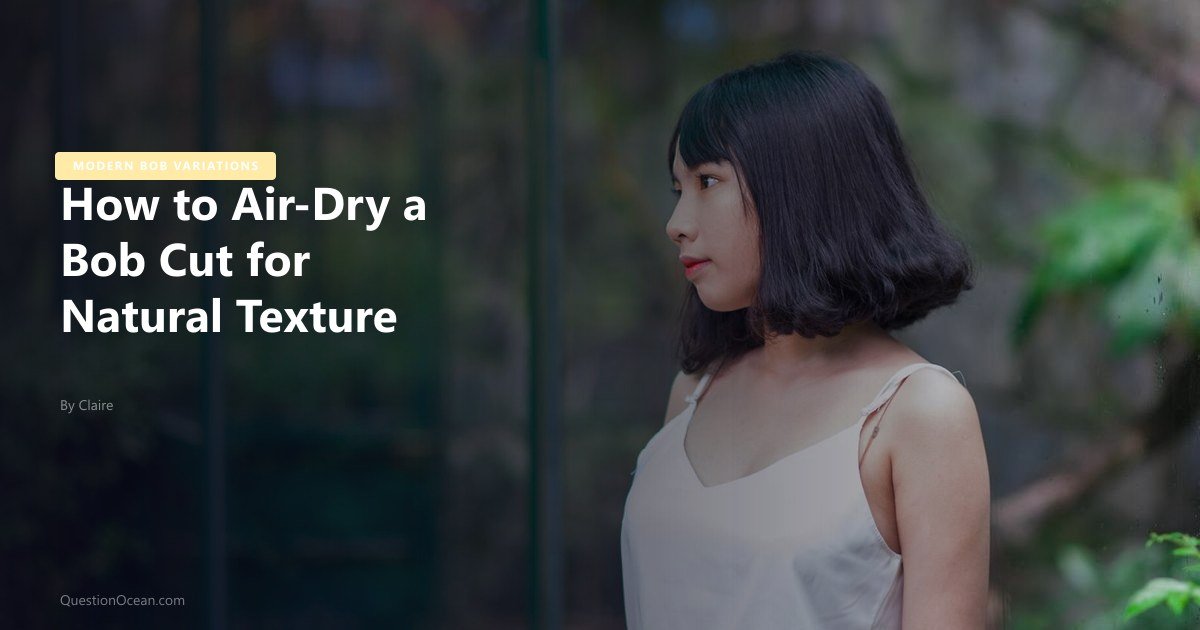
Microfiber towels reduce frizz by up to 50 percent compared to cotton terry cloth, making them the single most impactful swap for anyone air-drying a bob. Skipping the blow dryer does not mean accepting a shapeless, frizzy result. With the right products, drying method, and a few strategic clips, an air-dried bob can look intentionally tousled, textured, and polished.
This guide covers porosity-specific product selection, the physics behind microfiber plopping, and a step-by-step scrunch-and-clip method that prevents the dreaded triangle shape on shorter cuts.
For a broader look at how bobs differ in structure and which styles lend themselves to air-drying, start with the French bob vs Italian bob guide.
Why Air-Drying Works for a Bob
Short to medium cuts dry faster than long hair, which means the window for frizz-causing friction is smaller, giving bobs a natural advantage in the air-dry game. Less drying time also means less opportunity for hair to settle flat against the scalp, preserving some natural body.
The key is controlling what happens during that drying window. Touching, scrunching too aggressively, or switching products mid-dry disrupts the curl or wave pattern as it forms. A hands-off approach after the initial styling step produces the most consistent texture.
How Do You Let a Bob Air Dry Nicely?
This is the question that drives most readers here, and the answer starts with understanding your hair’s porosity. Porosity determines how quickly your hair absorbs and releases moisture, which dictates your ideal air-dry cream weight.
Low Porosity (Cuticles Tightly Closed)
Low porosity hair resists moisture absorption. Products sit on the surface and create a greasy, weighed-down look if they are too heavy. Choose lightweight leave-in sprays or milks rather than thick creams.
Best products: water-based leave-in sprays, mousse, or light foams.
Medium Porosity (Balanced Absorption)
Medium porosity hair accepts and holds moisture evenly. This is the easiest porosity to air-dry because most products work well. A medium-weight cream or curl-enhancing lotion is ideal.
Best products: leave-in conditioners, curl creams, or light styling lotions.
High Porosity (Cuticles Raised or Damaged)
High porosity hair absorbs moisture quickly but loses it just as fast, leading to frizz as the outer layers dry unevenly. Heavier creams and oils seal the cuticle and slow moisture loss.
Best products: rich leave-in creams, shea-based curl butters, or layered cream-plus-oil combos.
If you have fine, straight hair and wonder whether air-dry creams can still add texture, the approach for styling a French bob on fine hair covers lightweight product layering that avoids limpness.
Microfiber Towel Plopping: The Friction-Reduction Method
Plopping is a technique borrowed from the curly hair community that works equally well on wavy and straight bobs seeking texture. The method uses a microfiber towel to compress hair against the scalp, encouraging wave formation while eliminating the friction that causes frizz.
Why Microfiber Matters
Cotton terry cloth has looped fibers that catch and lift the hair cuticle as you rub. This creates friction, roughens the outer layer, and causes flyaways. Microfiber towels have flat, tightly woven fibers that absorb water through capillary action without mechanical disruption.
The difference is measurable. Microfiber absorbs water 7 times faster by weight than cotton, which means your bob spends less time soaking wet, the stage where it is most vulnerable to stretching and shape loss.
Aquis Original Hair Towel Microfiber
How to Plop a Bob
- After washing, gently squeeze excess water from your hair with your hands. Do not twist or wring.
- Lay a microfiber towel flat on a counter or bed.
- Flip your head forward and lower your hair onto the center of the towel.
- Gather the towel edges up and around your hairline, securing at the nape with a loose twist or clip.
- Leave the plop in place for 10 to 15 minutes. Longer than 20 minutes on a bob can over-compress the shape.
- Release the towel gently and avoid touching your hair.
For bobs, 10 to 15 minutes is the sweet spot. Longer plopping on short hair creates creases that are difficult to shake out without heat.
The Scrunch-and-Clip Method for Root Volume
The biggest challenge when air-drying a bob is the triangle shape, where the roots go flat while the ends puff outward. Strategic clip placement at the roots during drying lifts the crown and prevents that mushroom silhouette.
Step-by-Step Instructions
- After removing the microfiber plop, apply your air-dry cream or foam to damp hair, scrunching upward from the ends.
- Part your hair where you normally wear it.
- Take a duckbill clip and slide it horizontally into the roots at the crown, lifting the hair upward as you clip.
- Place two more clips on either side of the part, angled slightly outward.
- If your bob has layers, scrunch the mid-lengths gently and leave them alone.
- Allow hair to dry completely before removing clips. Removing early collapses the lift.
The result is volume at the crown with textured, slightly wavy ends. This method works on straight, wavy, and curly textures alike.
Innersense I Create Lift Volumizing Foam
Climate-Specific Air-Dry Cream Recommendations
Humidity is the variable that most air-dry guides ignore. A cream that performs well in dry Colorado air may turn into a frizz bomb in London or Houston. Here is how to adjust.
High Humidity (US Gulf Coast, UK Year-Round, Coastal Canada)
Humidity above 60 percent means airborne moisture constantly tries to penetrate the hair shaft. You need products with humectant blockers or anti-humidity ingredients.
Look for: formulas containing polyquaternium-11, beeswax micro-emulsions, or medium-hold styling creams that form a light film.
Avoid: pure glycerin-based products, which attract atmospheric moisture and swell the cuticle.
Low Humidity (US Mountain West, Prairie Canada, Indoor Heated Spaces)
Dry air pulls moisture out of the hair shaft. Humectants are your friend here because there is not enough atmospheric moisture to cause over-swelling.
Look for: glycerin-rich leave-ins, aloe-based creams, or hyaluronic acid hair serums.
Avoid: alcohol-heavy mousses or gels that accelerate moisture loss.
Variable Humidity (US Northeast, Pacific Northwest, Southern UK)
Regions with unpredictable humidity swings need versatile products. Layer a lightweight leave-in under a flexible-hold cream so you can skip or add the second layer depending on the day.
Tucking Techniques for a Polished Air-Dry Bob
Not every air-dry day produces perfect waves. Tucking the front sections behind the ears while hair is still 50 percent damp creates a deliberate, editorial shape that looks intentional rather than neglected.
Tuck both sides for a sleek look, or tuck one side and let the other fall forward for asymmetry. If you prefer a bolder shape, the asymmetrical bob styling guide covers how to maximize one-sided volume.
Tucking also prevents the front pieces from drying in an awkward half-curl. Once hair is fully dry, release the tucked sections and they will hold a smooth, swept-back shape.
Refreshing Day-Two Texture
Air-dried bobs often look better on day two because natural oils add weight and definition. To refresh without rewashing, mist roots with a dry texture spray and scrunch the ends with damp hands.
A light application of texturizing spray for short hair revives movement and adds grit where the hair has gone flat overnight. Avoid rewetting the entire head, which resets the drying process and reintroduces frizz risk.
If the crown has flattened, clip the roots again for 10 minutes while you do your makeup. The clips re-establish lift without heat.
Avoiding Common Air-Dry Mistakes
The three most common errors are touching hair while it dries, applying product to soaking wet hair, and using too much cream. Each one disrupts the texture-forming process.
Apply products to hair that is damp, not dripping. Excess water dilutes the product and prevents it from gripping the hair shaft. A pea-sized amount of cream is enough for most bobs. Start with less than you think you need, and add more only to the ends if they look dry after the initial application.
For a deeper exploration of air-drying techniques across all hair textures, the complete guide to air-dry styling for natural textures covers everything from coily to pin-straight patterns.
FAQ
Can I air-dry a bob if my hair is completely straight?
Yes. Straight hair will not develop curls from air-drying alone, but it can achieve a soft, piecey texture with the right product. Use a volumizing foam and the scrunch-and-clip method to add body and separation.
How long does it take for a bob to air dry?
Most bobs air-dry in 45 minutes to 2 hours depending on thickness, porosity, and humidity. Fine hair dries fastest. Thick, high-porosity hair in a humid climate takes the longest.
Will air-drying damage my hair less than blow-drying?
Air-drying eliminates heat damage entirely. However, hair that stays wet for extended periods can experience hygral fatigue, where the cortex repeatedly swells and contracts. Microfiber plopping and proper product application minimize this risk by reducing drying time.
What is the best air-dry cream for fine, straight, short hair?
Lightweight foams and volumizing mousses outperform heavy creams on fine hair. Look for products under 3 ounces that list water as the first ingredient and avoid silicones, which flatten fine strands.
How do I prevent my bob from looking flat when air-dried?
Flat roots are the main culprit. Use the scrunch-and-clip method at the crown, avoid heavy conditioners on the root area, and part your hair on the opposite side while drying to create lift. Flip the part back once dry.
Does scrunching actually create waves in straight hair?
Scrunching encourages natural wave patterns to emerge, but it will not create waves that do not exist in your hair’s structure. On straight hair, scrunching primarily adds volume and a slightly tousled, imperfect finish rather than defined waves.
Conclusion
Air-drying a bob is a skill, not a shortcut. The combination of porosity-matched products, microfiber plopping, and the scrunch-and-clip method produces texture that looks effortless but is actually deliberate. Start with a microfiber towel swap, experiment with clip placement at the crown, and give your hair at least three air-dry sessions to learn its natural pattern. The intentionally imperfect, lived-in texture that results is exactly what makes the modern bob feel current.