
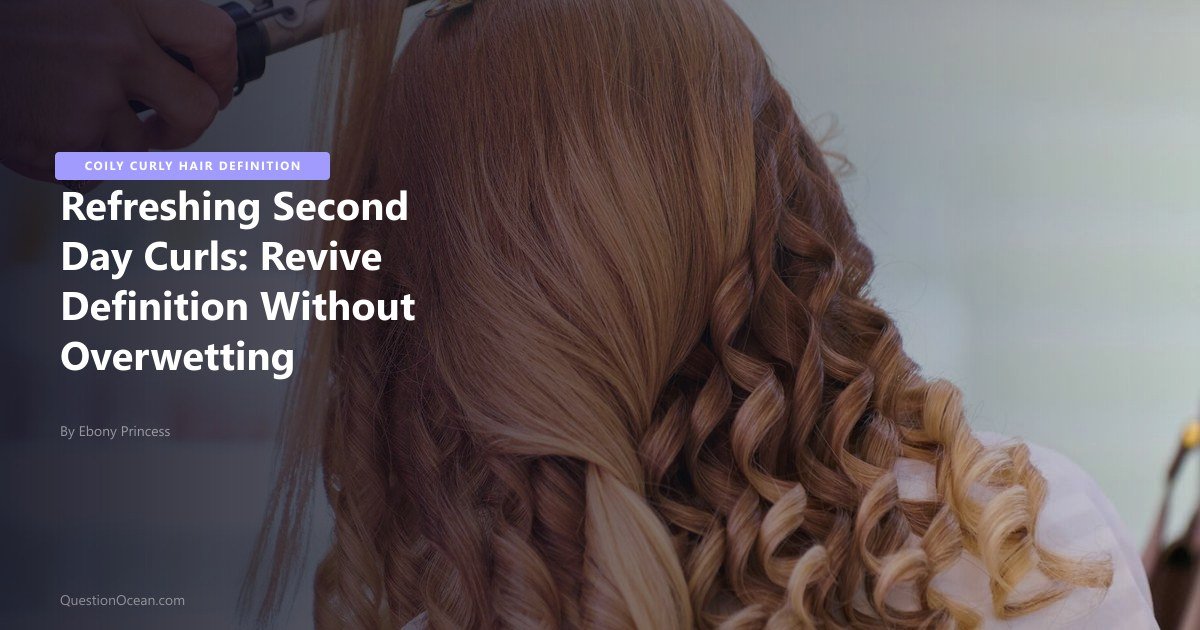
A 45-minute wash-day routine loses its value the moment you wake up to flattened roots and frizzy ends the next morning. Refreshing second day curls effectively is the difference between a one-day style and a style that carries through to day three, four, or even five. The biggest mistake most people make is reaching for a spray bottle and drenching their entire head. Constant full rewetting reactivates products unevenly, introduces excess moisture that bloats the cuticle, and resets the drying clock all over again.
This guide breaks down exactly why overwetting damages curl longevity, how to use targeted steam for precision refreshing, which serums tame halo frizz without weight, and how to reset individual coils that lost their shape overnight.
Why Constant Rewetting Degrades Curl Definition Over Time
Every time hair absorbs water, the hydrogen bonds that hold each curl in its shape temporarily break. As the strand dries, those bonds reform. Ideally in the same curl pattern. But each wet-dry cycle introduces small shifts. After three or four full rewetting sessions, the cumulative bond disruption produces inconsistent curl patterns, limp mid-lengths, and roots that refuse to hold volume.
The cuticle layer also suffers from repeated swelling and contracting. Water causes the cuticle to expand; drying causes it to contract. This repeated flexing: called hygral fatigue, gradually weakens the outermost protective layer of each strand. Over weeks of daily rewetting, strands lose their ability to reflect light smoothly, appearing duller and frizzier even when freshly styled.
Product integrity also breaks down with constant water exposure. Gels, custards, and creams are formulated to set once and hold. Flooding them with water mid-week partially dissolves the polymer film that provides hold, creating a patchy, inconsistent cast that flakes when disturbed.
For a foundational understanding of how moisture layering works with curl structure, our type 3 and type 4 hair care guide covers the science of LOC/LCO methods and humectant behavior.
How to Refresh Curly Hair in the Morning
The most effective morning refresh targets only the areas that need attention, typically the crown, hairline, and any sections that were compressed during sleep, while leaving well-behaved curls completely untouched. This selective approach preserves the gel cast on intact sections and limits hygral stress to a few specific zones.
The Targeted Steam Method
Steam delivers moisture in vapor form, which penetrates the cuticle more gently than liquid water. A handheld garment steamer or a bowl of hot water with a towel draped over your head accomplishes this.
- Identify the sections that lost definition overnight, usually the crown, nape, and front hairline.
- Hold a garment steamer 6-8 inches from the section, moving slowly across the surface for 5-10 seconds per section.
- Once the section feels slightly damp (not wet), scrunch upward with your palms to re-form the curl clump.
- Apply a pea-sized amount of lightweight gel or curl cream to your palms and scrunch again to reinforce the pattern.
- Allow the section to air-dry or hit it briefly with a diffuser on low heat for 30-60 seconds.
Steam reactivates existing product without dissolving it, and the vapor penetrates the cuticle at a lower volume than liquid water, reducing the hygral fatigue cycle by roughly 60% compared to full spraying.
The Diluted Product Mist Approach
If you do not own a garment steamer, create a diluted refresh mist:
- Fill a continuous-mist spray bottle with 80% water and 20% leave-in conditioner.
- Add 3-4 drops of a lightweight oil (argan or jojoba) to the mixture.
- Shake vigorously before each use.
Mist only the problem sections. Three to four sprays per zone. The diluted product ratio reactivates existing styling products without creating excess buildup. A continuous-mist bottle produces finer droplets than a standard trigger sprayer, distributing moisture more evenly across the curl surface.
Continuous Mist Spray Bottle, fine mist for curl refreshing
Smoothing Halo Frizz With Serum on Day Two
Halo frizz: the fine, flyaway strands that form a fuzzy outline around your head. Is the most visible sign of second-day wear. These strands separated from their curl clumps overnight through pillow friction or static electricity, and they stand upright because they lack the weight and product coating of the grouped clumps below.
A lightweight, silicone-based serum applied only to the outermost layer of hair is the fastest and most effective way to smooth halo frizz without disrupting the curls underneath. Look for serums containing dimethicone or cyclomethicone as the first active ingredient: these create a thin, transparent film that weighs down flyaways and reflects light for added shine.
Application technique matters:
- Dispense one drop (literally one drop) of serum onto your fingertips.
- Rub fingertips together until the serum becomes a barely-there film.
- Lightly press your palms over the crown and sides of your head, smoothing outward along the surface layer only.
- Do not rake fingers through the interior of your curls. This breaks clumps apart.
For readers dealing with persistent frizz in high-humidity environments, our guide to anti-frizz techniques for curly hair in humidity explains anti-humectant sealants that block atmospheric moisture from entering the cuticle.
Avoid heavy oils (castor, olive) for halo frizz smoothing. These coat too thickly, weigh down the surface curls, and attract dust and lint that make the frizz appear worse by afternoon.
Resetting Defined Coils That Lost Their Shape
Some sections, particularly the nape, the part line, and whichever side you sleep on, lose their curl pattern entirely by morning. These sections need more than a light mist; they need a full localized reset.
Finger Coil Reset for Type 4B-4C
- Mist the flattened section with your diluted product spray until damp.
- Apply a small amount of gel or custard to the section.
- Wrap the section around a single finger from root to tip, twisting gently as you go.
- Release the finger and allow the coil to spring back into shape.
- Repeat for each flattened section: this typically takes 5-8 minutes for the problem zones only.
Scrunch Reset for Type 3A-3C
- Mist the limp section lightly.
- Apply a dime-sized amount of mousse or curl cream to your palm.
- Scrunch the section upward from the ends toward the roots, holding the scrunch for 3-5 seconds before releasing.
- Repeat two to three times per section.
- Diffuse on low for 30-45 seconds to set the refreshed curl.
The critical rule for both methods: work in small sections. Trying to reset an entire side of your head at once results in frizz because you disturb too many intact clumps in the process.
Building a Day-Two and Day-Three Refresh Kit
Having the right products within arm’s reach speeds up your morning routine significantly. Keep a dedicated refresh kit with these essentials:
- Continuous mist spray bottle filled with your diluted conditioner-water mixture (replace every 5-7 days to prevent bacterial growth).
- Lightweight curl cream or mousse for reinforcing sections that need reshaping.
- Silicone serum for halo frizz smoothing, one drop goes further than you expect.
- Gel or custard for localized resets on flattened coils.
- Satin scrunchie for quick pineappling if you need to extend to day four.
Multi-purpose products that combine leave-in conditioning with light hold streamline this kit. Our guide to multi-tasking products for simplified routines identifies formulas that serve double duty for refreshing and restyling.
Lightweight Curl Refresh Spray, leave-in mist for second day curls
How Overnight Preservation Reduces Morning Refresh Time
The less damage curls sustain overnight, the less work you need in the morning. Proper sleep protection is the single highest-impact investment for extending style life.
Pineappling, gathering all curls loosely at the crown with a satin scrunchie. Preserves root volume and prevents side-flattening. Pair this with a satin or silk pillowcase to eliminate friction on any strands that escape the pineapple during the night. For a full step-by-step walkthrough of the pineapple method and plopping technique, our pineapple plopping towel guide covers everything from folding instructions to microfiber care.
Readers with very short curls or type 4C textures often find that a satin-lined bonnet provides better overnight protection than pineappling, since the hair may not reach the crown. Choose a bonnet with an adjustable elastic band, too tight compresses curls flat; too loose falls off during sleep.
Apply a thin layer of oil (jojoba or argan) to your ends before bed. Ends are the oldest, driest part of each strand and lose moisture fastest overnight. This pre-bed seal keeps them pliable and reduces the amount of refreshing they need the following morning.
Mistakes That Make Second-Day Refresh Worse
Even experienced naturalistas fall into refresh habits that create more problems than they solve.
- Over-misting: Spraying the entire head creates global frizz because water disrupts intact curl clumps alongside the flattened ones. Target only the problem zones.
- Touching curls before they are fully dry: Disturbing a refreshed section while still damp separates the strands before the hydrogen bonds re-form. Let every refreshed area dry completely, by air or diffuser, before moving on.
- Using heavy butters for smoothing: Shea butter and castor oil are excellent sealants on wash day, but layering them on top of two-day-old product creates a waxy buildup that dulls shine and attracts lint.
- Brushing or combing on dry hair: This destroys clumps instantly. If you must detangle, do so only on fully wet, conditioned hair during your next wash day.
- Skipping overnight protection: No amount of morning refreshing compensates for eight hours of cotton-pillowcase friction. Invest in satin sleep accessories before spending on refresh products.
Frequently Asked Questions
Q: How to refresh curly hair in the morning? A: Target only the sections that lost definition — typically the crown, hairline, and sleep side. Use steam or a diluted leave-in conditioner mist, scrunch to reform clumps, and apply a small amount of gel or cream to hold the pattern. Avoid wetting your entire head, which disrupts intact curls and causes hygral fatigue.
Q: How long should a morning curl refresh take? A: A targeted refresh on specific problem sections takes 5-10 minutes for most people. If your entire head needs refreshing, the routine extends to 15-20 minutes. Proper overnight protection (pineapple method or satin bonnet) significantly reduces morning refresh time.
Q: Can I refresh curls every day for a full week? A: Most curl types hold up well through two to three refresh sessions before product buildup and cumulative frizz make a full wash necessary. Attempting to refresh daily beyond day four or five usually produces diminishing results and more buildup.
Q: What products work best for refreshing second day curls? A: A diluted leave-in conditioner in a continuous mist bottle, a lightweight gel or mousse for reshaping specific sections, and a silicone serum for halo frizz. Avoid heavy creams and butters for refreshing, they layer on top of existing product and create buildup.
Q: Is it better to refresh with water or with product? A: Neither alone is ideal. Plain water reactivates existing products but provides no additional hold. Product alone sits on top of the old layer. A diluted mixture of water and leave-in conditioner (roughly 80/20 ratio) gives the best balance of moisture reactivation and fresh hold.
Q: Why do my curls look worse after refreshing? A: The most common cause is over-wetting, which dissolves the existing product cast and causes the cuticle to swell unevenly. The second most common cause is touching curls before they fully dry after refreshing. Let each section set completely before moving on.
Refreshing second day curls effectively is a skill that improves with practice and the right tools. Master the targeted approach, steam or mist only where needed, smooth halo frizz with a single drop of serum, and reset individual coils rather than rewetting your entire head. Combined with proper overnight preservation, this method keeps definition alive through day three and often beyond.