
The 2026 protective styling landscape has shifted decisively toward low-tension installations, glueless wig systems, and edge-preservation techniques that prioritize long-term hairline health over short-term aesthetic impact. Protective hairstyles 2026 are defined by three non-negotiable principles: zero-glue adhesion systems, fiber weight distribution under 150 grams per installation, and mandatory edge-rest rotations every 6-8 weeks. The era of tight braids ripping out temple hair and heavy sew-ins creating traction stress is being replaced by engineering-conscious installations that protect what they claim to protect.
This pillar guide covers every major protective styling method available in US, UK, and Canadian markets, from tape-in extensions to glueless wigs to traditional braids: with the tension science, maintenance protocols, and removal techniques that separate protective styling from cosmetic damage disguised as protection.
The Tension Spectrum: How Protective Styles Create or Prevent Damage
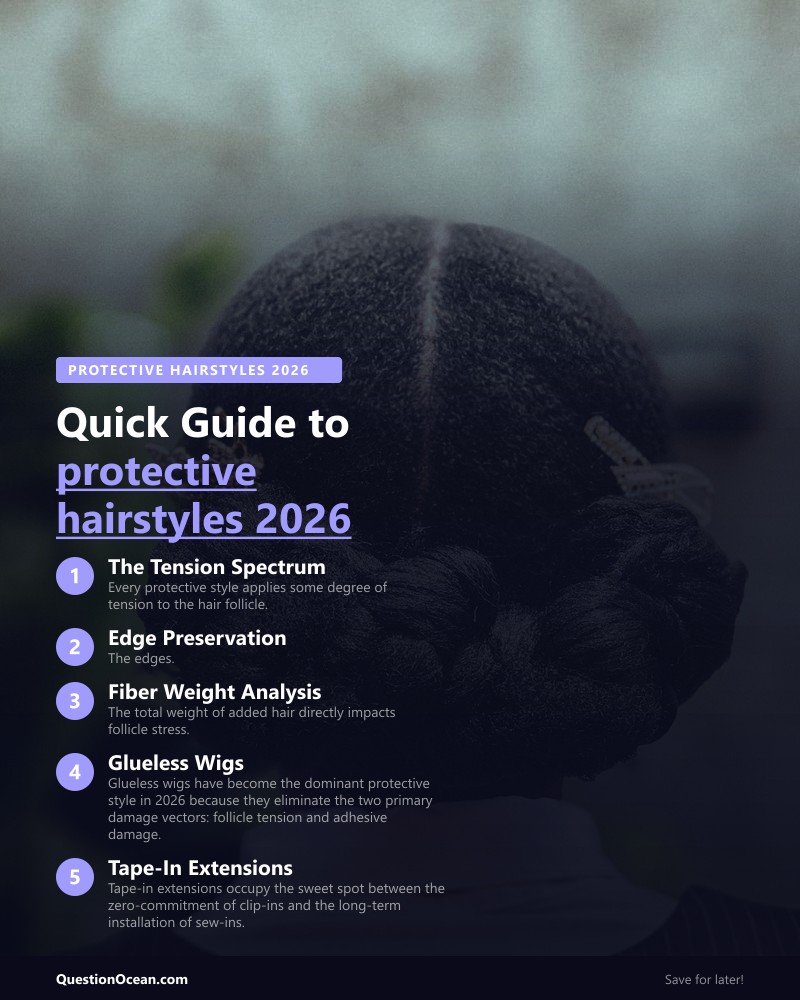
Every protective style applies some degree of tension to the hair follicle. The critical threshold is approximately 400 grams of sustained pulling force. Above this level, the follicle enters a stress response that can produce visible thinning at the attachment point over repeated installations.
The 2026 protective styling philosophy frames tension as a budget. Each follicle has a finite tolerance for sustained pulling force. Heavy extensions, tight braiding, and adhesive removal all withdraw from this budget. The goal is to keep total tension expenditure well below the damage threshold across every installation cycle.
Low-Tension Installations (Under 100g Pull Force)
- Glueless wigs with adjustable elastic bands — zero follicle tension because the wig sits on a cap, not attached to individual strands. See our glueless wig maintenance guide for care protocols.
- Clip-in extensions worn for single-day use, brief attachment period means minimal cumulative tension
- Silk-lined headwraps: true zero-tension protection with no attachment mechanism at all
Moderate-Tension Installations (100-300g Pull Force)
- Tape-in extensions, adhesive sandwiches distribute weight across flat panels rather than point-loading individual strands. Our tape-in vs clip-in comparison covers the weight distribution differences.
- Medium-sized box braids (pencil-width or larger). The larger the braid section, the more follicles share the load
- Loose twist-outs left in for 2-3 weeks maximum
High-Tension Installations (300g+ Pull Force), Use Cautiously
- Micro braids. Very small sections concentrate tension on fewer follicles per braid
- Tight cornrows at the hairline, the hairline follicles are the weakest and most vulnerable
- Heavy sew-in weaves exceeding 200 grams of added hair
Edge Preservation: The Most Critical Element of Protective Styling
The edges. The fine, delicate hairs along the hairline, temples, and nape: are the most vulnerable area to traction damage from protective styles. These follicles are naturally finer, shallower-rooted, and more susceptible to tension-induced thinning than the denser hair at the crown and mid-scalp.
Edge preservation requires active management, not just avoiding tight styles. The 2026 approach includes leaving the first 0.5-inch perimeter of hairline completely unstressed during any braided or sewn installation.
For edge styling techniques that complement protective styles, see our guide to edge brushes and baby hair styling. For textured hair edge care specifically, check out this resource on edge control for 4C hair.
The Edge-Rest Rotation
Between protective style installations, the edges need 1-2 weeks of zero-tension recovery. During this rest period:
- Avoid any hairstyle that pulls the hairline backward (tight ponytails, slicked-back buns)
- Apply a lightweight oil (jojoba or sweet almond) to the hairline nightly
- Sleep with a silk bonnet to protect braids and edges
- Avoid adhesive-based edge control products that require pulling to remove
Fiber Weight Analysis: How Extension Weight Affects Your Hair
The total weight of added hair directly impacts follicle stress. Every gram above your natural hair weight creates additional downward pull on the attachment points, and this pull operates 24 hours a day for the entire installation duration.
The 150-gram rule: Most professional stylists in 2026 recommend keeping total added hair weight under 150 grams for full-head installations. This applies to all extension types, clip-ins, tape-ins, sew-ins, and braiding hair.
| Extension Type | Typical Weight (Full Head) | Tension Risk Level |
|---|---|---|
| Clip-in set (temporary) | 100-180g | Low (short wear time) |
| Tape-in set | 80-140g | Low-Moderate |
| Sew-in weave | 150-250g | Moderate-High |
| Box braids (waist-length) | 200-350g | High |
| Glueless wig | 150-250g (on cap, not follicles) | Very Low |
For guidance on matching extension weight to your natural hair density, see our guide to color matching extensions which also covers texture and weight matching.
Silk Bonnet for Protective Styles
Glueless Wigs: The Lowest-Risk Protective Style of 2026
Glueless wigs have become the dominant protective style in 2026 because they eliminate the two primary damage vectors: follicle tension and adhesive damage. The wig sits on a breathable cap secured by adjustable elastic bands, combs, or silicone grip strips. None of which attach to individual hair strands.
The HD lace revolution makes glueless wigs look natural without any adhesive. HD (high definition) lace is thinner and more transparent than traditional lace, blending seamlessly against the skin along the hairline.
For complete glueless wig care, see our glueless wig maintenance guide. For heat styling considerations with wigs, see heat styling synthetic vs human wigs.
Tape-In Extensions: The Versatile Middle Ground
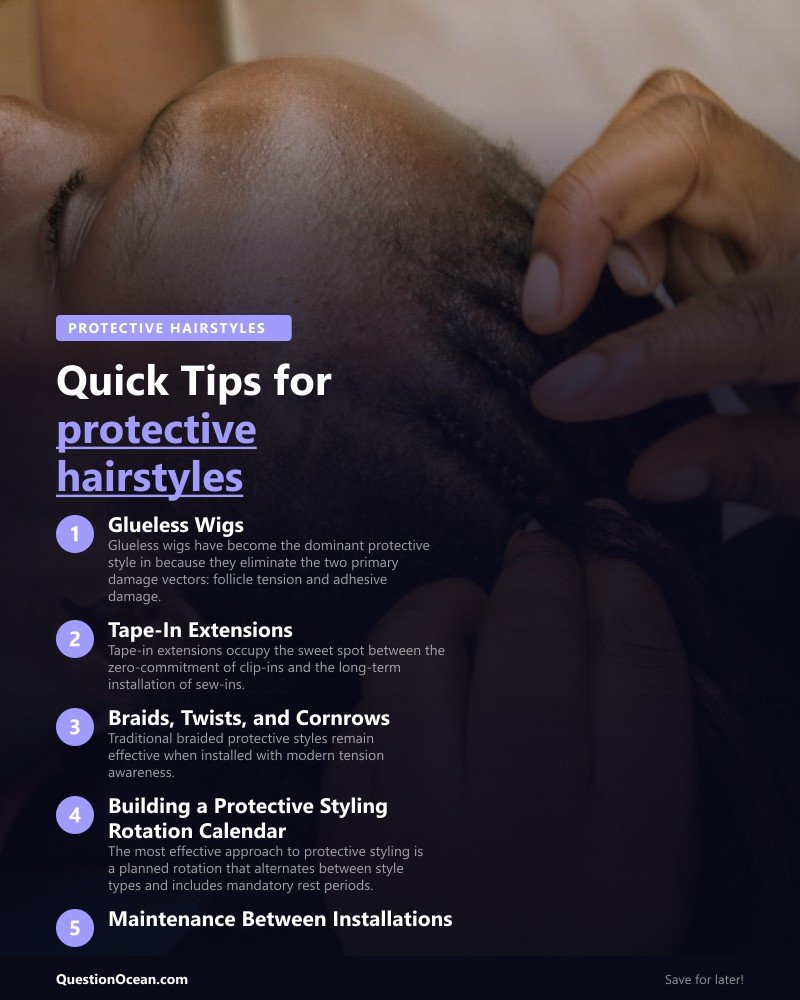
Tape-in extensions occupy the sweet spot between the zero-commitment of clip-ins and the long-term installation of sew-ins. Two thin adhesive panels sandwich a section of natural hair, creating a flat, lightweight attachment that moves naturally.
Key advantage: Weight distribution. The flat tape panel spreads the extension weight across 1-1.5 inches of hair rather than concentrating it at a single point. This reduces per-follicle tension significantly.
For detailed installation and blending techniques, see our guide to blending extensions with natural texture. For washing protocols that preserve the adhesive bond, see washing and drying human hair extensions.
Braids, Twists, and Cornrows: Traditional Protective Styling Done Right
Traditional braided protective styles remain effective when installed with modern tension awareness. The key modifications for 2026:
- Start braids 0.5 inches back from the hairline. Never braid directly from the edge
- Use feed-in technique at the root, this adds extension hair gradually rather than loading full weight at the base
- Limit installation duration to 6-8 weeks maximum: beyond this point, matting and tangling at the root create removal damage
- Size matters: Pencil-width or larger braids distribute tension across more follicles than micro braids
For the complete guide to safe braid removal, see transitioning out of protective styles without breakage.
Edge Control for Protective Styling
Building a Protective Styling Rotation Calendar
The most effective approach to protective styling is a planned rotation that alternates between style types and includes mandatory rest periods.
Sample 6-month rotation:
- Weeks 1-6: Glueless wig (zero follicle tension)
- Weeks 7-8: Rest period. Loose natural styles only
- Weeks 9-14: Medium box braids with silk bonnet nightly
- Weeks 15-16: Rest period
- Weeks 17-22: Tape-in extensions (repositioned at week 20)
- Weeks 23-24: Rest period, deep conditioning, trim
This rotation ensures no single attachment method stresses the same follicles continuously, and the rest periods allow the hairline to recover between installations.
For protecting textured curls and coils throughout this rotation, see our guide to Type 3 and Type 4 curl styling. For event-specific protective extensions, see securing extensions for bridal and formal events.
Maintenance Between Installations
Between protective style changes, the exposed natural hair needs targeted care:
- Clarifying wash to remove product buildup from the installation period
- Deep protein conditioning to strengthen strands stressed by the previous style
- Scalp massage with lightweight oil to stimulate circulation at attachment sites
- Trim inspection, check for split ends created by friction at braiding or tape attachment points
For detailed post-installation detangling, see our guide on taking out braids without breakage. This resource on detangling brushes for coily hair is also valuable for natural hair care between installations.
Frequently Asked Questions
Q: What are the best protective hairstyles for 2026? A: Glueless wigs lead the 2026 protective styling trend due to zero follicle tension. Medium box braids, tape-in extensions, and flat twists remain effective when installed with tension-aware techniques: keeping total added weight under 150 grams and leaving the first 0.5-inch hairline perimeter unstressed.
Q: How long should you keep protective styles in? A: Maximum 6-8 weeks for braided styles and sew-ins. Tape-in extensions need repositioning every 6-8 weeks. Glueless wigs can be worn daily indefinitely since they don’t attach to hair. Always include a 1-2 week rest period between installations.
Q: Do protective styles actually help hair grow? A: Protective styles reduce mechanical damage from daily manipulation, environmental exposure, and heat styling, which preserves length by minimizing breakage. They don’t accelerate growth rate, but they retain more of the length your hair naturally produces.
Q: Can protective styles damage your edges? A: Yes, if installed too tightly or worn too long. Traction damage at the edges is the most common negative outcome of improperly installed protective styles. Edge preservation requires leaving the hairline unstressed, using low-tension installation methods, and rotating between style types.
Q: How do I protect my hair under a wig? A: Cornrow or flat-twist the natural hair flat against the scalp, apply a lightweight leave-in conditioner, cover with a breathable wig cap, and moisturize the scalp 2-3 times per week through the cap. Sleep with a silk bonnet over the wig cap nightly.
Q: What protective styles work for fine or thin hair? A: Glueless wigs (zero tension), clip-in extensions for temporary volume, and loose two-strand twists. Avoid heavy braiding hair or tight cornrows. Fine hair follicles have lower tension tolerance than coarse hair follicles.
Protective hairstyles 2026 demand more engineering awareness than any previous generation of protective styling. The shift toward glueless systems, weight-conscious installations, and mandatory edge-rest rotations reflects a market that finally understands protection must include the follicles and hairline, not just the visible hair shaft. Every installation decision should answer one question: does this style reduce total mechanical stress on my hair, or just redistribute it?