
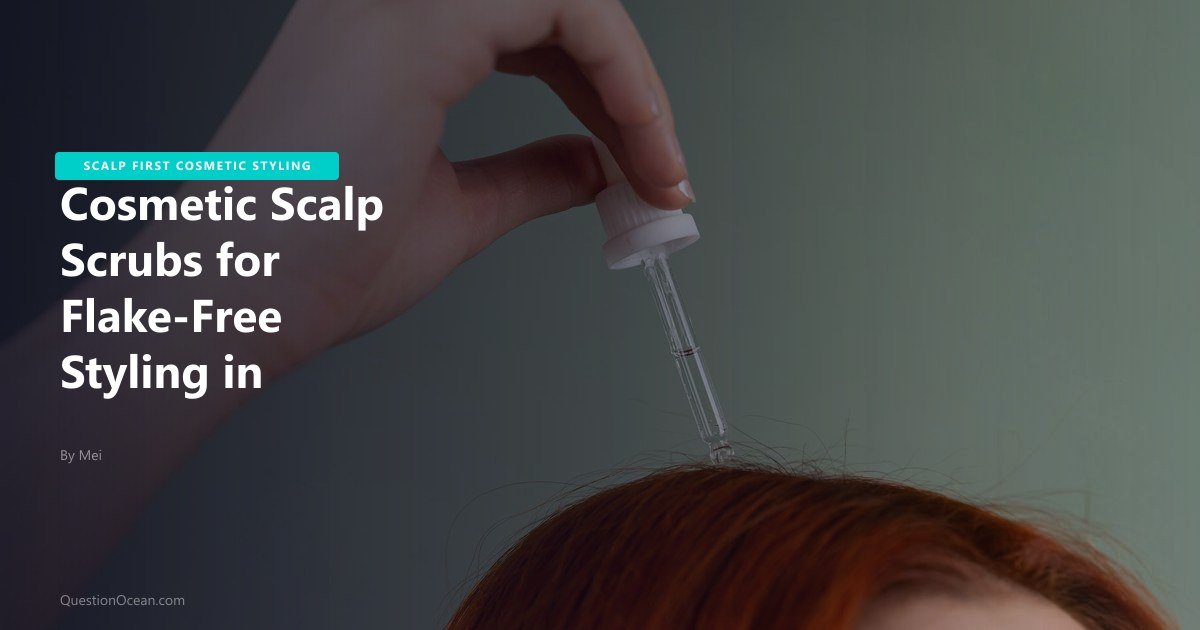
Visible flakes sitting at the root of a fresh blowout undermine every minute of effort spent on the style itself. Cosmetic scalp scrubs, both physical and chemical: dissolve the dead skin cells, product residue, and dry shampoo polymers that create that visible flaking. The 2026 shift toward chemical exfoliants (AHAs and BHAs) has made flake-free styling achievable without the abrasive friction that can irritate sensitive scalps.
Our complete guide to scalp-first styling routines positions exfoliation as the second critical step, after clarifying. This article examines the exact science, product categories, and application methods that produce a cosmetically clean, flake-free styling foundation.
Physical vs. Chemical Cosmetic Scalp Scrubs
Understanding the difference between these two exfoliation approaches determines whether your scrub actually dissolves the problem or merely pushes debris around the scalp surface.
Physical Exfoliants
Physical scrubs use granular particles: sugar, sea salt, activated charcoal, or ground walnut shell. To manually lift dead cells and product residue through friction. You apply the scrub to a wet scalp, massage in 1-inch circular motions for 60-90 seconds, and rinse.
The primary advantage is immediate tactile feedback. You can feel the granules working, and the scalp feels noticeably cleaner after rinsing. However, physical scrubs carry a significant limitation: they cannot dissolve dried styling polymers that have bonded to the skin’s surface. They scrub over the top of stubborn dry shampoo residue rather than breaking it down chemically.
Physical scrubs also create micro-friction on already-sensitive scalp surfaces. Users with visible redness, cosmetic irritation from harsh products, or very fine hair at the temples should avoid aggressive physical scrubbing in those zones. The most popular physical scrubs in the US/UK/CA market, Briogeo Scalp Revival ($42/236ml), dpHUE ACV Scrub ($35/142g), and Christophe Robin Purifying Scrub with Sea Salt (£38/250ml), use rounded sugar or salt granules to minimize cuticular damage.
Chemical Exfoliants
Chemical exfoliants use alpha-hydroxy acids (AHAs) or beta-hydroxy acids (BHAs) to dissolve the bonds between dead cells and the scalp surface. Rather than scrubbing debris away mechanically, they chemically loosen it so it rinses away cleanly during shampooing.
BHAs (salicylic acid) are oil-soluble, meaning they penetrate into the area around each root opening and dissolve the sebum-product mixture responsible for most visible flaking. AHAs (glycolic acid, lactic acid) work on the surface level, dissolving the protein bonds between dead skin cells for a smoother, flake-free appearance.
For a deeper cleanse that targets both surface debris and embedded product residue, see our guide to double-cleansing your hair: a technique that pairs chemical exfoliation with two-phase shampooing.
How AHA and BHA Scalp Serums Work
AHAs and BHAs borrowed from facial skincare have been reformulated specifically for the scalp at appropriate concentrations. Each acid type targets a different layer and type of debris.
Salicylic Acid (BHA). The Dry Shampoo Dissolver
Salicylic acid at 1-2% concentration is the single most effective cosmetic ingredient for dissolving dry shampoo buildup at the root. Because it’s oil-soluble, it cuts through the starch-sebum paste that forms when dry shampoo absorbs scalp oils over 2-3 days of repeated application.
Apply a BHA scalp serum to dry or slightly damp hair 5-10 minutes before shampooing. This gives the acid time to dissolve stubborn residue before the cleansing step washes it away. The INKEY List Salicylic Acid Exfoliating Scalp Treatment (£12.99/150ml, available at Boots and Sephora) delivers 2% salicylic acid through a precision nozzle applicator, one of the most effective budget options across all three markets.
Glycolic Acid (AHA). The Cell Turnover Accelerator
Glycolic acid at 5-8% concentration accelerates the natural turnover of dead skin cells. On the scalp, this means fewer visible flakes and a smoother surface for product application. Because glycolic acid is water-soluble, it works best on a freshly rinsed scalp before the conditioning step.
Glycolic exfoliants are particularly effective for users who notice white flakes near the hairline and center part: areas where dead cells accumulate visibly and disrupt the clean appearance of styles like sleek ponytails and center parts. Nip + Fab Glycolic Fix Extreme Pads (£12.95/60 pads) can be wiped along the hairline and part line as a targeted pre-wash step.
Lactic Acid (AHA), The Gentle Hydrating Exfoliant
Lactic acid offers the mildest exfoliation of the three acids and simultaneously attracts moisture to the scalp surface. At 5% concentration, it gently dissolves surface debris while maintaining hydration. Making it ideal for scalps that tend toward dryness, especially during Canadian prairie winters and Northern UK cold seasons when indoor heating drops ambient humidity to 15-20%.
Dissolving Dry Shampoo Polymers: Why Regular Shampoo Fails
Standard shampoos operate on a simple surfactant model: they attract oil-based molecules and rinse them away with water. This process works for natural sebum and most water-soluble styling products.
Dry shampoo, however, deposits starch-based or silica-based polymers that are neither oil-soluble nor water-soluble in the traditional sense. These polymers absorb sebum to create the appearance of freshness, but the polymer itself remains physically bonded to the scalp surface at the microscopic level. Repeated application without proper removal creates a compounding layer, visible as white or gray buildup along the part line, that standard shampoo cannot fully dissolve even after two lathers of 60+ seconds each.
A clarifying shampoo handles a significant portion of this buildup through stronger surfactants. But for users who rely on dry shampoo three or more times per week, a dedicated cosmetic scalp scrub, especially one containing salicylic acid at 1-2%. Provides the additional dissolving power needed to fully clear the polymer layer before wash-day styling.
Salicylic Acid Scalp Scrub, BHA exfoliant for buildup removal
Preventing Cuticular Friction During Physical Scrubbing
The most common user error with physical cosmetic scalp scrubs is applying excessive downward pressure, which creates friction along the first inch of the hair shaft. This friction roughs up the cuticle at the root, producing frizz and flyaways that no amount of smoothing serum can fully correct.
The correct technique uses the pads of your fingertips. Never the nails: in small, circular motions with light to moderate pressure. Focus on the scalp surface itself rather than dragging granules through the length of the hair. A silicone scalp massager brush distributes pressure more evenly than fingertips and significantly reduces the risk of localized friction damage.
Additional friction-prevention strategies:
- Apply the physical scrub to a thoroughly wet scalp: never dry or merely damp hair
- Use scrubs with rounded, smooth granules (sugar crystals or jojoba beads) rather than sharp-edged particles (ground walnut or apricot kernel)
- Limit physical scrubbing sessions to 60-90 seconds per wash: timing with a bathroom clock prevents over-scrubbing
- Follow with a lightweight, silicone-free conditioner on the lengths to smooth any cuticle disruption
Top 2026 Cosmetic Scalp Scrub Categories by Concern
The scalp scrub market has expanded significantly, with formulations now targeting specific cosmetic concerns. Matching the right formulation to your primary issue produces measurably better results.
For Heavy Product Users (Dry Shampoo + Texturizing Spray + Styling Cream)
BHA-based chemical exfoliants (1-2% salicylic acid) or charcoal-infused physical scrubs. These cut through the layered polymer residue created by daily product application. Apply the BHA formula to dry hair 10 minutes before shampooing for maximum polymer dissolution.
For Visible Flaking Near the Part Line and Hairline
AHA-based serums (glycolic or lactic acid at 5-8%) dissolve dead cell clusters most effectively at the surface level. Apply with a precision nozzle applicator directly to the part line 10 minutes before washing. Two applications per month produce a noticeable reduction in visible flaking for most users.
For Sensitive Scalps Prone to Redness
Lactic acid at 5% or enzyme-based exfoliants (papaya or pineapple bromelain enzymes) offer the gentlest possible cell turnover without the pH disruption of stronger acids. Avoid any scrub with menthol, tea tree, or peppermint on sensitive skin: these create a cooling tingle that masks potential irritation.
For Thick, Dense Hair That’s Hard to Penetrate
Sugar-based physical scrubs with a pourable, slightly fluid consistency (rather than a thick paste) ensure the product reaches the scalp surface rather than sitting on top of the hair. Use a scalp massager brush to work the scrub through dense layers. Christophe Robin Purifying Scalp Scrub with Sea Salt works well for this hair density.
AHA Scalp Serum, glycolic acid scalp exfoliant
Building a Flake-Free Exfoliation Schedule
Consistency matters more than intensity with cosmetic scalp scrubs. One gentle exfoliation session per week produces better long-term results than an aggressive monthly scrub that over-stimulates the scalp surface.
Recommended weekly rotation:
- Week 1: Chemical exfoliant (BHA or AHA serum, applied 5-10 minutes before shampooing)
- Week 2: Physical scrub (sugar or charcoal granules, 60 seconds of gentle circular massage during lathering)
- Week 3: Chemical exfoliant
- Week 4: Physical scrub
This alternating pattern provides thorough exfoliation without over-stimulating the scalp surface or disrupting its natural lipid barrier. During weeks when you’re increasing wash frequency (summer heat in the US South, post-gym schedules, UK August humidity), you can exfoliate twice. Once chemical, once physical. Without risk of irritation for most scalp types.
For seasons when the scalp tends toward dryness rather than oiliness (Canadian winters, US Northeast December-March), reduce the 4-week cycle to chemical-only exfoliation, skipping the physical scrub entirely to preserve the moisture barrier.
When to Skip the Scrub
Exfoliation should be paused temporarily after fresh hair color application (wait at least 7 days for the cuticle to fully close and lock pigment), during any period of visible redness or cosmetic sensitivity, and if the scalp feels tight or dry within two hours of the previous exfoliation session.
The goal of cosmetic scalp scrubs is a clean, flake-free styling base. Not a stripped, sensitized surface. If your scalp feels noticeably tight, stinging, or produces more flaking in the days after exfoliating, you’re either using too strong a formula, applying excessive pressure, or exfoliating too frequently. Reduce frequency or switch from a physical scrub to a gentler chemical formula (lactic acid at 5%).
Frequently Asked Questions
Q: Are cosmetic scalp scrubs actually good for your hair? A: Cosmetic scalp scrubs improve styling outcomes by removing dead skin cells, product buildup, and dry shampoo residue that weigh down roots and create visible flaking. They do not address any underlying cosmetic concern. They create a cleaner, lighter foundation for styling products to perform better.
Q: How often should I use a scalp scrub? A: Once per week is sufficient for most hair types. Alternate between chemical exfoliants (AHA/BHA serums) and physical granular scrubs for the most thorough results without over-exfoliating the scalp surface.
Q: Can cosmetic scalp scrubs remove dry shampoo buildup? A: Yes, specifically, scrubs containing salicylic acid (BHA) at 1-2% dissolve the starch and silica polymers deposited by dry shampoo more effectively than standard shampoos. Apply 5-10 minutes before washing on dry or slightly damp hair for maximum dissolution.
Q: What’s the best scalp scrub for flake-free styling? A: For visible flaking near the hairline and part line, a glycolic acid (AHA) serum at 5-8% applied before washing offers the most targeted results. For overall buildup from heavy product use, a salicylic acid (BHA) formula provides deeper penetration into the sebum-polymer layer.
Q: Can I use a scalp scrub on color-treated hair? A: Yes, but wait at least 7 days after coloring and use a gentle chemical exfoliant (lactic acid at 5%) rather than an aggressive physical scrub. Avoid sulfate-based scrub formulas on recently dyed hair, as the open cuticle allows faster pigment displacement.
Q: What ingredients should I look for in a scalp scrub? A: For chemical exfoliants: salicylic acid (1-2%) for oil-soluble buildup, glycolic acid (5-8%) for surface flaking, or lactic acid (5%) for sensitive scalps. For physical scrubs: rounded sugar granules or jojoba beads rather than sharp-edged walnut shell or apricot kernel.
Cosmetic scalp scrubs are the invisible foundation behind every volumized blowout and sleek updo. The 2026 shift toward chemical exfoliants, particularly BHA formulas targeting dry shampoo polymer layers — has made this step more effective and less abrasive. One weekly session with the right cosmetic scalp scrubs formula produces a flake-free, product-ready surface that measurably improves root lift and blowout longevity.