
Cotton pillowcases create friction coefficients of 0.5-0.7 against hair fibers, and for braided protective styles, this friction works against the entire purpose of the installation. Every night spent on cotton generates micro-abrasion at the braid surface, edge stress from the pillowcase catching loose baby hairs, and frizz along the braid pattern as surface strands are pulled out of alignment. A silk bonnet for braids reduces overnight friction by 75-85% compared to cotton, preserving the clean braid pattern, protecting the fragile edge hairs from traction stress, and extending the wearable life of the installation by 1-2 weeks.
This guide covers XL bonnet sizing for long or voluminous braided styles, the friction science that separates silk from satin, and the edge comfort band features that protect the most vulnerable hairs while you sleep.
For the complete protective styling overview, see our pillar guide to protective hairstyles 2026.
Silk vs Satin Friction: The Science Behind the Fabric Choice
The terms “silk” and “satin” are used interchangeably in marketing, but they refer to different things. Silk is a natural fiber; satin is a weave pattern. A satin bonnet can be made from polyester, nylon, or silk, and the friction properties differ significantly based on the base fiber.
| Fabric | Fiber Type | Friction Coefficient | Moisture Absorption | Price Range |
|---|---|---|---|---|
| Mulberry silk satin | Natural protein fiber | 0.08-0.12 | 10-12% | $20-45 |
| Polyester satin | Synthetic | 0.15-0.25 | 0.4% | $6-15 |
| Charmeuse silk | Natural silk weave | 0.10-0.14 | 10-12% | $18-35 |
| Cotton | Natural cellulose | 0.50-0.70 | 7-8% | $3-8 |
The friction difference matters for braids specifically because braided styles have more textured surface area than loose hair. Each crossing point of the braid pattern creates a raised ridge that catches more easily on rough surfaces. Lower friction fabric slides over these ridges without disturbing the braid structure.
Silk’s moisture absorption advantage: Silk absorbs 10-12% of its weight in moisture without feeling wet. This pulls excess humidity away from the braid surface overnight, reducing the frizz-promoting moisture that loosens braid patterns. Polyester satin absorbs almost no moisture, leaving it on the hair surface.
For additional sleep protection for curly and coily hair, check out this guide on silk sleep caps for curly hair.
XL Bonnet Designs: Accommodating Long and Voluminous Braids
Standard bonnets accommodate loose natural hair or short styles. Waist-length box braids, jumbo twists, or high-volume styles like goddess locs simply don’t fit inside a standard-diameter bonnet: the excess braids fall out during sleep, defeating the protection entirely.
XL bonnets solve this with expanded circumference and depth:
- Standard bonnet: 18-20 inch circumference, 8-10 inch depth. Suitable for: loose natural hair, TWAs (teeny weeny afros), short braids above the shoulders
- XL bonnet: 24-28 inch circumference, 14-18 inch depth. Suitable for: mid-back to waist-length braids, jumbo twists, large-diameter locs
- XXL bonnet: 28-32 inch circumference, 18-22 inch depth. Suitable for: waist-length or longer braids, very high-volume styles, stacked or layered braids
Packing technique for XL bonnets:
- Gather braids loosely at the crown — never pull them tight or fold them sharply
- Coil the gathered braids gently in a loose spiral on top of the head
- Lower the XL bonnet over the coiled braids, tucking any stray ends inside
- Adjust the elastic or drawstring to sit comfortably at the hairline without pressing into the edges
XL Silk Bonnet for Long Braids
Edge Comfort Bands: Protecting the Most Vulnerable Hairs
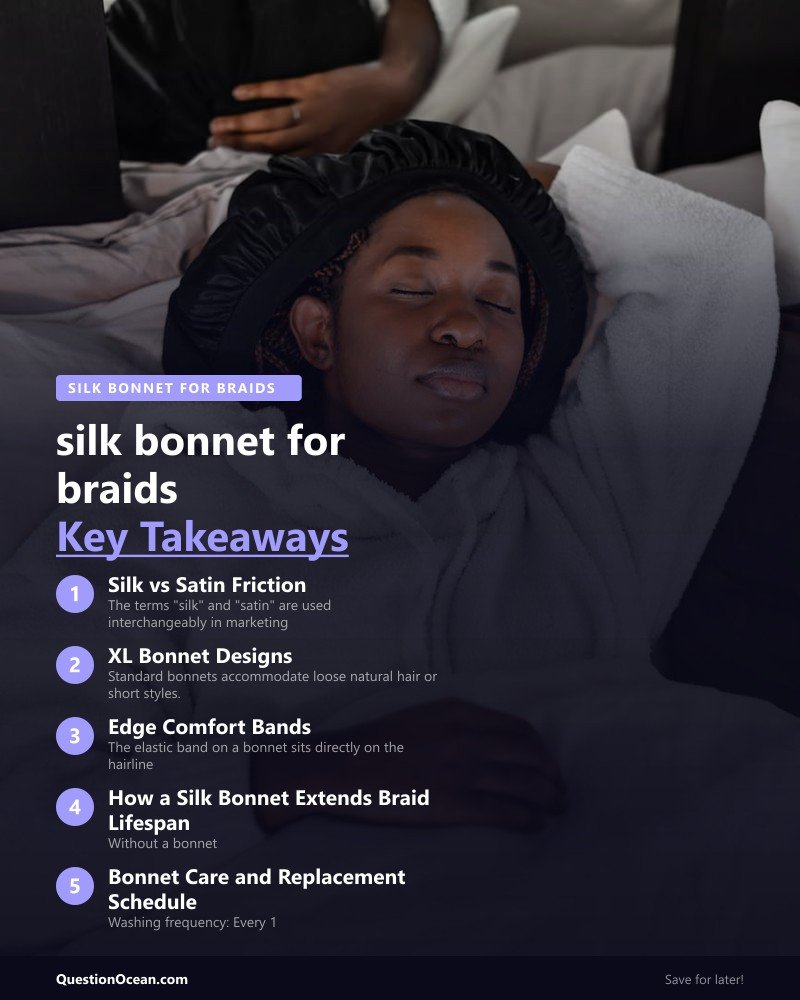
The elastic band on a bonnet sits directly on the hairline, the exact zone where edges are most vulnerable to traction stress. A tight, narrow elastic band pressing against the edges for 7-8 hours nightly creates cumulative compression that can thin the hairline over time.
2026 edge-safe bonnet designs address this with three innovations:
Wide Satin-Lined Elastic
Premium bonnets use a 1-1.5 inch wide elastic band lined with satin on the interior surface. The wider band distributes compression pressure across a larger area (reducing pressure per square inch), while the satin lining eliminates friction against the edge hairs.
Adjustable Drawstring
A drawstring closure allows you to set the bonnet tension precisely, loose enough to avoid edge pressure but snug enough to stay on overnight. This eliminates the one-size-fits-all elastic that is inevitably too tight for some heads and too loose for others.
Bonnet-Free Alternative: Silk Pillowcase
For those who find any bonnet uncomfortable, a silk pillowcase provides the same friction reduction without any head compression. The trade-off: silk pillowcases don’t contain the braids, so longer styles may shift more during sleep.
How a Silk Bonnet Extends Braid Lifespan
Without a bonnet, box braids or twists installed for 6-8 weeks begin showing visible frizz at the surface within 2-3 weeks. The surface frizz is caused primarily by overnight friction pulling individual strands out of the braid pattern.
With a silk bonnet worn nightly, the same braids maintain a clean, smooth surface for 4-5 weeks: extending the “fresh” appearance by 1-2 weeks. This matters economically: if braids cost $150-300 to install, extending the fresh period by 25% effectively increases the value of each installation.
Additional bonnet benefits for braids:
- Prevents lint from bedding from embedding in the braid texture
- Reduces overnight moisture loss from the braided hair, maintaining softness
- Keeps edge styling (baby hairs, swoop patterns) intact overnight, reducing morning touch-up time
For edge styling techniques that pair with bonnet protection, see our edge brush and baby hair styling guide.
Satin-Lined Bonnet with Wide Edge Band
Bonnet Care and Replacement Schedule
Washing frequency: Every 1-2 weeks in cool water with a gentle detergent. Silk degrades when exposed to harsh detergents or hot water.
Drying: Air dry flat: never machine dry. Heat from a dryer damages silk fibers and degrades the satin finish.
Replacement indicators:
- The elastic has lost its stretch and no longer stays in place
- The interior surface feels rough rather than slippery
- Visible pilling or fabric thinning at the crown contact point
- Bonnet no longer reduces frizz compared to when it was new
Typical replacement cycle: Every 4-6 months for nightly use. Silk bonnets last longer than polyester satin due to the natural fiber’s durability.
For transitioning out of protective styles while maintaining the hair health preserved by bonnet protection, see our guide on removing braids without breakage.
Frequently Asked Questions
Q: Is silk or satin better for braids? A: Mulberry silk has the lowest friction coefficient (0.08-0.12) and absorbs excess moisture, making it superior for braid protection. Polyester satin (0.15-0.25 friction) is the next best option at a lower price point. Both are dramatically better than cotton.
Q: How big should a bonnet be for braids? A: Standard bonnets (18-20 inch circumference) work for shoulder-length braids. XL bonnets (24-28 inches) suit mid-back to waist-length braids. XXL bonnets (28-32 inches) accommodate waist-length or longer styles with high volume.
Q: Do silk bonnets help edges? A: Yes: silk bonnets reduce hairline friction by 75-85% compared to cotton pillowcases. Choose a bonnet with a wide satin-lined elastic or adjustable drawstring to minimize compression on the fragile edge hairs during sleep.
Q: Can I wear a silk bonnet with a wig? A: Yes. Wearing a silk bonnet between your natural hair (or cornrow base) and the wig cap reduces friction on your cornrows. At night, wear the bonnet over your cornrowed natural hair after removing the wig.
Q: How often should I replace my silk bonnet? A: Every 4-6 months with nightly use. Replace sooner if the interior surface feels rough, the elastic has lost stretch, or the fabric shows visible pilling.
A silk bonnet for braids is the highest-return overnight investment in protective styling. A $20-40 bonnet extends the fresh lifespan of a $150-300 braid installation by 1-2 weeks, protects edges from nightly friction damage, and maintains the clean braid surface that makes protective styling worth the installation time and cost.