
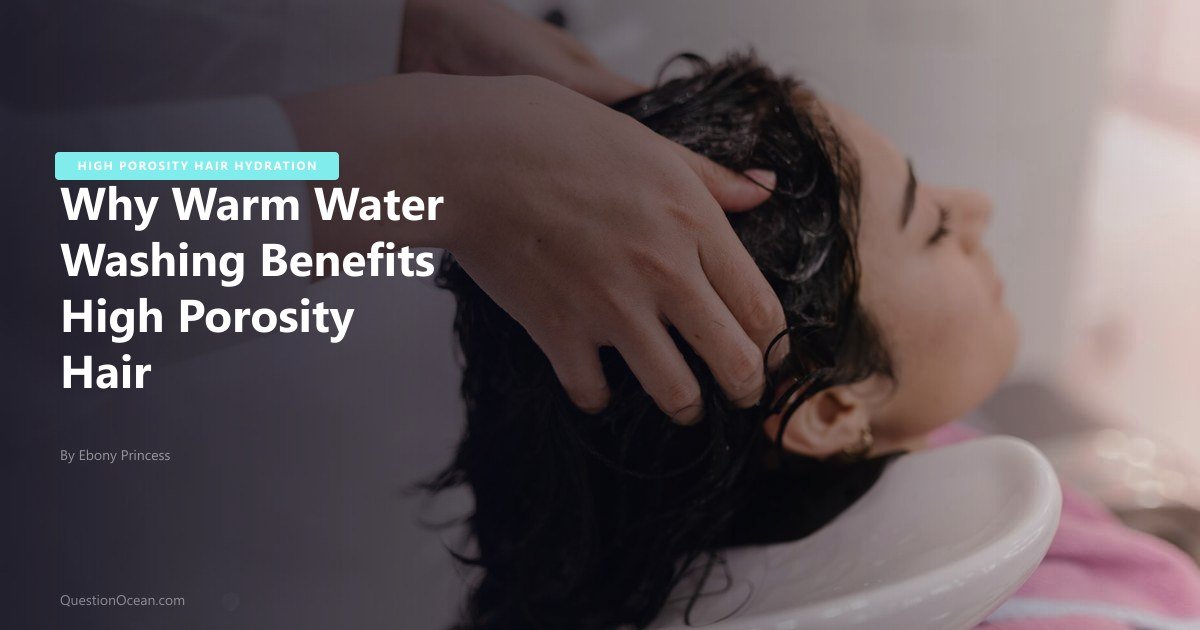
The temperature of the water hitting your hair in the shower affects cuticle behavior more than most styling products ever will, and for high porosity strands, getting that temperature wrong at the wrong moment either compounds existing cuticle damage or helps reverse it. Washing high porosity hair effectively is not about choosing hot or cold and sticking with it. It requires a deliberate temperature shift: warm water to open, cleanse, and allow conditioning agents inside, then cool-to-cold water to flatten and seal those raised cuticle scales before you step out. This guide maps out the exact shower protocol, explains how water mineral content amplifies the problem, and covers the friction-reduction techniques that protect porous strands during every wash.
How Water Temperature Manipulates the Cuticle
Warm water (approximately 36-38 degrees Celsius or 97-100 degrees Fahrenheit) causes the cuticle scales to lift slightly and the cortex to swell, which is exactly what you want during the cleansing and conditioning phases, but devastating if that lifted state becomes permanent.
On low porosity hair, the cuticle lies flat and resists opening, so warm water is necessary just to get products inside. High porosity hair already has cuticles that are lifted, chipped, or partially missing. Warm water lifts them further, creating wider gaps for cleansers and conditioners to reach the cortex.
Cold water does the opposite. At temperatures below 20 degrees Celsius (68 degrees Fahrenheit), the cuticle contracts and flattens against the shaft. This contraction traps moisture and conditioning agents inside the cortex and creates a smoother surface that reflects more light, which is why cold-rinsed hair looks shinier. Our complete high porosity hair care guide explains how cuticle management is the foundation of every routine for porous strands.
What Temperature Water for High Porosity Hair?
The answer is both warm and cold, used at different stages of the wash, not one temperature throughout. A single-temperature wash forces a compromise: hot water cleans well but leaves the cuticle gaping, while cold water seals well but prevents thorough cleansing and conditioner penetration.
The ideal protocol follows this pattern:
- Initial wetting and shampoo phase: Warm water at 36-38 degrees Celsius opens the cuticle enough for the cleanser to lift dirt and buildup from beneath the scales
- Conditioning and deep conditioning phase: Warm water maintained so the conditioner’s fatty alcohols and cationic surfactants can slip between lifted cuticle layers and coat the cortex
- Final rinse: Cool-to-cold water at 15-20 degrees Celsius to flatten the cuticle, lock in the conditioning agents, and create a smoother strand surface
This warm-to-cold shift mimics what professional stylists do in salons across the US, UK, and Canada. The warm phase is functional: it gets the job done. The cold phase is cosmetic. It seals the results in place. Skipping the cold rinse on high porosity hair is like conditioning without sealing, and our guide to styling hacks that seal the cuticle expands on post-wash sealing methods.
A Step-by-Step Shower Protocol for Porous Hair
Follow this sequence for every wash day:
- Apply your pre-poo treatment to dry hair 20-30 minutes before stepping into the shower
- Begin with warm water and saturate your hair completely. Give it 60-90 seconds of direct warm water flow to fully hydrate the cortex before applying any product
- Apply a sulfate-free shampoo to your scalp only, using fingertip pads (never nails) in gentle circular motions, let the suds rinse down through the lengths rather than scrubbing the mid-shaft and ends directly
- Rinse the shampoo out thoroughly with warm water, spending at least 30 seconds per section to ensure zero residue remains in the cuticle gaps
- Apply conditioner from mid-length to ends, gently working it through with a wide-tooth comb or fingers to ensure even distribution
- Leave the conditioner on for 3-5 minutes while the warm water keeps the cuticle accessible
- Switch the water to cool-to-cold for the final rinse and rinse the conditioner out completely — this temperature drop flattens the cuticle and seals conditioning agents beneath the scales
- Gently squeeze excess water from your hair using your hands, moving from roots to ends in a downward motion, never wring or twist
The total temperature shift from warm to cold should happen over 5-10 seconds. A gradual change is gentler on the scalp and easier to tolerate than an abrupt blast of ice-cold water.
Chelating for Hard Water Mineral Buildup
Hard water contains dissolved calcium, magnesium, and iron ions that deposit onto the hair shaft with every wash. On high porosity hair, these minerals lodge inside the open cuticle gaps rather than just sitting on the surface, creating a crusty buildup that blocks moisture absorption, dulls shine, and makes hair feel perpetually stiff and dry regardless of how much conditioner you apply.
More than 85% of homes in the US have hard water, and significant portions of the UK (particularly London, the South East, and the Midlands) and Canadian provinces like Ontario and Alberta face the same issue. If your hair feels coated, tangles easily despite conditioning, or reacts poorly to products that once worked well, mineral buildup is a likely culprit.
Chelating shampoos contain ingredients like EDTA (ethylenediaminetetraacetic acid) or citric acid that bind to metal ions and lift them away from the strand. Use a chelating shampoo once every two to four weeks, not every wash, to strip accumulated minerals without over-cleansing the rest of your strand.
Malibu C Hard Water Wellness Shampoo, chelating formula that removes mineral deposits
For a deeper look at how water quality affects your styling results, see our guide on hard water vs. soft water effects on hair styling.
Shower Filter Alternative
If chelating shampoos alone are not enough, an inline shower filter removes a significant percentage of chlorine and heavy metals before the water ever reaches your hair. Look for filters using KDF-55 or activated carbon media, and replace the cartridge every two to three months for consistent mineral reduction.
AquaBliss High Output Shower Filter, KDF and carbon filtration for hard water areas
Sulfate-Free Lathering and Why It Matters
Traditional shampoos use sodium lauryl sulfate (SLS) or sodium laureth sulfate (SLES) as their primary surfactant. These sulfates produce a satisfying lather but strip lipids aggressively from the cuticle, and on high porosity hair, where the cuticle is already compromised, sulfates accelerate moisture loss and leave strands feeling rough and tangled immediately after rinsing.
Sulfate-free shampoos use gentler surfactants like cocamidopropyl betaine or decyl glucoside. These produce less lather, which many people misinterpret as less cleaning power. The reality is that lather volume has no relationship to cleansing efficacy. The surfactant still bonds to oil and dirt molecules and rinses them away, just without the aggressive stripping action.
When switching to sulfate-free for the first time, expect a 2-3 week adjustment period where your hair may feel different during the wash. Your strands are accustomed to the squeaky-clean feeling of sulfate stripping, and the gentler clean of a sulfate-free formula feels less dramatic but leaves significantly more moisture intact.
SheaMoisture Coconut and Hibiscus Shampoo, sulfate-free cleanser for porous curly and wavy hair
Minimizing Mechanical Friction During the Wash
Water makes high porosity hair more elastic and fragile simultaneously. Wet high porosity strands can stretch up to 30% beyond their dry length before snapping, and aggressive handling during the wash is one of the top causes of mid-shaft breakage. Every point of friction during a wash, scrubbing lengths, twisting to wring out water, rough towel drying. Creates micro-abrasions on the already weakened cuticle.
Reduce friction with these practices:
- Detangle before the shower, never during. Work through knots on dry, pre-pooed hair with a wide-tooth comb
- Shampoo the scalp only and let suds slide down the lengths passively during rinsing
- Apply conditioner with a smoothing motion from root to end, never a scrubbing motion
- Use a microfiber towel or an old cotton t-shirt to blot (not rub) excess water after the wash
- Avoid stacking hair on top of your head during shampooing. This creates tangles and friction points at the crown that lead to breakage
The goal is to handle your hair as little as possible while it is in its most vulnerable wet state. Every unnecessary touch during washing high porosity hair removes cuticle fragments that cannot regenerate.
Frequently Asked Questions
Q: Should I wash high porosity hair with hot water? A: No. Hot water above 40 degrees Celsius strips natural oils excessively and causes the cuticle to lift wider than warm water does. Stick to warm (36-38 degrees Celsius) for cleansing and conditioning, then switch to cool-to-cold (15-20 degrees Celsius) for the final rinse to seal the cuticle.
Q: How often should I wash high porosity hair? A: Most people with high porosity hair find that washing once or twice per week balances cleanliness with moisture retention. Washing more frequently increases cumulative hygral fatigue and surfactant exposure, so extend time between washes with a dry shampoo or water-based refresh spray when possible.
Q: Does cold water actually make hair shinier? A: Yes, and the mechanism is straightforward. Cold water causes the cuticle scales to contract and lie flatter against the shaft. A smoother cuticle surface reflects light more uniformly, which the eye perceives as shine. The effect is temporary: the cuticle lifts again with heat, humidity, or the next wash, but it makes a visible difference in post-wash appearance.
Q: Can I skip conditioner if I use warm water? A: No. Warm water opens the cuticle to allow cleansing, but it does not deposit any conditioning agents. Conditioner provides the fatty alcohols and cationic surfactants that coat the cortex and reduce friction between strands. Skipping conditioner on high porosity hair leaves the cuticle open and unprotected.
Q: Is filtered shower water worth the investment? A: If you live in a hard water area and notice persistent dryness, stiffness, or product buildup despite a good routine, a shower filter can make a meaningful difference. Filters that remove chlorine and heavy metals cost between 20 and 40 USD (15-30 GBP, 25-50 CAD) and last two to three months per cartridge.
Q: Why does my hair feel worse right after switching to sulfate-free shampoo? A: Your hair and scalp are adjusting to a gentler surfactant that does not strip as aggressively. The initial 2-3 weeks may feel like the shampoo is not cleaning properly, but your strands are actually retaining more natural moisture. Give the transition a full month before judging results.
Final Thoughts
Washing high porosity hair effectively comes down to temperature management, mineral awareness, and gentle handling: three factors that cost nothing extra but transform the condition of porous strands over time. Start every wash with warm water to cleanse and condition, end with a cold rinse to seal the cuticle, and treat your lengths with the minimal friction they need to survive the process intact. Combined with a consistent pre-poo and sulfate-free cleanser, this protocol turns wash day from a damage event into a restoration step.