
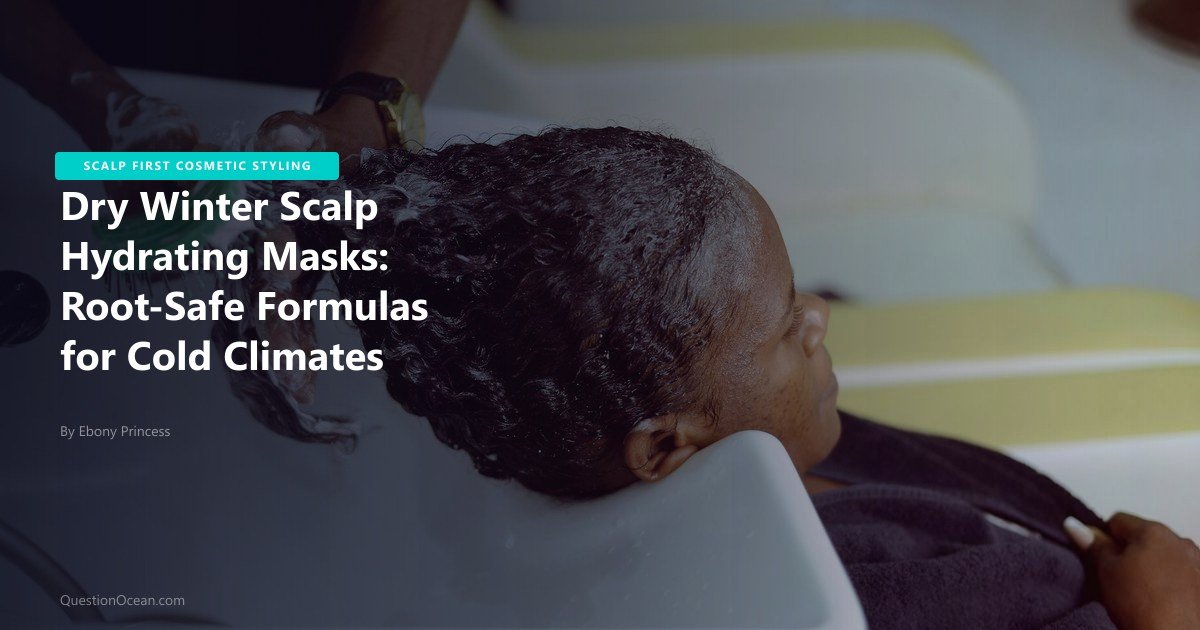
Every February in Toronto, Chicago, and Edinburgh, the same sequence plays out: indoor heating drops ambient humidity to 15-20%, the scalp surface dehydrates, visible flakes appear at the part line, and every styled look is undermined by white specks visible at the roots. Dry winter scalp hydrating masks, formulated specifically for the root zone rather than the lengths. Restore the moisture barrier that central heating and cold, dry air systematically destroy between November and March.
The challenge is finding masks that hydrate the scalp without weighing down the roots. This guide identifies formulations, application methods, and seasonal schedules for dry winter scalp hydrating masks designed specifically for US, UK, and Canadian winter climates.
How Indoor Heating Creates Cosmetic Scalp Dryness
The physics of winter scalp dryness is straightforward. The scalp surface maintains a lipid barrier: a thin layer of natural oils, that retains moisture and prevents transdermal water loss. Indoor heating systems reduce ambient humidity from a comfortable 40-60% to as low as 15%, accelerating moisture evaporation from the scalp surface faster than the body can replenish it.
The result is cosmetically visible: tightness, visible flaking along the hairline and part, increased static at the roots, and a rough, dry texture that makes blow-drying feel scratchy rather than smooth.
This isn’t a condition requiring professional consultation, it’s a seasonal environmental response that nearly everyone in Northern climates experiences. The cosmetic fix is restoring surface moisture through targeted hydrating masks, combined with the broader scalp-first styling routine that maintains root cleanliness year-round.
Dry Winter Scalp Hydrating Masks vs. Standard Hair Masks
Standard hair masks. Olaplex No. 3, Moroccanoil Intense Hydrating Mask, etc. are engineered for the mid-shaft and ends. They contain heavy butters (shea, cupuaçu), thick silicones (dimethicone, amodimethicone), and rich oils that coat the strand to replenish moisture along the length.
Applying these products to the scalp creates an immediate volume disaster. The heavy ingredients coat the root zone, flattening every strand against the head and producing a greasy, limp appearance that no amount of blow-drying can overcome.
Scalp-specific hydrating masks use:
- Hyaluronic acid: attracts and holds moisture at the scalp surface without adding weight to the hair shaft
- Aloe vera, lightweight gel hydration that soothes the sensation of tightness
- Glycerin (at low concentrations), draws ambient moisture to the skin surface
- Niacinamide (Vitamin B3). Strengthens the scalp’s moisture barrier cosmetically
- Allantoin. Calms the appearance of redness and irritation from dry conditions
These ingredients hydrate the scalp’s skin surface without interfering with hair styling. They absorb into the scalp rather than coating the hair shaft, maintaining root lift and styling performance.
Hyaluronic Acid Scalp Mask: lightweight hydrating formula
Regional Winter Challenges Across the US, UK, and Canada
Canadian Prairies and Northern Ontario (November-March)
Outdoor temperatures regularly drop below -20°C (-4°F), and indoor heating runs continuously. Humidity inside heated homes drops to 10-20%. This produces the most extreme scalp dehydration of any English-speaking region. Weekly hydrating masks are essential, and a bedside humidifier significantly reduces overnight moisture loss.
US Northeast and Midwest (December-February)
Extended heating seasons combined with cold, dry outdoor air create a similar dehydration pattern to Canada, though slightly less extreme. Biweekly hydrating masks are typically sufficient, increasing to weekly during extended cold snaps.
Northern UK and Scotland (November-February)
UK winters are cold and damp rather than cold and dry. However, indoor heating (particularly radiators) creates localized dry zones. The scalp dries faster than in outdoor UK conditions. A lightweight hydrating mask every two weeks, combined with reduced scalp exfoliation frequency, maintains the moisture balance.
Canadian Dry Cold vs. UK Damp Cold: Different Dehydration Mechanisms
Although both Canada and the UK experience cold winters, the scalp dehydration mechanisms differ significantly. Canadian winters, particularly across the Prairies, Northern Ontario, and Quebec. Deliver extreme dry cold with outdoor humidity frequently dropping below 30%.
Indoor forced-air furnaces are the larger problem: they push relative humidity down to 10-15%, and at that level the scalp’s lipid barrier begins losing measurable moisture within 20 minutes of exposure. The constant transition between frigid outdoor air and aggressively heated indoor environments creates a double dehydration cycle that strips the lipid barrier from both directions.
UK winters, by contrast, deliver damp cold with outdoor humidity often exceeding 70-80%. The scalp does not dehydrate outdoors in Manchester or Glasgow the way it does in Winnipeg or Ottawa — but persistent wet-cold exposure creates its own cosmetic problem: a tight, contracted scalp surface that flakes differently than dry-cold dehydration. UK flaking tends to appear as small, waxy patches rather than the fine, powdery flakes Canadian users experience.
Indoor central heating. Particularly older radiator systems common in UK housing stock. Compounds this by creating localized dry zones around the head during sleep and desk work. The radiator effect is concentrated and sustained: sitting within three feet of a running radiator for several hours drops the skin-surface humidity in that zone dramatically, even if the room’s overall humidity remains moderate.
UK users should focus dry winter scalp hydrating masks on post-radiator recovery, applying a lightweight hyaluronic acid mask after extended periods near heat sources rather than on a fixed weekly schedule.
For Canadian users facing extreme dehydration, hyaluronic acid scalp masks with molecular weights below 50 kDa penetrate the scalp surface most effectively. Recommended options include The INKEY List Hyaluronic Acid Hydrating Hair Treatment ($12/100ml), which applies a lightweight gel directly to the scalp, and Briogeo Scalp Revival Soothing Solutions Mask ($32/177ml), which combines hyaluronic acid with aloe for dual-action hydration suitable for weekly winter use.
For UK users dealing with waxy-flake buildup from damp-cold exposure, Briogeo Scalp Revival Micro-Exfoliating Shampoo ($42/236ml) combines charcoal and coconut oil to lift flakes without over-stripping the moisture barrier, use it biweekly as a prep step before applying a hydrating mask. SheaMoisture Raw Shea Butter Deep Treatment Masque ($12/340g) works as a mid-shaft-to-ends companion product on wash days, providing intense moisture to lengths dried by radiator exposure while keeping the scalp zone clear for a lightweight hyaluronic formula.
Southern US and Mild UK (Year-Round)
These regions rarely require dry winter scalp hydrating masks. Natural humidity provides adequate surface moisture. If winter dryness does occur from extended air conditioning or unusually cold snaps, a monthly application of a lightweight hyaluronic acid formula is sufficient.
Application Method for Root-Safe Hydration
The application technique ensures the mask reaches the scalp surface, where it’s needed, without coating the roots with product weight.
Step-by-Step Application
- Shampoo and rinse hair normally (skip the conditioner step for now)
- Towel-blot until hair is damp, not dripping
- Part the hair into four sections
- Using fingertips or a nozzle applicator, apply the scalp mask along each part line directly onto the skin
- Massage gently for 30 seconds, spreading the mask across the scalp surface
- Avoid pulling the product down the hair shaft: keep it on the scalp
- Leave for 5-10 minutes (or as directed by the product label)
- Rinse thoroughly with lukewarm water
- Apply conditioner from mid-shaft to ends
- Style as normal
The total amount of mask needed is typically 1-2 tablespoons for the entire scalp. Over-application creates the same volume-killing effect as applying conditioner to the roots.
Combining Hydration with Exfoliation in Winter
Winter dryness creates a challenging cycle: dry flakes accumulate more rapidly, tempting users to exfoliate more aggressively, which further strips the moisture barrier and produces even more dryness.
The solution is reducing exfoliation frequency during winter months while increasing hydration frequency. A practical winter schedule:
- Week 1: Gentle chemical exfoliant (lactic acid) + hydrating scalp mask
- Week 2: Hydrating scalp mask only: skip exfoliation
- Week 3: Gentle chemical exfoliant + hydrating scalp mask
- Week 4: Hydrating scalp mask only
This cycle maintains enough exfoliation to prevent visible flaking while protecting the moisture barrier that aggressive scrubbing would disrupt. Avoid physical scrubs entirely during periods of active dryness. The granular friction compounds the irritation.
For a deeper dive into rosemary oil pre-wash treatments that complement winter scalp hydration, our dedicated guide covers seasonal carrier oil adjustments.
Environmental Supplements That Reduce Scalp Dryness
Product-based hydration works best when combined with environmental moisture management.
Practical environmental adjustments:
- Bedroom humidifier: Running a cool-mist humidifier during sleep raises ambient humidity in the breathing zone to 40-50%, significantly reducing overnight scalp dehydration. This single action often reduces visible flaking by 50% or more within two weeks.
- Lukewarm showers: Hot water strips the scalp’s lipid barrier more aggressively than warm water. During winter, reduce shower temperature from hot to lukewarm, particularly during the rinse step. The temperature difference feels minor but measurably preserves surface moisture.
- Silk or satin pillowcases: Cotton pillowcases absorb moisture from the scalp surface overnight. Silk and satin create a non-absorbent barrier that reduces friction-related moisture loss during sleep.
- Reduced washing frequency: If you’re managing the oily-roots-dry-ends balance, consider extending wash intervals by one day during winter. The scalp’s natural sebum provides a modest protective layer against transdermal water loss.
Ingredient Red Flags in Scalp Hydrating Masks
Not all products marketed as “scalp masks” are formulated for root-zone use. Watch for ingredients that undermine volume:
Avoid at the Roots:
- Shea butter or mango butter, too heavy for the root zone; creates instant flatness
- Heavy silicones (dimethicone, cyclomethicone) — seal the surface but coat the hair shaft, adding weight
- Mineral oil or petroleum: extremely heavy; nearly impossible to rinse completely with a single shampoo
Safe for the Scalp:
- Hyaluronic acid, weightless hydration
- Aloe vera gel, cooling, lightweight moisture
- Centella asiatica (cica). Calms the appearance of redness
- Panthenol (Pro-Vitamin B5), attracts moisture to the surface
- Squalane, lightweight, non-comedogenic hydration
Panthenol Scalp Treatment. Lightweight winter hydrating formula
Frequently Asked Questions
Q: Can I use a regular hair mask on my scalp? A: Standard hair masks are too heavy for the scalp. Their butters and silicones flatten roots and create buildup. Use a lightweight scalp-specific mask containing hyaluronic acid, aloe, or niacinamide instead.
Q: How often should I use a scalp mask in winter? A: Weekly in extremely dry climates (Canadian Prairies, US Northeast). Biweekly in moderate winter climates (Southern UK, Pacific Northwest). Monthly or as-needed in mild regions.
Q: What causes dry scalp in winter specifically? A: Indoor heating systems reduce ambient humidity to 15-20%, which accelerates moisture evaporation from the scalp’s lipid barrier. Cold outdoor air compounds the effect by further reducing environmental moisture.
Q: Can a humidifier help with dry scalp? A: Significantly. Running a cool-mist humidifier in the bedroom during winter sleep maintains ambient humidity at 40-50%, visibly reducing scalp flaking within one to two weeks.
Q: What is the best hydrating scalp mask for winter? A: Look for lightweight, water-based formulas containing hyaluronic acid, panthenol, or aloe vera. Avoid masks with heavy butters (shea, mango) or thick silicones, which coat the root and eliminate volume.
Winter scalp dryness is one of the most common cosmetic frustrations across the US, UK, and Canada, and one of the easiest to solve. The right dry winter scalp hydrating masks. Lightweight, root-safe, and built on hyaluronic acid or panthenol rather than heavy butters: applied weekly, combined with a bedroom humidifier running at 40-50% RH and lukewarm wash temperatures below 105°F, eliminates visible flaking and restores the smooth, hydrated styling foundation that cold-climate winter environments systematically destroy.