
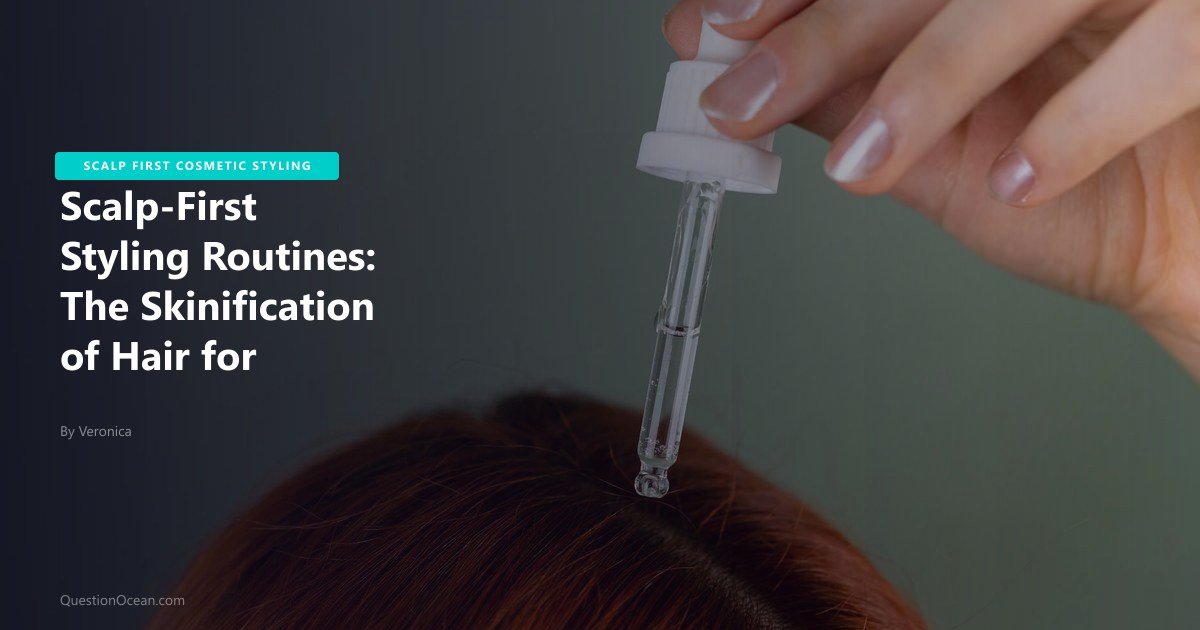
The best blowout in the world falls flat when the roots are weighed down by three weeks of dry shampoo residue and invisible product buildup. Scalp-first styling routines. The practice of applying facial skincare principles directly to the scalp before any styling, have rewritten the rules of volume, shine, and styling longevity in 2026. Every lasting style begins with a clean, balanced, cosmetically optimized scalp surface.
This guide breaks down exact product sequences, exfoliation techniques, and serum application methods that produce measurably more root lift and extend blowout life by 24-48 hours. The scalp is the foundation: the prep determines the result.
Why Scalp-First Styling Routines Outperform Traditional Approaches
Traditional styling starts mid-shaft and works outward, ignoring the single most important factor in root volume: the weight sitting at the base of each strand. Product residue from styling sprays, dry shampoos, and conditioners accumulates within the first inch of the hair shaft, physically flattening each strand against the scalp.
A cosmetically clean scalp reduces root-level weight by up to 15%, producing noticeably more lift during blowouts. When each strand emerges from a clear, balanced surface, it stands at a wider angle from the head: the exact structural mechanic that creates the appearance of thicker, fuller hair.
The skinification approach borrows three core philosophies from facial skincare: chemical exfoliation (AHAs and BHAs) to dissolve buildup, targeted serums to address specific cosmetic concerns like limpness and oiliness, and barrier protection to maintain hydration between washes. The concept originated in Korean beauty routines and has been adapted for Western hair types and climates since 2023.
For a detailed look at building volume through weight reduction, see our guide on clarifying shampoos for removing buildup.
The Scalp-First Product Layering Sequence
Just as facial skincare follows a specific order, cleanser, exfoliant, serum, moisturizer, scalp-first styling demands a precise product sequence. Applying these steps out of order reduces their cosmetic effectiveness by 30-50%, according to cosmetic formulation principles.
Step 1: Pre-Wash Oil or Serum (Optional, 1-2x Per Week)
Apply a lightweight carrier oil such as jojoba (25 cP viscosity) or argan to the scalp 20-30 minutes before shampooing. This pre-wash step softens stubborn styling polymer residue and provides slip during the shampooing process, reducing mechanical friction on the scalp surface. Use approximately 1 tablespoon for fine-to-medium hair, 2 tablespoons for thick, dense hair. Our guide to applicator bottles for mess-free root oiling covers the best precision tools for this step.
Step 2: Clarifying or Chelating Shampoo
Use a sulfate-free clarifying shampoo to dissolve the softened buildup. Lather for 60-90 seconds: significantly longer than the typical 15-20 second wash most users default to. In hard water zones across much of the US Midwest, Southern England, and Ontario, a chelating shampoo with EDTA or phytic acid removes calcium and iron mineral deposits that dull hair and weigh down roots.
Step 3: Physical or Chemical Scalp Exfoliant
After the first cleanse, apply a cosmetic scalp scrub to dissolve remaining flakes and dead skin cells at the root. AHA-based chemical exfoliants (glycolic acid at 5-8% or lactic acid at 5%) work more gently than physical sugar scrubs, dissolving debris without creating micro-tears on the scalp surface. Apply 5-10 minutes before the second shampoo step for maximum dissolution.
Step 4: Lightweight Shampoo or Co-Wash
Follow with a gentle, sulfate-free shampoo to rinse away dissolved exfoliant residue. This second cleanse. A technique borrowed from the double-cleansing method, ensures the scalp is completely clean without stripping natural oils. Lather for 30-45 seconds, focusing on the nape and behind the ears where residue concentrates.
Step 5: Targeted Root Serum
Apply a lightweight root-lifting serum directly to the damp scalp using a nozzle applicator. 6-10 drops total for fine hair, 12-15 drops for medium to thick hair. These polymer-based serums (containing PVP or VP/VA copolymers) coat each strand at the root, providing thermal activation during blow-drying for sustained lift lasting 24-72 hours.
Scalp Scrub, salicylic acid scalp exfoliant
Exfoliation: The Foundation of Flake-Free Styling
Styling problems that appear at the mid-shaft, limpness, greasiness, visible flakes: frequently originate at the scalp. Chemical exfoliants containing salicylic acid (BHA) at 1-2% concentration dissolve oil-bound dry shampoo polymers that physical scrubbing alone cannot reach.
Physical exfoliants use sugar, salt, or charcoal granules to manually lift debris. They work well for thick, resilient scalps but carry a risk of irritation on sensitive skin types. Chemical exfoliants, formulated with glycolic acid, lactic acid, or salicylic acid. Dissolve the bonds between dead cells and product residue without abrasive contact.
For styling purposes, chemical exfoliants produce a cleaner result because they penetrate below the visible surface layer, clearing the area cosmetically and allowing roots to stand taller during blow-drying. The most effective approach alternates between a physical scrub every other week and a chemical exfoliant weekly.
Sugar-based physical scrubs cost $8-15 across US, UK, and Canadian retailers (Briogeo Scalp Revival, dpHUE ACV Scrub). Chemical exfoliants range from $12-28 (The INKEY List Salicylic Acid Scalp Treatment at the budget end, Drunk Elephant T.L.C. at the prestige end).
The Role of Scalp Massager Brushes in Styling Prep
Silicone scalp massager brushes have moved from a wellness trend to a genuine styling tool. When used during the shampoo step, the flexible bristles create micro-circular motions that lift product residue away from the root opening more effectively than fingernail scrubbing.
The key cosmetic benefit is improved lather distribution. Rather than concentrating shampoo on the crown, the brush spreads the cleanser evenly across the entire scalp, including the nape and behind the ears, where buildup silently accumulates. High-density brushes with 60+ bristles per square inch provide the most thorough coverage.
For a detailed evaluation of bristle densities, ergonomic grips, and compatibility with curly textures, read our scalp massager brush guide. Fine-haired users should select brushes with widely spaced, soft-tip flexible bristles to prevent tangling during the massage. Budget options from HEETA and Maxsoft ($6-8 on Amazon US/UK/CA) perform comparably to premium $15-20 alternatives.
Root Serums vs. Traditional Volumizing Mousses
The 2026 shift toward root serums represents a significant upgrade over traditional volumizing mousses. Mousses coat strands from mid-shaft to ends, adding approximately 0.3 grams of product weight per application, negligible on thick hair but enough to collapse fine hair within hours. Root serums deliver lightweight polymers exclusively to the first two inches of each strand, where lift matters most.
Root serums activate thermally during blow-drying at temperatures above 200°F (93°C). As heat evaporates the water content, the polymer structure tightens around the base of each strand, creating a scaffolding effect that holds the hair at an elevated angle from the scalp for 24-72 hours.
Look for serums containing PVP (polyvinylpyrrolidone) or VP/VA copolymers. These flexible-hold polymers provide structure without the crunchiness associated with older gel-based formulas. Avoid serums with heavy dimethicone, which can gradually reintroduce the weight you just clarified away. Kevin Murphy Anti.Gravity ($32/150ml) and Living Proof Full Root Lifting Spray ($29/163ml) are leading US/UK/CA options.
Root Lifting Serum, lightweight polymer volumizer
Rosemary Oil: Cosmetic Shine as a Pre-Wash Step
Rosemary oil is one of the most versatile cosmetic pre-wash ingredients available, functioning strictly as a surface-level glossing agent. Diluted in a carrier oil (3-5 drops per tablespoon of jojoba), it reduces pre-shampoo friction and adds a noticeable sheen to strands through improved cuticle-level light reflection.
Apply the diluted blend to the roots 15-20 minutes before shampooing, using an applicator bottle for precision. Wash out thoroughly with a clarifying shampoo, two lathers may be necessary for heavy carrier oils like castor or olive. For a deeper exploration of rosemary oil’s cosmetic benefits and application ratios, including carrier oil selection by hair type, see our dedicated guide.
Adapting Scalp-First Styling Routines to Western Climates
Scalp appearance shifts dramatically with the seasons across the US, UK, and Canada, requiring routine adjustments.
Hot, Humid Summers (US South, UK July-August)
Increase clarifying frequency to once per week. Humidity above 70% accelerates sebum spread along the hair shaft, creating a greasy appearance within 4-6 hours of styling. A lightweight astringent toner with witch hazel or niacinamide, applied to the roots post-wash with a cotton pad, can extend the freshness window by 8-12 hours.
Cold, Dry Winters (Canadian Prairies, US Northeast, Northern UK)
Switch to a hydrating scalp mask once per week to counteract the dehydrating effects of indoor heating, which drops ambient humidity to 15-20%. Our guide to soothing dry winter scalps with hydrating masks covers root-safe formulations containing hyaluronic acid and panthenol that moisturize without weighing down fine hair.
Hard Water Zones (Much of England, US Midwest, Southern Ontario)
Add a chelating shampoo (containing EDTA or phytic acid) every two weeks to remove calcium, magnesium, and iron deposits that create a dull, rough texture at the root. Malibu C Hard Water Wellness Shampoo ($18/266ml) is the most widely recommended chelating option across all three markets.
Managing the Oily-Roots-Dry-Ends Paradox
The combination of greasy roots and parched, brittle ends is the single most common scalp-related styling frustration. Single-product “balancing” shampoos cannot simultaneously strip root oil and deposit end moisture. The chemistry required for each task is directly contradictory.
The effective approach uses zone-specific application: an astringent, clarifying shampoo applied exclusively to the roots and scalp, followed by a rich conditioner applied only from mid-shaft to ends. During rinsing, the diluted clarifying shampoo flowing over the lengths provides gentle cleansing without stripping essential moisture from the ends.
For a complete breakdown of zone-specific routines, including porosity-based adjustments and a 7-day maintenance schedule, read our guide on balancing oily roots and dry ends cosmetically.
Building a Complete Weekly Scalp-First Rotation
Combining these elements creates a weekly rotation that maintains styling performance across all Western climates. Our complete wash-day optimization guide integrates scalp-first principles into a broader styling framework.
- Monday or Tuesday: Full scalp-first wash day. Clarify (60-90 seconds) → exfoliate (5-10 minutes) → root serum (6-10 drops) → tension blowout
- Wednesday-Thursday: Dry shampoo at roots only (rice starch formula), refresh mid-lengths with a lightweight texture mist
- Friday: Quick co-wash or water rinse if needed, reapply root serum to damp roots, air-dry or diffuse
- Weekend: Pre-wash oil cosmetic routine (rosemary + jojoba, 20 minutes), full exfoliation cycle, deep condition ends
This rotation keeps roots lifted and clean while protecting mid-shaft moisture. The exact balance that produces salon-quality blowouts lasting 3-4 days between full washes.
Frequently Asked Questions
Q: What is scalp-first hair care? A: Scalp-first hair care applies facial skincare principles — exfoliation, serums, and barrier maintenance, directly to the scalp before styling. The goal is to create a clean, balanced root environment that produces natural volume and extends the life of blowouts, curls, and updos by 24-48 hours.
Q: How often should I exfoliate my scalp? A: Once per week for most hair types, alternating between a physical scrub and a chemical exfoliant (AHA or BHA). Fine hair may prefer chemical exfoliants exclusively, lactic acid at 5% is the gentlest option: as physical granules can create friction-related frizz near the roots.
Q: Can scalp care actually improve volume? A: Removing product buildup and excess sebum from the root zone reduces the weight sitting at the base of each strand, allowing hair to stand at a wider angle from the head. The result is measurably more root lift during blowouts, approximately 15% more volume compared to a standard shampoo-only wash.
Q: How do I optimize my styling base without harsh chemicals? A: Use sulfate-free clarifying shampoos paired with gentle chemical exfoliants (glycolic or lactic acid at 5-8%). Follow with a lightweight root serum containing PVP or VP/VA copolymers rather than heavy mousses. Apply conditioner from mid-shaft to tips only. Zero product at the roots.
Q: Is the double-cleansing hair method worth it? A: For anyone who uses dry shampoo three or more times per week, texturizing sprays, or silicone-based serums, double cleansing removes significantly more residue than a standard single wash. The first wash (oil-based or micellar) dissolves styling polymers; the second wash (surfactant-based) cleanses the scalp surface.
Q: What products should I avoid putting directly on my scalp? A: Avoid heavy conditioners, thick silicone-based serums (containing high-concentration dimethicone), and oil-based styling creams at the roots. These weigh down the hair shaft within the first inch, eliminating any lift your blowout technique creates. Apply all conditioning products from ear-level downward.
Scalp-first styling routines add five focused minutes to your wash day while extending blowout longevity by 24-48 hours and producing measurably more root lift. The investment is in exfoliation, targeted serums, and zone-specific cleansing, three steps that make every subsequent styling product perform at a noticeably higher level.