
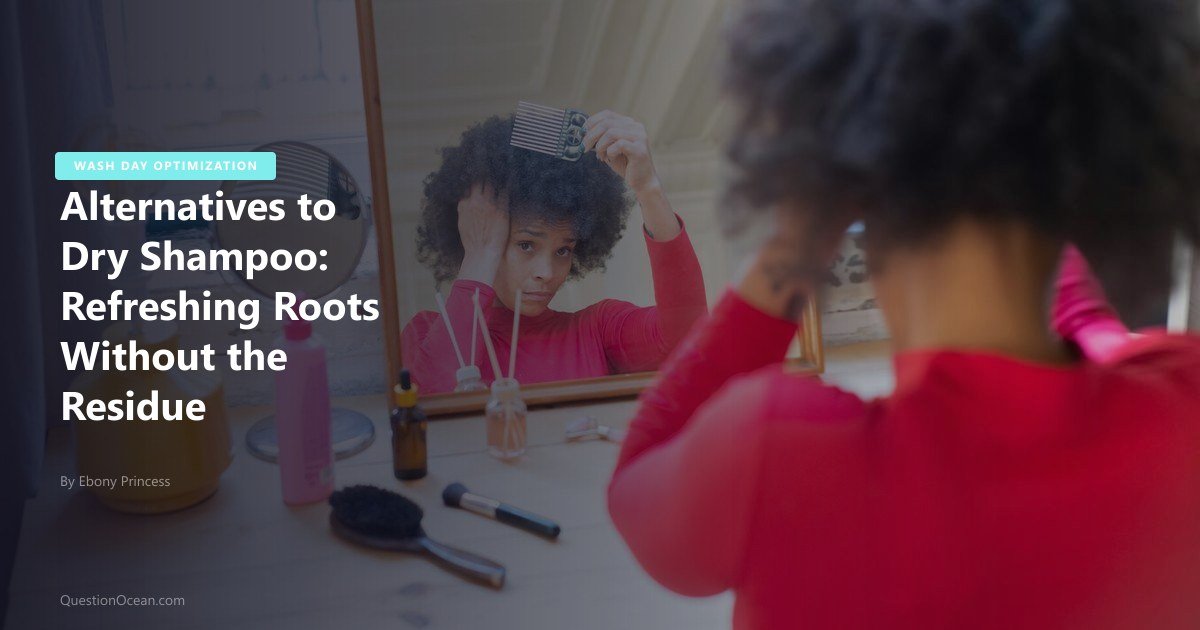
Dry shampoo solved a real problem when it first became mainstream, oily roots between wash days, but it introduced a new set of issues that millions of users now struggle with. White powder buildup on dark hair, gritty texture that makes strands feel coated rather than clean, and scalp irritation from starch and alcohol accumulation are pushing people to find alternatives to dry shampoo that actually refresh roots without the residue. The good news is that several methods work as well or better than aerosol dry shampoo, and most of them cost less per use.
This guide covers the most effective root-refreshing methods ranked by hair type and situation. For a complete between-wash strategy, our optimized wash day routine guide explains how every product and technique fits together.
Why Dry Shampoo Leaves White Powder Buildup
Understanding why dry shampoo creates buildup helps you evaluate whether an alternative will actually solve the problem. Most aerosol dry shampoos rely on rice starch, tapioca starch, or aluminum starch octenylsuccinate as their primary oil-absorbing ingredient. These starches work by physically coating excess sebum on the hair shaft, which is why your roots look less oily after application.
The white residue appears when the starch particles sit on the surface of the hair rather than fully absorbing into the oil. This happens for three reasons: applying too much product, not massaging the product into the scalp after spraying, or using a starch-heavy formula on hair with minimal oil to absorb it.
On dark hair: brunette, black, or deep auburn: even a properly applied starch-based dry shampoo leaves a visible gray cast that requires significant brushing and shaking to distribute. On fine hair, the starch particles add weight that flattens whatever volume you had. And for anyone who uses dry shampoo more than twice between washes, the layered residue creates a gritty coating that makes hair feel dirtier than before you sprayed it.
Micellar Scalp Waters: The Closest Alternative to Washing
Micellar water technology migrated from skincare to haircare, and scalp-specific micellar sprays are now the most effective alternatives to dry shampoo for oil absorption without residue. Micellar scalp waters use clusters of surfactant molecules called micelles that attract and encapsulate oil, lifting it off the hair shaft without leaving any powder or film behind.
The key advantage over dry shampoo is that micellar waters do not rely on starch. They use a water-based solution that evaporates, taking dissolved oil with it. The result is genuinely cleaner-feeling roots with zero visible residue on any hair color.
How to use micellar scalp water effectively:
- Part your hair along your natural part line and any secondary parts where oil concentrates (usually along the temples and crown).
- Spray the micellar solution directly onto exposed scalp from a distance of four to six inches.
- Massage with fingertips for 15 to 20 seconds per section to activate the micelles.
- Blot gently with a microfiber towel or cotton cloth to lift the dissolved oil.
- Allow roots to air dry for two to three minutes before restyling.
The process takes under five minutes and leaves hair feeling significantly lighter than dry shampoo. Look for formulas listing aqua and sodium lauroyl sarcosinate as primary ingredients, these are the gentle surfactants that form micelles without stripping the scalp.
Micellar scalp water spray. Sulfate-free
What Can I Use if I Run Out of Dry Shampoo?
The fastest zero-product fix is targeted blow drying at the roots using cool air. This works because the warm sebum on your scalp is semi-liquid at body temperature. A blast of cool air from a dryer (held six inches from the scalp) reduces the surface temperature of the oil, causing it to become more viscous and less visible. The airflow also physically lifts hair at the roots, restoring volume that oil weight has compressed.
This method takes roughly 90 seconds, requires no product, and works on every hair type and color. It will not remove oil, it temporarily redistributes it, so it works best as a same-day fix rather than a multi-day strategy.
Other no-product alternatives for emergencies:
- Cornstarch or arrowroot powder applied with a makeup brush to the part line. Tap off excess and massage in. This is essentially DIY dry shampoo, so it carries the same white-residue risk on dark hair.
- Hairline blotting papers (oil-absorbing sheets designed for the face) pressed along the part line and temple areas. They physically lift oil without adding any product to the hair.
- A clean cotton bandana or headband worn for 10 to 15 minutes while getting ready. The cotton absorbs scalp oil through direct contact, reducing visible greasiness at the hairline.
Hairline Blotting Papers: The Underrated Root Refresher
Oil blotting papers have been a face-care staple for decades, but very few styling guides mention them as a hair tool. Pressing a blotting sheet against your part line, temple area, and hairline absorbs excess sebum instantly without leaving any residue, fragrance, or texture change. This makes them the single best option for refreshing roots on dark hair where any powder-based product creates visible buildup.
How to use blotting papers on hair:
- Hold a sheet flat against the scalp along your part line for three to five seconds, then lift straight up (do not drag sideways, which creates frizz).
- Use a fresh sheet for each section. One for the center part, one for each temple, one for the crown.
- Follow immediately with a quick cool blast from a dryer to lift the roots and restore volume.
Standard face blotting papers work perfectly well. Look for the charcoal-infused variety if available: the charcoal adds mild odor absorption on top of oil removal. Each sheet costs roughly $0.05 to $0.10, making this one of the most affordable alternatives to dry shampoo available.
Oil blotting papers — charcoal-infused, large size
Blow-Drying for Volume Without Rewashing
A targeted root blow-dry is different from a full blowout. The goal is not to restyle the entire head but to lift oil-weighed roots back to their original volume position. This technique pairs well with any of the oil-absorbing methods above.
- Flip your head upside down.
- Set the dryer to medium heat and medium speed (high heat can bake oil into the shaft).
- Direct airflow at the root area only, keeping the nozzle six inches from the scalp.
- Dry for 30 to 60 seconds while massaging the roots with your free hand.
- Flip upright and use the cool shot to set the lifted volume in place.
The cool shot at the end is critical: it firms the hydrogen bonds in the lifted position so roots do not collapse back down within an hour. Without the cool shot, the volume boost lasts only 20 to 30 minutes before gravity and oil weight flatten it again.
For overnight protection that reduces the need for morning root refreshing, see our guide on silk pillowcases for preventing bedhead. Sleeping on silk preserves root lift and reduces oil transfer to the hair from the pillowcase.
Scalp Cosmetic Care Between Wash Days
Thinking of between-wash root care as “scalp cosmetic maintenance” rather than “oil management” shifts the approach from reactive to proactive. Instead of waiting for roots to look greasy and then treating them, you build habits that slow oil visibility from the start.
The most impactful proactive step is avoiding touching your hair and scalp throughout the day. Your hands transfer additional oils and stimulate sebaceous glands, accelerating the oil production cycle. People who consciously stop touching their hair report an extra half-day to full day of clean-looking roots between washes.
Other proactive scalp care strategies:
- Switch your part line every other day. Oil accumulates fastest along the exposed part because it is closest to the scalp surface. Moving the part to a slightly different position hides the oiliest section under the top layer of hair.
- Apply a lightweight root volumizer at the crown on day two after washing. Products containing polymers like VP/VA copolymer create a scaffolding effect that keeps roots lifted even as oil weight increases.
- Use a scalp-specific toner or astringent on a cotton pad along the hairline. Witch hazel diluted with water (50/50 ratio) works as a gentle, fragrance-free option that reduces surface oil without stripping the scalp.
For readers interested in hybrid products that combine cleansing and volumizing functions, our guide on hybrid dry shampoo foams covers foaming formulas that avoid the white-residue problem while adding body.
Avoiding White Powder Buildup on Dark Hair
If you still want to use a powder-based root refresher but need to avoid the gray cast on dark hair, these modifications make a significant difference.
- Choose tinted formulas designed for brunette or dark hair. These use cocoa powder, charcoal, or iron oxides to match your hair color while still absorbing oil.
- Apply to fingertips first, then press into the scalp rather than spraying directly from the aerosol can. This gives you precise control over placement and prevents over-application.
- Wait 60 seconds after application before brushing or touching the treated area. The starch needs time to absorb oil. Brushing too early spreads dry powder rather than oil-absorbed powder, which is what creates the visible white residue.
The single biggest mistake dark-haired users make is applying dry shampoo to visibly oily roots instead of applying it preventively the night before. Spraying dry shampoo at the roots before bed gives the starch eight hours to gradually absorb oil as it is produced. By morning, the starch is fully saturated and virtually invisible. This preventive approach dramatically reduces white powder visibility for brunettes.
Tinted root volumizing spray, brunette
Building a Dry Shampoo-Free Between-Wash Routine
Combining multiple alternatives creates a system that outperforms dry shampoo alone. Here is a practical four-day rotation for someone who washes every four to five days.
- Day 1 (wash day): Style as normal. No root refreshing needed.
- Day 2: Switch part line. Apply lightweight root volumizer at the crown.
- Day 3: Use blotting papers along the part and temples in the morning. Follow with a 60-second cool-air root blast.
- Day 4: Apply micellar scalp water to the part line, crown, and temples. Massage, blot, and blow dry roots on medium heat with a cool shot finish.
This rotation addresses oil incrementally, never allowing it to accumulate to the point where your only option is a full wash or a heavy layer of starch powder. Each step takes under five minutes.
For extending blowouts specifically, our guide on making a salon blowout last all week combines these root-refreshing techniques with overnight protection strategies.
Frequently Asked Questions
Q: What can I use if I run out of dry shampoo? A: The fastest options are a cool-air blast from a blow dryer aimed at the roots (60 to 90 seconds), oil blotting papers pressed along the part line and temples, or a 50/50 witch hazel and water solution dabbed on the hairline with a cotton pad. All three work without leaving any residue.
Q: Does micellar water work on hair? A: Yes, when formulated specifically for the scalp. Micellar scalp waters use surfactant clusters that encapsulate and lift oil without starch or powder. They leave zero visible residue and work on every hair color, making them the most effective liquid alternative to dry shampoo.
Q: How do you refresh oily roots without washing? A: Start with oil blotting papers to physically lift excess sebum, then follow with a targeted root blow-dry on cool or medium heat. For more thorough refreshing, spray micellar scalp water along the part line, massage for 15 to 20 seconds, and blot with a microfiber towel. The entire process takes under five minutes.
Q: Can dry shampoo cause buildup on the scalp? A: Yes. Starch-based dry shampoos accumulate on the scalp surface with repeated use, creating a coating that can clog follicles and make hair appear dull and heavy. Using a clarifying shampoo once every two weeks and switching to non-starch alternatives between washes prevents this buildup cycle.
Q: Is cornstarch a good substitute for dry shampoo? A: Cornstarch absorbs oil effectively but carries the same white-residue risk as commercial dry shampoo on dark hair. Apply it with a small makeup brush for precise placement, let it sit for two minutes, then massage in thoroughly and brush out. Adding a pinch of cocoa powder creates a better color match for brunettes.
Q: How many days can you go without washing your hair? A: Most hair types look and feel best with washing every three to five days. Using alternatives to dry shampoo, micellar waters, blotting papers, and targeted blow drying. Can extend that window by an additional one to two days. The ideal frequency depends on your hair density, oil production rate, and styling products used.
Cleaner Roots Without the Powder Problem
The best alternatives to dry shampoo address root oiliness without introducing powder residue, product weight, or scalp buildup. Micellar scalp waters, blotting papers, and targeted blow-drying techniques each tackle the problem from a different angle, and combining them across a multi-day rotation keeps roots fresh far longer than any single aerosol can. Drop the powder, pick up the method that matches your hair type, and enjoy genuinely clean-feeling roots between washes.