
Most people wash their hair far more often than their hair actually needs it, and every unnecessary wash resets a style that could have lasted two or three more days. Extending time between hair washes is not about neglecting your hair: it is about understanding how your scalp produces oil, how your styling choices affect longevity, and which preservation techniques keep your look intact from Monday morning through the weekend. This guide covers every factor that determines how long a style lasts and exactly how to push that timeline further.
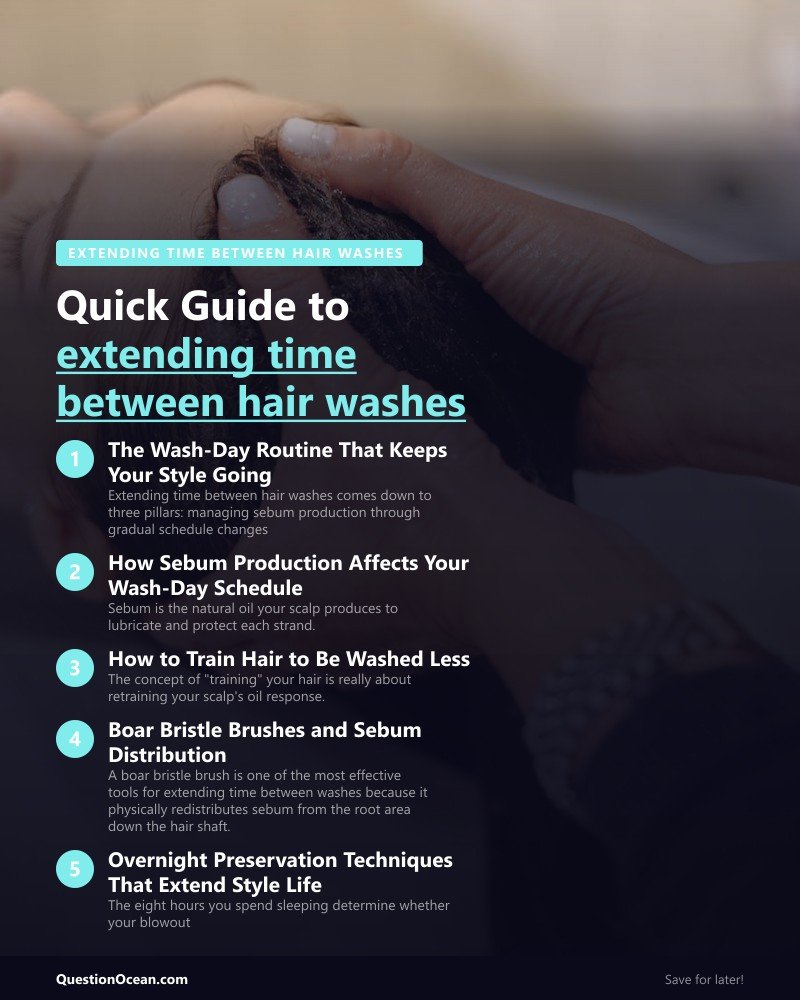
How Sebum Production Affects Your Wash-Day Schedule
Sebum is the natural oil your scalp produces to lubricate and protect each strand. The rate of production varies dramatically between individuals and is influenced by genetics, climate, and your current washing frequency. When you wash daily, your scalp compensates by ramping up sebum output to replace what the shampoo strips away. This creates a cycle: more washing leads to more oil, which leads to more washing.
Breaking this cycle is the foundation of extending time between hair washes. When you gradually increase the gap between washes, adding one extra day every two weeks, sebum production slowly recalibrates downward. Most people notice a meaningful reduction in oiliness within four to six weeks of spacing out their washes.
Fine hair shows oil faster than coarse hair because the strands are thinner and sebum coats them more visibly. Thick, coarse hair can often go four to five days between washes because the oil distributes less noticeably across a wider strand diameter. For a deeper look at how your scalp environment shapes your styling routine, see our guide to scalp-first cosmetic styling routines.
How to Train Hair to Be Washed Less
The concept of “training” your hair is really about retraining your scalp’s oil response. Jumping from daily washing to once a week will leave you with a greasy, uncomfortable transition period that most people abandon within days. A gradual approach works far better.
- Start by pushing your current wash schedule by one day. If you wash every day, move to every other day for two full weeks.
- Use a targeted dry shampoo or root powder on the transition day to absorb excess oil at the scalp. Our guide to refreshing roots without dry shampoo covers alternatives if powders irritate your scalp.
- After two weeks at the new schedule, add another day. Continue this pattern until you reach your target frequency.
- Expect the adjustment period to last four to eight weeks before your scalp fully recalibrates.
The single most important rule during the training period is to avoid touching your hair. Your hands transfer additional oils to your strands, accelerating the greasy look and undermining the recalibration process. Wearing your hair in a loose bun, braid, or clip-secured style on transition days helps you keep hands off while maintaining a polished appearance.
Boar Bristle Brushes and Sebum Distribution
A boar bristle brush is one of the most effective tools for extending time between washes because it physically redistributes sebum from the root area down the hair shaft. The natural bristles are structurally similar to human hair, which allows them to pick up oil at the scalp and carry it toward the mid-lengths and ends where it acts as a natural conditioner.
- Brush from root to tip in long, smooth strokes, 30 to 40 strokes per section is the traditional recommendation, and it genuinely works
- Best timing is at night before bed, so the redistributed oil conditions your ends overnight without making your roots look freshly oily during the day
- Avoid boar bristle brushes on wet hair. The bristles snag on damp strands and cause breakage
- Clean the brush weekly by removing trapped hair and washing the bristles in warm water with a drop of shampoo
Boar bristle paddle brush, natural bristle
For those with high porosity hair that absorbs oil quickly, a boar bristle brush doubles as a moisture-sealing tool because it presses natural oils into the open cuticle layer.
Overnight Preservation Techniques That Extend Style Life
The eight hours you spend sleeping determine whether your blowout, curls, or waves survive into the next day. Friction against a cotton pillowcase roughens the cuticle, creates frizz, and flattens volume at the crown. Three changes to your overnight routine can add two or more days to any style.
Satin or Silk Pillowcases
Switching from cotton to satin or silk reduces surface friction by roughly 40%, which means your hair slides over the pillow rather than catching against it. Our full comparison of silk pillowcases for preventing bedhead breaks down which fabrics perform best.
Mulberry silk pillowcase, standard and king size
The Pineapple Method
Gathering all hair into a very loose ponytail on top of the head, secured with a silk scrunchie, not a tight elastic, prevents your hair from being crushed between your head and the pillow. This works for curly, wavy, and blow-dried styles alike.
Shower Cap Protection During Non-Wash Showers
A well-fitting shower cap keeps steam and moisture away from your styled hair during showers when you are not washing. Steam alone can swell the hair shaft and deflate volume. Our guide to mold-resistant shower caps covers the best options that seal properly at the hairline.
Managing Cosmetic Scalp Appearance Between Washes
A style can still look great on day three, but if your scalp looks oily or feels uncomfortable, you will wash anyway. Managing the cosmetic appearance of your scalp on non-wash days is just as important as preserving the hairstyle itself.
Targeted application is more effective than blanket coverage. Instead of spraying dry shampoo all over your head, focus on the three zones that show oil first: the hairline around your face, the part line, and the crown. These areas have higher sebum gland density and become visually oily before the rest of the scalp.
- Loose mineral powder (like translucent setting powder) applied with a small brush works identically to dry shampoo but without the aerosol buildup
- Blotting papers designed for facial oil can press against the scalp along the part line to absorb excess sebum instantly
- A light dusting of cornstarch or arrowroot powder offers a budget alternative, though it requires careful blending on dark hair to avoid visible residue
For a complete wash that resets your scalp without stripping your style, an apple cider vinegar rinse for shine and scalp refresh removes cosmetic buildup without the full lather-and-rinse cycle. Alternatively, co-washing with a cleansing conditioner offers gentle cleansing that preserves more of your style’s structure.
Managing Workout Sweat Without a Full Wash
Exercise is the biggest threat to an extended wash schedule. Sweat saturates the root area, reactivates dry shampoo, and introduces salt that can change your hair’s texture. The good news is that sweat itself is mostly water and salt: it does not carry the same grease as sebum, and it does not always require a full shampoo.
- Immediately after a workout, blot your scalp with a microfiber towel. Do not rub — rubbing pushes sweat deeper into the hair shaft and creates frizz.
- Use a blow dryer on the cool setting for 60 to 90 seconds to evaporate residual moisture at the roots. This prevents the damp, flat-root look that makes day-old hair appear unwashed.
- Apply dry shampoo or root powder after the hair is fully dry, not while it is still damp. Applying to damp hair creates a paste that clumps visibly.
- If sweat is heavy, a rinse with plain water (no shampoo) removes the salt without stripping sebum. Follow with a conditioner on the ends only and restyle with a blow-dry technique for maximum style memory.
How Water Quality Affects Wash-Day Frequency
Your local water supply plays a larger role in wash frequency than most people realize. Hard water, common across much of the US Midwest, southern England, and the Canadian prairies: deposits calcium and magnesium minerals on the hair shaft with every wash. These minerals create a dull, rough coating that makes hair feel dirty faster, pushing you to wash more often.
Installing a shower filter removes up to 95% of these mineral deposits, which can extend the time your hair looks and feels clean after each wash. Our detailed guide to shower filters for hair hydration covers installation, cartridge schedules, and regional hardness differences across the US, UK, and Canada.
If your water quality is affecting your hair’s styling results, addressing the water itself may do more for your wash schedule than any product change.
Building Your Ideal Wash-Day Routine
A wash day that maximizes style longevity follows a specific sequence designed to cleanse thoroughly, condition strategically, and lock in a style with built-in memory.
- Clarify first: Use a clarifying or chelating shampoo once every two to four weeks to remove mineral and product buildup that dulls hair and weighs down styles.
- Shampoo at the scalp only. Lather shampoo into the scalp with your fingertips and let the suds rinse through the lengths. Scrubbing the mid-lengths strips moisture.
- Condition the mid-lengths and ends, Apply conditioner from ear level downward. Leave it for two to three minutes, then rinse with cool water to seal the cuticle.
- Blot, do not rub: Press a microfiber towel against your hair to remove excess water. Rubbing creates friction that roughens the cuticle and introduces frizz before styling even begins.
- Style for longevity, Choose techniques that build memory into the hair. A salon-quality blowout styled for week-long wear lasts longer than air-drying because heat-set hydrogen bonds hold their shape more firmly.
Frequently Asked Questions
Q: How to train hair to be washed less? A: Gradually add one extra day between washes every two weeks while using dry shampoo or root powder on transition days. Your scalp’s sebum production will decrease over four to six weeks as it adjusts to the reduced stripping. Avoid touching your hair during the transition period. Your hands transfer oils that accelerate the greasy appearance.
Q: How often should you really wash your hair? A: Most hair types benefit from washing two to three times per week. Fine, straight hair may need three washes, while thick or coily hair often looks and feels best with one to two washes per week. Your ideal frequency depends on sebum production rate, hair density, and how much product you use between washes.
Q: Does dry shampoo damage hair if used too often? A: Dry shampoo itself does not damage hair, but heavy buildup from daily use without regular cleansing can clog the cosmetic appearance of the scalp and weigh down roots. Limit dry shampoo to two to three consecutive days between washes, and use a clarifying shampoo periodically to remove accumulated powder and starch.
Q: Can hard water make your hair get oily faster? A: Hard water deposits minerals that coat the hair shaft, creating a rough texture that traps sebum and makes hair appear oily sooner. A shower filter or periodic chelating wash can remove these deposits and help your hair stay cleaner-looking for longer between washes.
Q: Is it better to wash hair in the morning or at night? A: Washing at night gives your hair a full overnight period to settle into its styled shape. If you blow-dry or set curls after an evening wash, the style has hours to lock in before you face humidity, wind, or activity. Morning washes work if you have time to fully dry and style, but rushing out with damp hair reduces style longevity significantly.
The Wash-Day Routine That Keeps Your Style Going
Extending time between hair washes comes down to three pillars: managing sebum production through gradual schedule changes, preserving styles overnight with low-friction fabrics and protective techniques, and addressing water quality issues that secretly shorten your style’s lifespan. Start by pushing your wash schedule by a single day, invest in a boar bristle brush and a satin pillowcase, and let your scalp recalibrate at its own pace. Every extra day you gain between washes is a day your style gets to shine.