
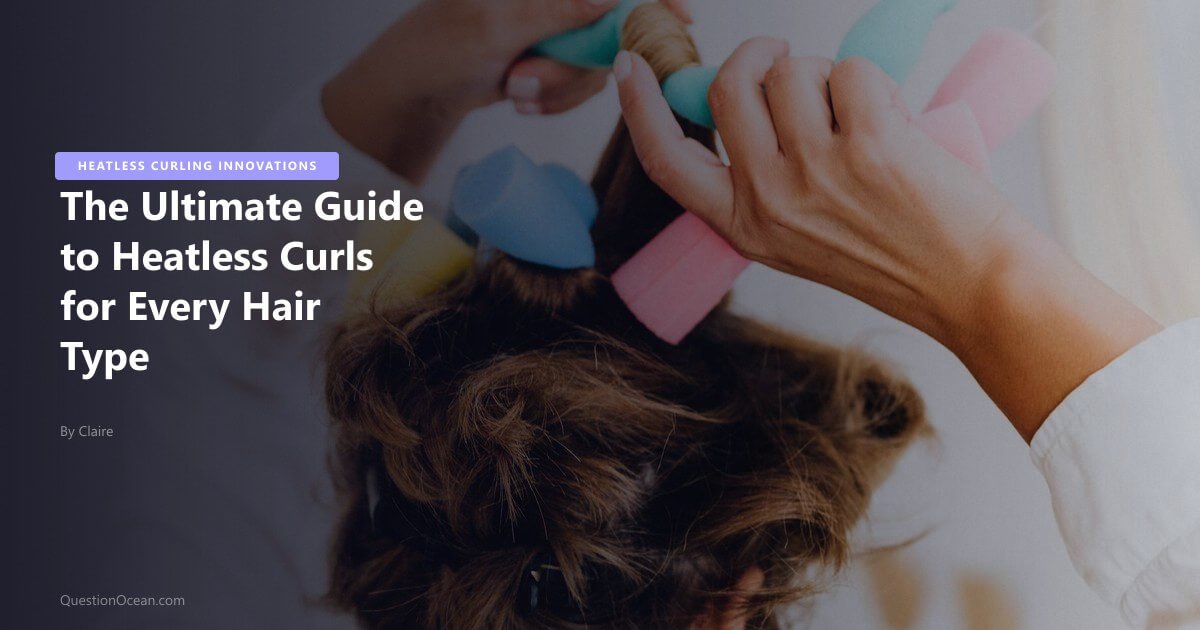
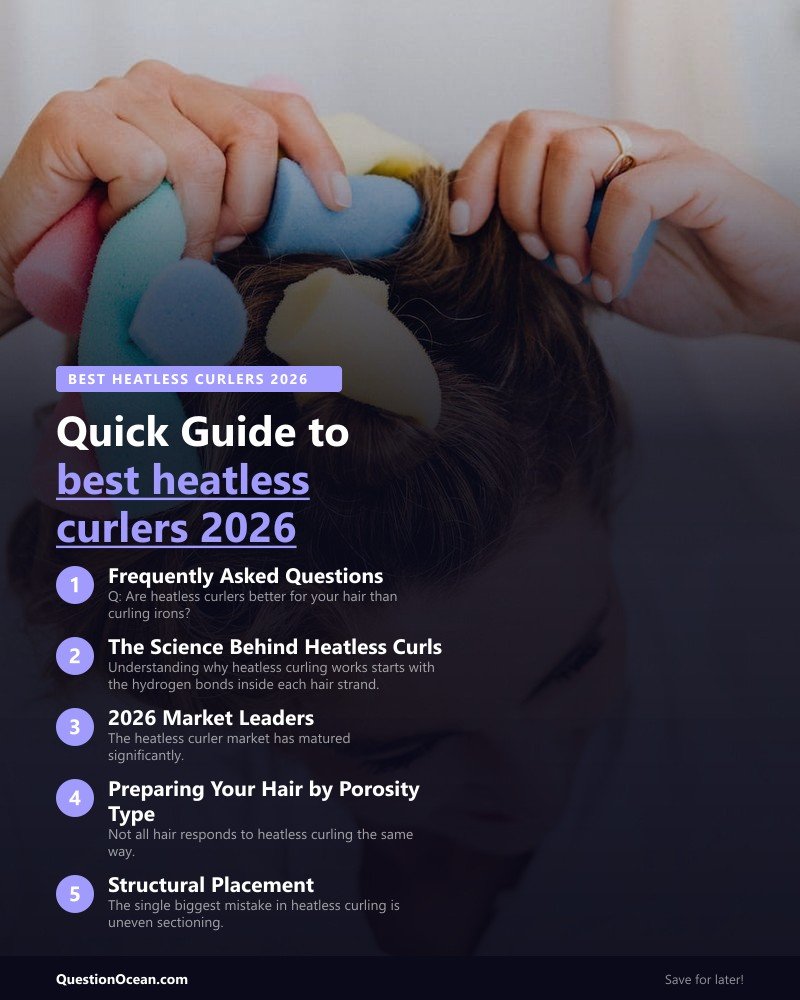
Heatless curlers have officially moved beyond a TikTok trend and into the daily routines of millions of people across the US, UK, and Canada. The best heatless curlers in 2026 now rival heated tools in curl definition while eliminating the thermal damage that weakens hair over time. From the viral Sleepy Tie to the precision-engineered Octocurl, this guide breaks down every method, every tool, and every hair-type consideration so you walk away with curls that actually hold.
The Science Behind Heatless Curls: How Hydrogen Bonds Shape Your Hair
Understanding why heatless curling works starts with the hydrogen bonds inside each hair strand. When hair is damp, these bonds break apart and become flexible. As hair dries in a wrapped or coiled position, the hydrogen bonds reform around that new shape, locking in the curl pattern.
This is the exact same mechanism heated tools use — the difference is that heat forces the bonds to break instantly while damp-setting lets them reform gradually. The result is a softer, more sustainable curl pattern that places zero thermal stress on the cuticle layer.
The key variable is moisture level. Wrapping soaking wet hair leads to frizz and incomplete drying. Wrapping bone-dry hair produces minimal curl formation. The sweet spot sits at roughly 80-90% dry, what professionals call “damp-dry.” This gives the hydrogen bonds enough moisture to reset without leaving hair wet inside the curler by morning. For a full breakdown of how to hit this moisture window, see our guide on prepping damp hair for heatless styling.
2026 Market Leaders: The Top Heatless Curling Tools Evaluated
The heatless curler market has matured significantly. Here are the standout tools dominating US, UK, and Canadian shelves right now.
RobeCurls
RobeCurls uses a thick, padded rod wrapped in satin that you tie around your head like a headband. It works best on medium to long hair and produces loose, voluminous waves rather than tight ringlets. The satin surface reduces friction-induced frizz, and the padding makes it more comfortable for overnight wear than rigid alternatives.
- Best for: Medium to long hair, loose beachy waves
- Hold time: 6-8 hours minimum for lasting results
- Comfort level: High: the padding distributes pressure evenly
Sleepy Tie
The Sleepy Tie wraps around a top-knot and creates curls through a coiling mechanism rather than a traditional wrap. It appeals to side-sleepers because the bulk sits on top of the head rather than at the sides. The microfiber exterior grips hair without clips, though fine hair may experience slippage without a light mousse applied first.
- Best for: Side-sleepers, medium-density hair
- Hold time: 6-10 hours
- Comfort level: High for back and side sleepers
For a detailed head-to-head comparison, read our full RobeCurls and Sleepy Tie comparison.
Octocurl
The Octocurl system uses eight individual pods attached to a headband. Each pod wraps a small section of hair, creating defined, uniform curls rather than waves. It offers the most control over curl tightness because you determine how much hair goes into each pod and how tightly you wrap. The system comes in both microfiber and satin options. Our Octocurl tutorial for tight coils walks through all eight wrapping methods.
- Best for: Defined ringlets, Type 2-4 hair
- Hold time: 6-8 hours
- Comfort level: Moderate, pods can press on side sleepers
Flexi Rods
Traditional flexi rods remain a reliable choice, especially for shorter hair. They come in various diameters (from pencil-thin to jumbo) and allow you to customize curl size section by section. The wire core lets you bend the rod to lock hair in place without clips.
- Best for: Short to medium hair, customizable curl patterns
- Hold time: 8+ hours for best results
- Comfort level: Low to moderate. sleeping in flexi rods requires specific positioning techniques
Velcro Rollers
Velcro rollers deliver maximum root lift and a blowout-style finish without heat. Jumbo rollers (2 inches or larger) create sweeping volume, while medium rollers (1-1.5 inches) produce more defined bends. They grip hair through tiny hooks on the roller surface, making clips unnecessary for most hair types. See our complete guide to heatless blowouts using velcro rollers.
- Best for: Root volume, blowout finish, all hair lengths
- Hold time: 30 minutes to 2 hours (not typically overnight)
- Comfort level: Not designed for sleeping
Silk and Satin Ribbons
Silk ribbon curlers wrap hair in a spiral pattern, producing soft, romantic waves. The key differentiator is material, pure mulberry silk creates significantly less friction than synthetic satin, which means less frizz and fewer flyaways upon takedown. Our guide to satin and silk ribbons for frizz-free waves explains the material differences in detail.
- Best for: Soft waves, frizz-prone hair
- Hold time: 6-8 hours
- Comfort level: High, lightweight and flexible
Heatless curling rod set, silk or satin options
Preparing Your Hair by Porosity Type
Not all hair responds to heatless curling the same way. Porosity, how open or closed your hair cuticle is, determines how quickly your hair absorbs and releases moisture, which directly affects curl formation and hold.
Type 1 and Type 2: Fine to Wavy Hair Prep
Fine and wavy hair absorbs moisture slowly but dries quickly. Apply a lightweight volumizing mousse to damp hair, focusing on mid-lengths and ends. Avoid heavy creams or oils that weigh fine strands down and cause curls to fall flat within hours.
Pre-wrap product stack: Volumizing mousse + light hold gel on ends only.
Type 3: Curly Hair Prep
Naturally curly hair already has a curl memory, so heatless tools enhance and redefine rather than create from scratch. Use a leave-in conditioner to maintain moisture, then apply a medium-hold curl cream. The existing curl pattern means you can wrap slightly larger sections without losing definition.
Pre-wrap product stack: Leave-in conditioner + curl-defining cream.
Type 4: Coily Hair Prep
Coily hair needs the most moisture retention during the heatless curling process. Apply a leave-in conditioner, followed by a curl cream, and seal with a lightweight oil (argan or jojoba work well without heaviness). The LOC (Liquid-Oil-Cream) or LCO method applies here, layering ensures moisture stays locked in while the curls set.
Pre-wrap product stack: Leave-in + lightweight oil + curl cream.
For thick, coarse textures specifically, our guide on heatless styling for thick, coarse hair covers advanced sectioning and product layering.
Structural Placement: Sectioning Techniques for Even Curls
The single biggest mistake in heatless curling is uneven sectioning. Too much hair in one rod or ribbon produces limp, undefined waves. Too little creates overly tight spirals that look inconsistent.
The Grid Method
Divide hair into a structured grid pattern:
- Part hair down the center from forehead to nape
- Section each half horizontally into 3-4 rows (depending on density)
- Within each row, create equal subsections, roughly 1-1.5 inches wide for most tools
- Wrap each subsection individually, maintaining consistent tension
The Mohawk Method (for Velcro Rollers)
This works specifically for velcro roller blowouts:
- Create a center strip from forehead to crown (roughly 3 inches wide)
- Roll the center section straight back using jumbo rollers
- Roll side sections diagonally away from the face
- Secure with duck-bill clips if needed for extra hold
Tension Control
Consistent, moderate tension is critical. Wrapping too loosely results in waves that barely register. Wrapping too tightly creates uncomfortable pressure points overnight and can leave creases rather than smooth curls. The goal is snug enough that the hair stays wrapped without clips, but not so tight that you feel pulling at the roots.
The Morning Takedown: Releasing Curls Without Frizz
How you remove heatless curlers matters as much as how you set them. Aggressive unwinding introduces friction that causes instant frizz.
- Check dryness first. If any section feels damp, the hydrogen bonds haven’t fully set. Leave the curlers in for another 30-60 minutes, or use a cool-shot setting on a hair dryer to finish drying
- Unwind slowly. Gently uncoil each section rather than pulling the curler out in one motion
- Do not brush. Separate curls with your fingers only. A brush or fine-tooth comb will destroy the curl pattern immediately
- Flip and shake. Once all curlers are out, flip your head upside down and shake gently to add volume at the roots
- Set with a light hold spray. A flexible-hold hairspray locks the shape without creating crunch. Hold the can 10-12 inches from your head and mist evenly
Flexible-hold finishing spray for curls
Are Heatless Curlers Better for Your Hair?
Heatless curlers eliminate thermal damage entirely. Flat irons and curling wands operate at temperatures between 300-450°F (150-230°C), which can vaporize moisture inside the hair shaft and weaken the protein structure of the cuticle over repeated use. Heatless methods avoid this entirely by relying on the natural hydrogen bond reformation process.
That said, heatless curlers are not damage-free. Wrapping hair too tightly, using rough materials, or sleeping on rigid rods can cause mechanical stress, tension on the roots and friction on the surface. Choosing satin or silk tools, using proper tension, and positioning curlers to avoid pressure points minimizes this risk.
The bottom line: Heatless curlers are significantly gentler than heated tools, provided you use proper technique and quality materials.
Do Heatless Curlers Work on Fine Hair?
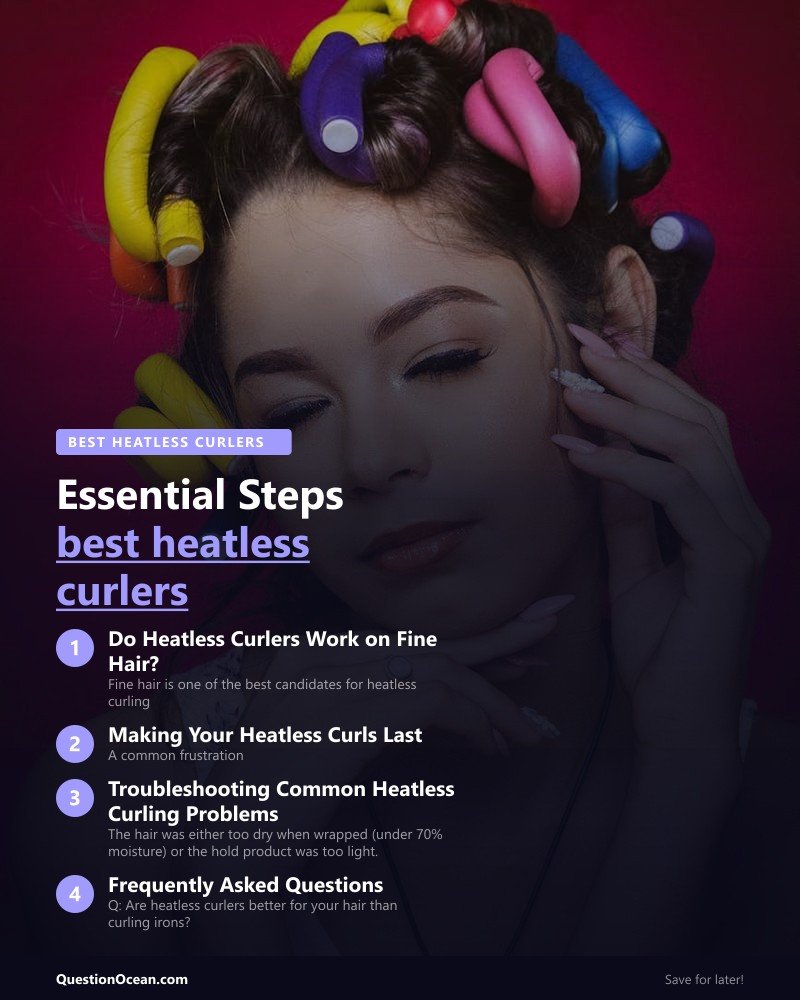
Fine hair is one of the best candidates for heatless curling, but the approach differs from medium or coarse textures. Fine strands hold curl shapes well because they’re lightweight, but they also lose curls quickly if weighed down by heavy products.
Key adjustments for fine hair:
- Use volumizing mousse instead of curl cream
- Wrap smaller sections (under 1 inch) for more definition
- Choose silk ribbons or satin rods over heavy foam rollers
- Apply a light-hold gel to ends only before wrapping
- Avoid heavy oils, they flatten fine curls within hours
- Use a root-lifting powder after takedown for volume at the crown
For short fine hair specifically, our guide to heatless curlers for short hair covers jaw-length and lob-specific techniques.
Making Your Heatless Curls Last: Humidity, Climate, and Preservation
A common frustration, curls that look perfect at 8 AM and fall flat by noon. The biggest culprit is humidity. Airborne moisture penetrates the cuticle, breaks hydrogen bonds, and releases the curl pattern your overnight set worked to create.
Anti-humidity strategies:
- Apply a polymer-based anti-humidity spray after takedown, these create a barrier that blocks moisture absorption
- In the UK and Pacific Northwest US, where ambient humidity stays high year-round, use a stronger-hold setting product before wrapping
- In dry Canadian winters, the risk is static rather than frizz, a light serum or oil mist after takedown controls flyaways
- The “pineapple” method preserves curls overnight on day two: gather all hair loosely at the crown with a silk scrunchie
For climate-specific strategies across the US, UK, and Canada, see our full guide on making heatless curls last in humid weather.
Troubleshooting Common Heatless Curling Problems
“My curls fall out within an hour”
The hair was either too dry when wrapped (under 70% moisture) or the hold product was too light. Increase the dampness level and switch from mousse alone to a mousse + light gel combination.
“I get creases instead of smooth curls”
Creases happen when hair bends sharply at the point where it meets the curler. Ensure you start wrapping from the mid-shaft rather than folding the ends over the rod. Also check that the rod diameter is appropriate, rods that are too thin for your hair length create more crease points.
“One side always looks different”
This is almost always a tension inconsistency. Most people wrap their dominant-hand side more tightly. Consciously match the wrapping pressure on both sides, and alternate which side you start with each session.
“The curlers feel unbearable at night”
Rigid tools like traditional flexi rods create pressure against the skull. The solution is repositioning: move rods toward the crown of your head rather than the sides, use the high ponytail hack for flexible tools, and invest in tools with padded cores. Silk and satin ribbons are the most comfortable overnight option.
Satin sleep bonnet for curl preservation
Frequently Asked Questions
Q: Are heatless curlers better for your hair than curling irons? A: Heatless curlers eliminate thermal damage, which is the primary cause of cuticle weakening from styling tools. They rely on hydrogen bond reformation during the drying process rather than forced heat. While not completely damage-free (friction and tension still apply), they are significantly gentler on hair over time.
Q: Do heatless curlers work on fine hair? A: Fine hair responds well to heatless curling because the strands are lightweight and hold shapes easily. The key is avoiding heavy products. Use volumizing mousse rather than curl cream, wrap smaller sections, and choose silk or satin tools to prevent the weight that causes fine curls to drop.
Q: How long should I leave heatless curlers in? A: Minimum six hours for most methods, with eight hours being ideal for long-lasting results. Hair must be completely dry before removal. If you set curlers on insufficiently damp hair, you’ll need less time. If hair was quite damp at the start, allow the full eight hours or use a cool-shot dryer to finish.
Q: Am I the only person who cannot sleep in these heatless curlers? A: This is one of the most common complaints. The solution depends on the tool: for flexi rods, reposition them to the crown using the high ponytail method. For headband-style tools (RobeCurls, Sleepy Tie), the design already favors sleep comfort. For maximum comfort, silk ribbon curlers lie the flattest against the head.
Q: Can I use heatless curlers on short hair? A: Absolutely. Short hair requires smaller tools: mini flexi rods, small-diameter ribbon curlers, or pin-curl clips work better than large headband-style curlers. The wrapping technique differs too, focusing on individual sections rather than a continuous wrap.
Q: Should my hair be wet or dry for heatless curls? A: Neither fully wet nor fully dry. The ideal moisture level is 80-90% dry: what stylists call “damp-dry.” This provides enough moisture for hydrogen bonds to reform while preventing the frizz and extended drying time that comes from wrapping soaking wet hair.
The best heatless curlers in 2026 offer genuine alternatives to heated styling for every hair type, length, and texture. Whether you choose the structured control of an Octocurl system or the effortless waves of a silk ribbon, the fundamentals remain the same: start with properly prepped, damp-dry hair, section evenly, wrap with consistent tension, and release gently. Master those four steps, and you’ll get salon-quality curls without ever turning on a hot tool.