
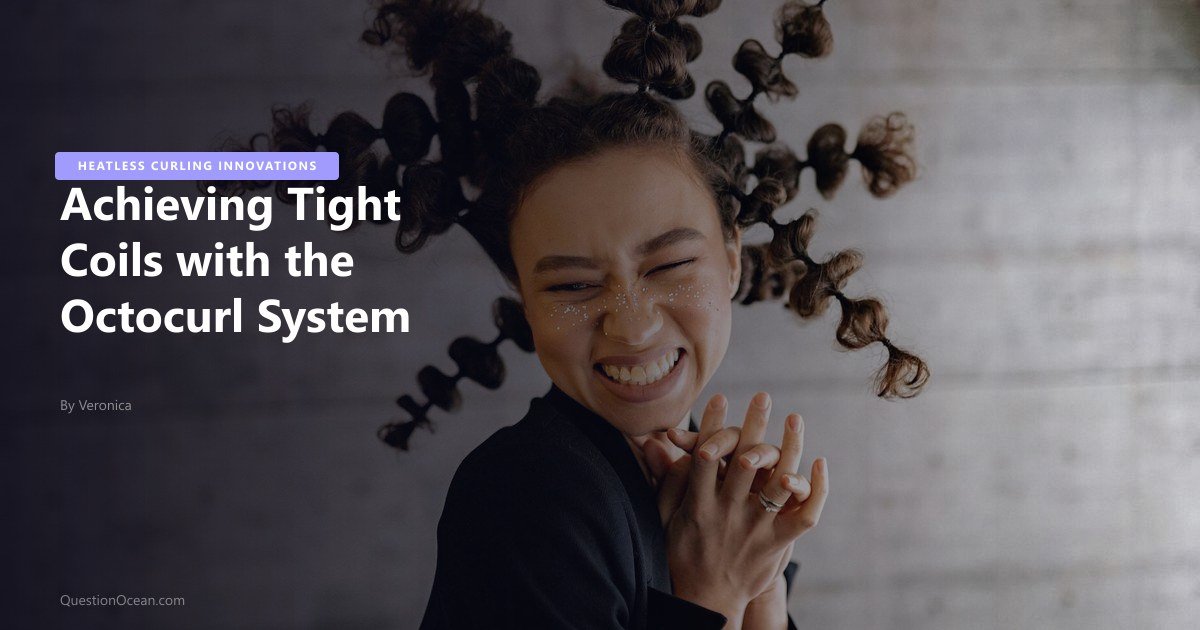
Achieving Tight Coils with the Octocurl System
The Octocurl system uses eight individual curling pods attached to a single headband, giving you precise section-by-section control that no other heatless curler on the market matches. Most tutorials only show the basic wrap-and-release method, which produces loose waves at best. This octocurl tutorial breaks down all eight distinct wrapping techniques so you can achieve tight, defined coils that rival a curling iron, without a single degree of heat.
What Makes the Octocurl Different from Other Heatless Curlers
The Octocurl stands apart because of its pod-based architecture. Instead of wrapping all your hair around a single rod or ribbon, each pod isolates a small section of hair and curls it independently. This creates uniform, consistent curls from root to tip rather than the graduated wave pattern that headband-style curlers produce.
Each pod attaches to a central headband that sits across the crown of your head. The eight pods distribute evenly, four on each side, so curl placement mirrors a professional roller set. This even distribution also balances weight, making it more comfortable for overnight wear than stacking multiple flexi rods on one side of your head (though sleeping in flexi rods overnight remains a strong alternative for shorter hair).
The system ships in two material options: microfiber and satin. Your choice between them affects curl outcome, frizz levels, and comfort significantly, more on that below.
Microfiber vs. Satin Octocurl: Which Version Produces Tighter Coils
This is the first decision you need to make, and it directly impacts your results. Microfiber pods grip hair more aggressively, while satin pods create a smoother, lower-friction wrap.
Microfiber Octocurl Pods
- Absorb residual moisture from damp hair, speeding up dry time
- Create more friction against the hair strand, which locks sections in place during sleep
- Best suited for fine to medium hair that tends to slip out of smooth curlers
- Can cause slight frizz on coarse or high-porosity hair due to the textured surface
Satin Octocurl Pods
- Minimal friction preserves the hair cuticle and reduces frizz at takedown
- Better for thick, coarse, or naturally curly and coily textures
- Requires slightly more product grip (mousse or light gel) since the smooth surface offers less hold
- More comfortable against the skin for those sensitive to microfiber textures
The verdict: Choose microfiber for fine-to-medium hair that needs extra grip. Choose satin for thick, coarse, or Type 3 and Type 4 curl patterns where frizz reduction is the priority.
Octocurl heatless curling system, microfiber and satin options
How Do You Use the Octocurl Headband?
Setting up the Octocurl headband correctly is the foundation for every wrapping technique that follows. Position the headband across the crown of your head, not across the forehead like a traditional headband.
- Place the headband so it sits roughly two inches behind your hairline, running from ear to ear across the top of your head
- Secure the headband by adjusting the elastic tension at the back, it should feel snug without creating pressure points
- Distribute the eight pods evenly, four on each side, spacing them roughly 1.5 to 2 inches apart
- Ensure each pod hangs freely without tangling with adjacent pods before you begin wrapping
The headband acts as your anchor point. Every wrap method starts by feeding hair up and into the pod from below, using the headband tension to keep the pod in position while you wrap.
All 8 Octocurl Wrapping Techniques for Different Curl Types
Most online content covers only the basic spiral wrap. The Octocurl system actually supports eight distinct wrapping methods, each producing a different curl pattern from loose bends to tight coils. Here is every technique broken down step by step.
1. The Basic Spiral Wrap
This is the standard method included in the Octocurl packaging instructions. It produces medium-definition curls with a natural-looking spiral pattern.
- Take a 1-inch section of hair and hold it taut at a 90-degree angle from your head
- Feed the ends into the pod opening and pinch to secure
- Rotate the pod away from your face while guiding the hair in a smooth spiral downward
- Continue until you reach the root, then tuck the pod against the headband to lock
2. The Tight Coil Wrap
This method produces the tightest curl pattern and is the focus of this octocurl tutorial.
- Take a half-inch section: smaller sections equal tighter coils
- Twist the section into a rope before feeding it into the pod
- Wrap the twisted rope around the pod in tight, overlapping layers rather than a spread spiral
- Each layer should sit directly on top of the previous one, building height rather than spreading width
- Secure at the headband with firm tension
3. The Flat Wrap
Produces a more ribbon-like curl with defined edges, similar to a pin curl effect.
- Take a 1-inch section and keep it flat, do not twist
- Wrap the flat section smoothly around the pod, ensuring the hair lies perfectly flat with each rotation
- Each layer sits neatly beside the previous one without overlapping
- This method creates a wider, more vintage-style wave pattern
4. The Single Crisscross Add-In
This advanced technique adds volume and dimension by crossing two thin sections over each other as they wrap around the pod. It prevents the clumped, one-dimensional curls that plague basic wrapping methods.
- Divide a 1-inch section into two equal halves
- Feed both halves into the pod simultaneously
- Cross the left half over the right, wrap once around the pod
- Cross the right half over the left, wrap again
- Continue alternating the crisscross pattern until you reach the root
- The interlocking sections create a fuller, more textured curl that separates naturally at takedown
5. The Anchor Wrap
Designed for hair that slips out of pods during sleep. Especially useful with satin pods.
- Take a 1-inch section and create a single knot loop around the pod base before wrapping
- This anchor loop locks the hair in place without clips
- Proceed with a standard spiral wrap from the anchor point downward
- The knot adds slight root lift without creating a visible crease
6. The Reverse Wrap
Wrapping toward the face instead of away from it produces curls that frame and sweep inward.
- Follow the same steps as the Basic Spiral Wrap, but rotate the pod toward your face
- Use this on the front four pods for face-framing curls while keeping back pods wrapped away from the face
- Mixing directions creates a natural, lived-in curl pattern
7. The Stacked Wrap
Creates a more uniform, cylindrical curl shape similar to what a standard curling iron produces.
- Take a 1-inch section and begin wrapping at the mid-shaft, not the ends
- First secure the ends by folding them over the pod tip
- Wrap downward toward the root in tight, stacked rings
- Each ring sits precisely beside the last, creating an even coil from mid-length to root
- The ends get a softer bend while the body of the curl gets maximum definition
8. The Twist-and-Wrap Hybrid
Combines rope twisting with spiral wrapping for maximum coil tightness on thick hair.
- Take a half-inch section and twist tightly into a rope
- Spiral-wrap the twisted rope around the pod with moderate spacing between layers
- The twist within the wrap creates a double-helix effect that holds extremely tight coils
- Best suited for thick, coarse hair that resists curl from basic methods
Product Layering for Maximum Hold on Type 3 and Type 4 Hair
Getting tight coils to hold on naturally curly and coily hair requires a specific product stack applied before wrapping. Layering mousses and creams in the right order prevents both crunch and curl dropout.
The Three-Layer Stack
- Base layer, leave-in conditioner. Apply a lightweight leave-in to damp-dry hair (80-90% dry). This provides slip for wrapping and locks in moisture. For guidance on hitting the right moisture level, see our breakdown on prepping damp hair for heatless styling
- Hold layer, curl-defining mousse. Work a golf-ball-sized amount of mousse through each section before wrapping. Mousse provides lightweight hold without the weight that creams add, which is critical for keeping coils bouncy
- Seal layer. Light-hold gel on ends only. A thin layer of gel on the last two inches of each section prevents the ends from unraveling inside the pod and gives the coil tips extra definition
Curl-defining mousse for heatless styling
Preventing Clumped Curls
Clumping happens when too much product builds up between hair strands inside the pod, fusing them together into a single thick clump instead of defined individual coils. Avoid this by:
- Distributing product evenly with a wide-tooth comb before wrapping each section
- Using mousse rather than heavy cream as your primary hold product — mousse coats strands without bonding them together
- Keeping sections to half-inch widths for tight coils, smaller sections mean less opportunity for strands to clump
- Applying the Single Crisscross Add-In technique (Wrap Method 4), which physically separates strands during the wrapping process
How to Use Octocurl on Natural Blown-Out Thick Black Hair
Blown-out natural hair has been stretched and smoothed, which changes how it interacts with heatless curlers. The key adjustment is reducing section size and increasing product grip to compensate for the smoothness that blow-drying creates.
- Section hair into eight even parts to match the eight pods. Use clips to keep sections separated
- Apply a curl-defining mousse generously to each section, scrunching upward to encourage curl memory
- Use the Tight Coil Wrap (Method 2) or the Twist-and-Wrap Hybrid (Method 8) for maximum definition
- Wrap each section firmly with consistent tension from ends to root
- Secure the headband snugly and cover with a satin bonnet. The bonnet prevents pods from shifting overnight and reduces friction against your pillowcase
Blown-out hair is already fully dry, so set time needs to be longer. Leave the Octocurl in for a minimum of eight hours. For best results on thick hair, wrap in the evening and remove the following morning.
Overnight Preservation: Bonnet Techniques for Octocurl Wear
Sleeping in the Octocurl without a bonnet is the number one reason curls come out flat or uneven. A satin bonnet holds everything in position and eliminates friction that causes frizz while you sleep.
- Choose a bonnet large enough to cover all eight pods without compressing them. Oversized bonnets work best
- Place the bonnet over the Octocurl setup gently, tucking any loose edges inside
- Avoid elastic-band bonnets that sit too tightly over the pods, which can push them out of alignment
- If pods press uncomfortably against your head while side-sleeping, place a satin pillowcase as a secondary barrier to cushion pressure points
Oversized satin bonnet for overnight styling
Octocurl Review: Pros, Cons, and Honest Takeaways
After testing all eight wrapping methods across different hair types, here is a balanced octocurl review summary.
Strengths:
- Unmatched curl uniformity thanks to the pod-isolation system
- Eight wrapping techniques give you creative range from loose bends to tight coils
- Microfiber and satin options cater to different textures and porosity levels
- Headband weight distribution is more comfortable than multiple individual rollers
Limitations:
- Learning curve is steeper than single-rod curlers, wrapping eight pods takes practice
- Side sleepers may feel pod pressure on the temples
- Satin version requires extra product for grip on fine hair
For a broader comparison of heatless curling tools beyond the Octocurl, our pillar guide covers every major option available in heatless curls for every hair type.
Frequently Asked Questions
How long do you leave the Octocurl in for tight coils?
Leave the Octocurl in for a minimum of six to eight hours for tight coils. Thicker hair and blown-out textures may need eight to ten hours. The curls set as hair dries completely inside the pods, so removing them before the hair is fully dry will result in limp curls that drop within an hour.
Can you use the Octocurl on short hair?
The Octocurl works best on hair that is at least six inches long. Shorter hair may not have enough length to wrap fully around the pod, which leads to loose sections slipping out overnight. For hair shorter than six inches, flexi rods or small-diameter rollers provide a more secure hold.
Does the Octocurl work on straight hair?
Yes. Straight hair (Type 1) responds well to the Octocurl, particularly with the Tight Coil Wrap or Stacked Wrap methods. Apply a mousse before wrapping to give straight strands the grip and hold they need, since straight hair lacks natural curl memory to reinforce the shape.
How do you prevent creases from the Octocurl headband?
Creases form when the headband sits too tightly against the hair at the root. Position the headband slightly behind the hairline, not directly on it, and ensure the hair feeds smoothly into each pod without bunching at the base. Loosening the elastic by one notch usually eliminates root creases without sacrificing hold.
Is the Octocurl better than flexi rods for tight curls?
The Octocurl produces more uniform curls because all eight pods are the same diameter and attach to a single headband, ensuring consistent placement. Flexi rods offer more diameter variety and work better on very short hair, but they require individual placement that makes even spacing harder to achieve. For tight coils specifically, the Octocurl’s pod system delivers more consistent results.
Can you use the Octocurl curling method on wet hair?
Wrapping soaking wet hair in the Octocurl leads to incomplete drying, frizz, and weak curl formation. Start with hair that is 80 to 90 percent dry, damp enough to reshape hydrogen bonds but dry enough to fully set within six to eight hours. Applying mousse to this damp-dry hair gives the best combination of hold and definition.
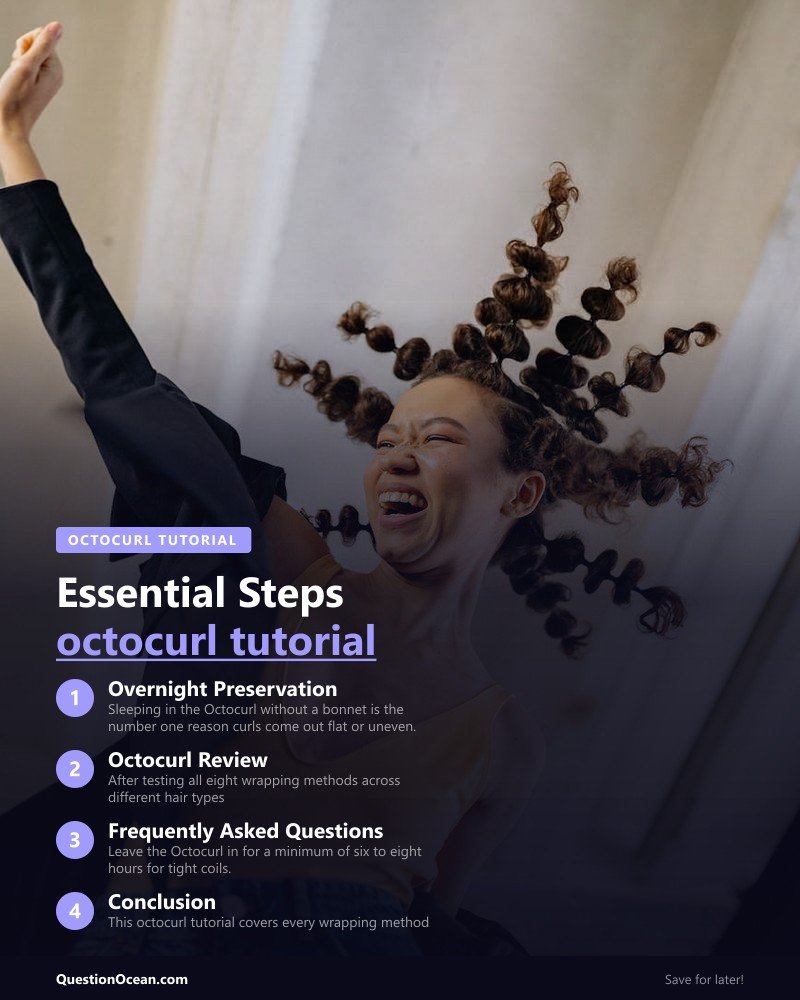
Conclusion
This octocurl tutorial covers every wrapping method, product layering strategy, and overnight preservation technique you need to achieve tight, defined coils without heat. The eight-pod system gives you more control over curl size and uniformity than any single-rod heatless curler, and choosing the right material. Microfiber for grip, satin for frizz reduction. Tailors the results to your specific hair type. Master the Tight Coil Wrap and the Single Crisscross Add-In, and you will get salon-quality coils from a tool that costs a fraction of a professional styling session.